

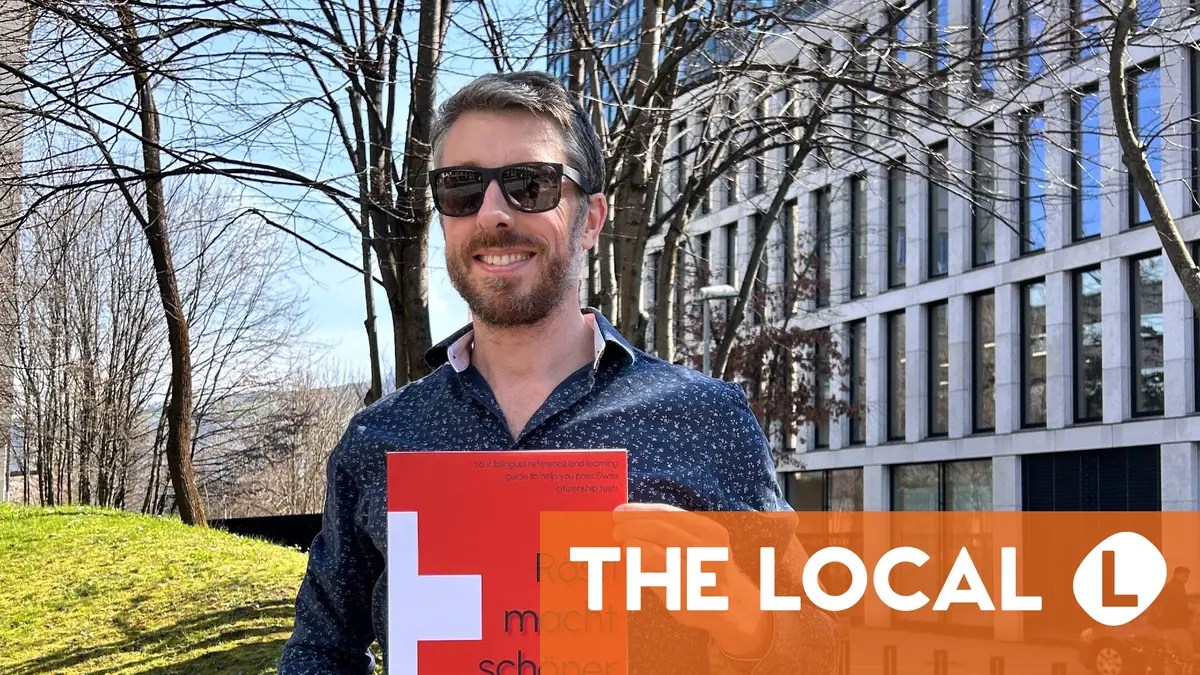
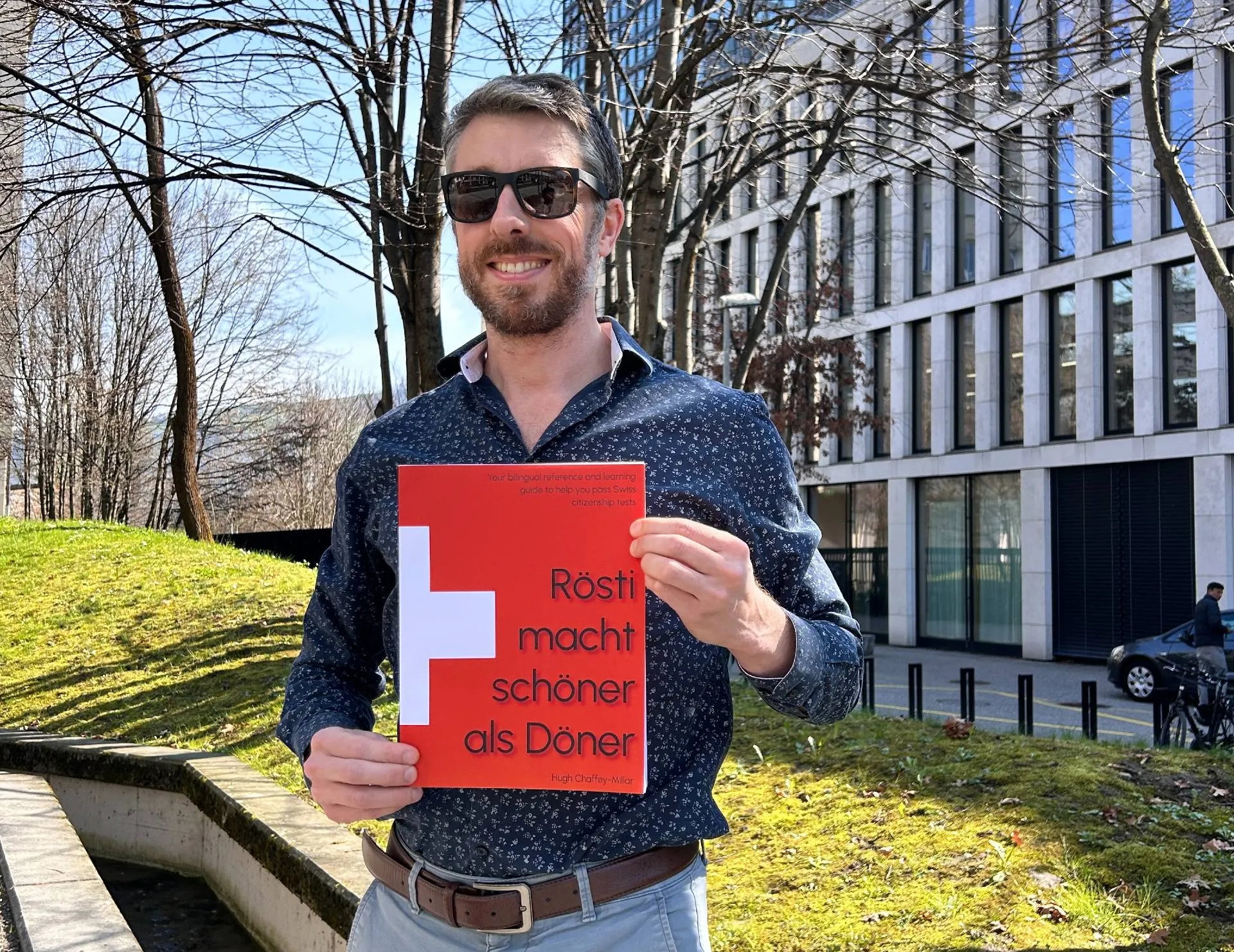
Australian Hugh Chaffey-Millar came to Switzerland in 2013 and finally became a Swiss citizen last year. Here he shares tips with The Local to help foreigners in their long, and often bumpy, quest for integration and naturalisation.
Before moving to Switzerland, the Sydney native had lived in Germany and Austria, so he didn’t experience a “classic culture shock” that hits many non-European expatriates pretty hard when they arrive in Switzerland.
Even so, as Chaffey-Millar told The Local in an interview, he didn’t just seamlessly slip into Swiss life.
“It took me a long time to form lasting social relationships with Swiss people outside of work. It feels strange to live in a place where you are happy with your job, your life, and the way the place works, but not know the locals,” he said.
“Sometimes I wondered whether I was really living here or whether I was just a guest.”
But the idea for the book did not emerge immediately.
It came to him when he was applying for Swiss citizenship. in the canton of Zug
“I started writing my own notes and thought I might try to publish them.”
Rösti versus kebab
The result is his curiously titled book, “Rösti macht schöner als Döner” which translates to “Rösti makes you more beautiful than doner kebab.”
While this may not be immediately clear, it is a play on a German saying “Döner macht schöner” – the Doner kebab makes you more beautiful.”
“I always joked that Rösti makes you even more beautiful,” he said – not to mention that it is much more culturally appropriate in Switzerland.
Chaffey-Millar’s main naturalisation takeaways, which he included in his bilingual (English and German) book, are these:
- Learn about your community and involve yourself in the local life in any way you can.
- Learn about Switzerland, its history, its political system, and the topics trending in politics right now.
- Don’t leave your learning journey until the last minute
- You may also want to seek the help of a ‘citizenship coach’ specialising in guiding English-speakers through the Swiss naturalisation process.
Advertisement
The wealth of experience
Chaffey-Millar, who works as a project manager in the software industry, hopes his own experiences will help other foreigners ease their way into Swiss life and, eventually, citizenship. as well.
First and foremost: the language
“Learning enough of the language to at least survive on a daily basis definitely helps, even if you’re not planning to become ‘business-fluent.”, he pointed out.
READ MORE: Seven tips for how to learn one of Switzerland’s national languages
“It stops you feeling dependent on someone else to translate for you, changes the way some Swiss perceive you, and and gives you more of a feeling of being at home.”
“Learning a language takes a long time but many English-speakers expect fast gains and lose motivation – as I also did on many occasions.”
The bottom line: “Regular practice over an extended period of time will always yield results and is very rewarding.”
Advertisement
Meet (Swiss) people
As any new arrival knows, getting to know, and making friends with the locals, is probably one of the biggest obstacles foreign residents face in Switzerland.
It was no different for Chaffey-Millar.
“If you are already in the workforce and no longer a student where you perhaps meet locals organically, finding a hobby or joining a group that enables you to meet a couple of Swiss is a great way to make connections,” he said.
Advertisement
Integrate
This often falls under the ‘easier said than done’ category.
“Recognise that integration is a process with good phases and not so good phases,” he said
READ MORE: Why joining a club in Switzerland offers a fast track to integration
“I once read that typically there is a honeymoon period, then a period of questioning and noticing, in which you start to perceive differences or minor annoyances.
“Then comes the hardest phase in which the cultural differences, the inconveniences of living somewhere that ‘just isn’t home’, the weather, and everything else all compound in a negative way.”
“But there is also a fourth phase – that of acceptance in which the annoyances get smaller or disappear and the new culture becomes more like a reference point rather than an anomaly,” he noted.
Achieving all these objectives will help foreigners feel at home in Switzerland, he added.
Hugh Chaffey-Millar’s book can be purchased on Amazon for 16.09 francs.


