


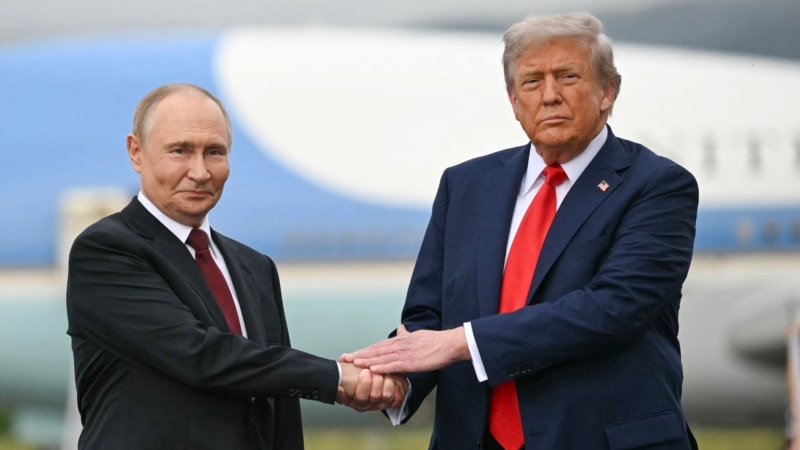
Security guarantees for Kyiv are a key issue at the heart of efforts to bring an end to fighting amid Russia’s ongoing invasion of Ukraine, and now White House special envoy Steve Witkoff has put the term “Article 5-like” center stage.
Witkoff told CNN on August 17 that it was agreed during the Alaska summit that Washington and its allies could offer “game-changing” assurances to Ukraine in the form of “Article 5-like protections,” though he did not provide specifics.
Witkoff said that, following President Donald Trump’s meeting with Vladimir Putin, Russia would not object to this as part of a potential peace framework.
The phrase draws from Article 5 of NATO’s founding treaty, the core clause that treats an armed attack against one member as an attack against all.
Contrary to popular belief, it does not commit NATO members to full military intervention in support of another member if it is attacked.
What it does say is that each NATO member “will assist the Party or Parties so attacked by taking forthwith, individually and in concert with the other Parties, such action as it deems necessary, including the use of armed force.”
Since NATO’s creation in 1949, Article 5 has been invoked only once: after the September 11 attacks. That step triggered alliance-backed operations and support measures, though members differed in the scope and timing of their contributions.
A quasi-Article 5 arrangement would appear to borrow this collective-defense concept to apply outside NATO’s treaty system. It would not make Ukraine a NATO member, which is something Trump has specifically ruled out.
Nor would it automatically invoke the alliance’s integrated structures; instead, it would be a bespoke pact crafted by the countries willing to sign on.
What ‘Article 5-Like’ Might Mean
Any parallel system for Ukraine would depend entirely on the text negotiated by the parties.
What matters is not the label but the fine print: who commits to what and how fast and forcefully they are prepared to act if Ukraine is attacked again.
Those specifics are precisely what fuel skepticism.
Ukrainians are wary of vague pledges after the 1994 Budapest Memorandum, which provided security “assurances” in return for Ukraine giving up nuclear weapons it inherited after the collapse of the Soviet Union.
Those assurances have failed to prevent Russian aggression.
And it’s not just Ukrainians who are skeptical. Polish Foreign Minister Radoslaw Sikorski noted that Kyiv’s problem is not a lack of assurances but the failure to respect them.
“On 22 April 2004 Vladimir Putin solemnly ratified the Treaty on the Russian-Ukrainian Border. Suffice to respect them and the war is over,” he wrote on X.
European Commission President Ursula von der Leyen, meanwhile, welcomed the proposal and said the EU was “ready to do its share.”
“As I have often said, Ukraine must become a steel porcupine, undigestible for potential invaders,” she said.
Geopolitically, the proposal raises a paradox. If guarantees truly mirror NATO’s deterrent effect, why would the Kremlin accept them? One possible answer is that Moscow may perceive non-NATO guarantees as less automatic or binding than alliance membership, or as more negotiable in scope and geography.
When explicitly asked on CNN whether Russia would allow “Article 5 guarantees of NATO” to happen, Witkoff replied, “What I said is we got to an agreement that the US and other European nations could effectively offer Article 5-like language for security guarantees.”
Conversely, if the guarantees are watered down to win Russian assent, they risk deterring no one — least of all Moscow.


