


Switzerland will introduce the EU’s new Entry/Exit System (EES) from October 12th, with Geneva and Zurich set to be among the first airports to implement the checks for non-EU travellers.
The EU’s long-delayed Entry and Exit System is finally set to come into force from October.
The new biometric border control scheme, which involves taking fingerprints and facial scans from non-EU travellers, will gradually replace the current system of manual passport stamps.
The EU has asked each country to have at least one point of entry operating the EES checks from October 12th. In Switzerland, Geneva and Zurich are set to be the first airports to roll it out.
Non-EU travellers have been warned to expect some delays as the new system is bedded in over the coming months.
How will Switzerland roll out the system?
The Local has obtained information on the rollout, although some details remain unclear at this stage.
A spokesperson from Geneva airport confirmed that the ESS scheme was ready for the launch.
They said: “The EES system will be officially implemented on October 12th. The equipment is already in place and has been tested several times.”
Zurich airport will also begin gradually rolling out the scheme in autumn.
READ ALSO: Travel to Switzerland – Your questions answered about EES and ETIAS
Advertisement
A spokesperson said: “At Zurich Airport, we are prepared for the introduction of the system together with the cantonal police. The launch in Zurich will take place in stages this autumn.”
The exact launch date for Zurich is expected to be confirmed in the coming weeks.
The EES system is expected to be implemented from mid-October at the EuroAirport at Basel-Mulhouse. The Local contacted the airport for confirmation but had not received a comment at the time of publishing.
Swiss media reports that smaller airports such as Bern-Belp and Lugano are to follow suit at a later date.
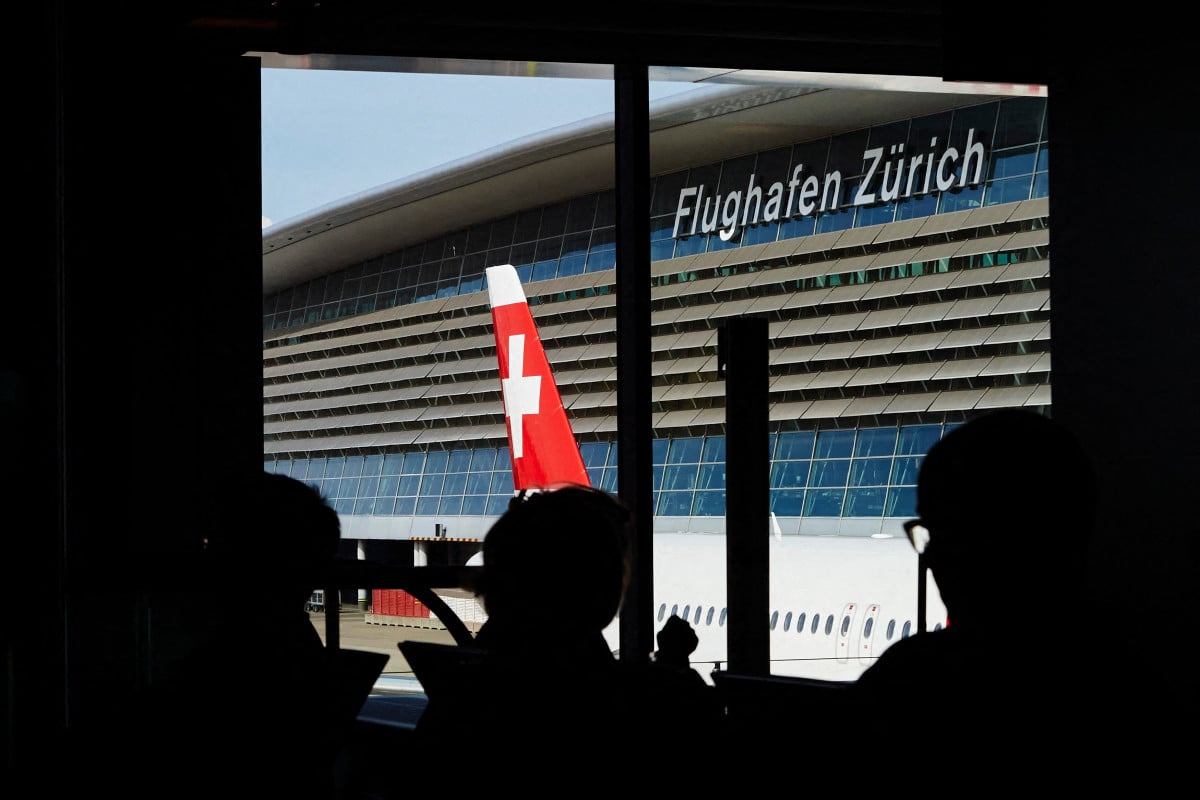
Zurich airport. Photo by MICHAEL BUHOLZER / AFP
What should travellers know?
Travellers from outside the EU or Schengen Area – including the UK, US and Canada – will have to use the new system.
However, EU and Schengen nationals are exempt, as well as non-EU residents living in Switzerland and other Schengen area countries. However, they may still be impacted by extra queues during the transition period.
So what will it actually mean for those affected?
“In practical terms, upon arrival at Geneva Airport from a non-Schengen country, third-country nationals will first have to register individually at self-service kiosks, as is already the case in many countries such as Canada and the United States,” the spokesperson from Geneva airport said.
“Assistants will be on hand to help and advise passengers with this process. This will take one or two minutes.”
Advertisement
Passengers will then go to border control officers to register their biometric data, which will include fingerprints and a facial scan.
“This electronic registration means that the entry stamp does not need to be manually affixed to the travel document,” said the Geneva airport spokesperson.
“This system will make it possible to identify wanted persons or those without valid identity documents and to automatically detect cases of overstaying, for example, the 90-day limit.”
Passenger data will be stored for three years which means travellers will be exempt from registering again if they enter another Schengen zone country during this time.
“However, they will still be required to present their passport to an immigration officer,” said the Geneva airport spokesperson.
Both Geneva and Zurich airports said they were set to launch an information campaign on how the entry system will affect travellers in the coming weeks, ahead of the official start date.
The spokesperson from Zurich airport pointed out that they expected entry to Switzerland would take longer for third-country nationals “especially when registering for the first time”.
READ ALSO: What happens if you overstay your 90-day limit in Switzerland
Advertisement
What else should I know about EES?
The Entry and Exit System is an EU-wide database designed to register the entry and exit of non-EU nationals visiting the Schengen Area for short stays.
There are a number of exemptions, which are listed here.
Although originally planned for November 2024, the rollout has been delayed until October 2025, with the European Commission deciding to phase in the system over six months.
From the launch-date, at least one border crossing in each member state must be operational, with coverage expanding to half of all border points within three months and to all of them within six months.
The EES checks will be followed by the introduction of the European Travel Authorisation and Information System (ETIAS) in the final quarter of 2026, although the exact date still is to be confirmed. It will also involve a phased introduction.


