


If you live in Spain on the Non-Lucrative Visa (NLV), then it’s important to be aware that you’ll still be taxed here and you will have to fill out the annual income tax return.
The general rule is that anyone who lives in or stays in Spain for more than 183 days a year is considered to be a tax resident and must fill out the annual income tax form known as la declaración de la renta.
The rules of the NLV state that you are that you are not allowed to work while in Spain, either for companies here or abroad, but you will still be taxed on your passive income and savings.
EXCLUSIVE: Spain clarifies two key rules of the Non-Lucrative Visa
Even though it has always been the case that you can’t work, there has long been confusion about this, with many believing that it only meant you couldn’t work for a Spanish company here, but you could still work remotely for clients abroad or online.
To clear up any confusion, the Spanish government has actually made it crystal clear in the legal text of its new Immigration Law that you can’t work while on the NLV. This means you can’t work full stop – not even remotely. If you want to do this, you need to apply for the Digital Nomad Visa (DNV) instead.
In order to be eligible for the NLV though, you have to be receiving a certain amount of passive income or have a certain amount of savings in order to be able to support yourself to live here. This is €2,400 per month or savings of €28,800 for the year.
Passive income could be in the form of receiving rental payments for a property you own abroad, pension payments, returns on investments or capital gains from the sale of assets for example.
As you are considered to be a Spanish resident while on the NLV, you must still pay tax on your passive income.
EXPLAINED: Who has to do a tax declaration in Spain in 2025?
Advertisement
Spanish law states that you must pay income tax on your worldwide income and capital gains.
You must file la declaración de la renta each year between April and July. This year, campaign for filing your taxes for 2024 opened on April 2nd 2025, and will close on June 30th 2025.
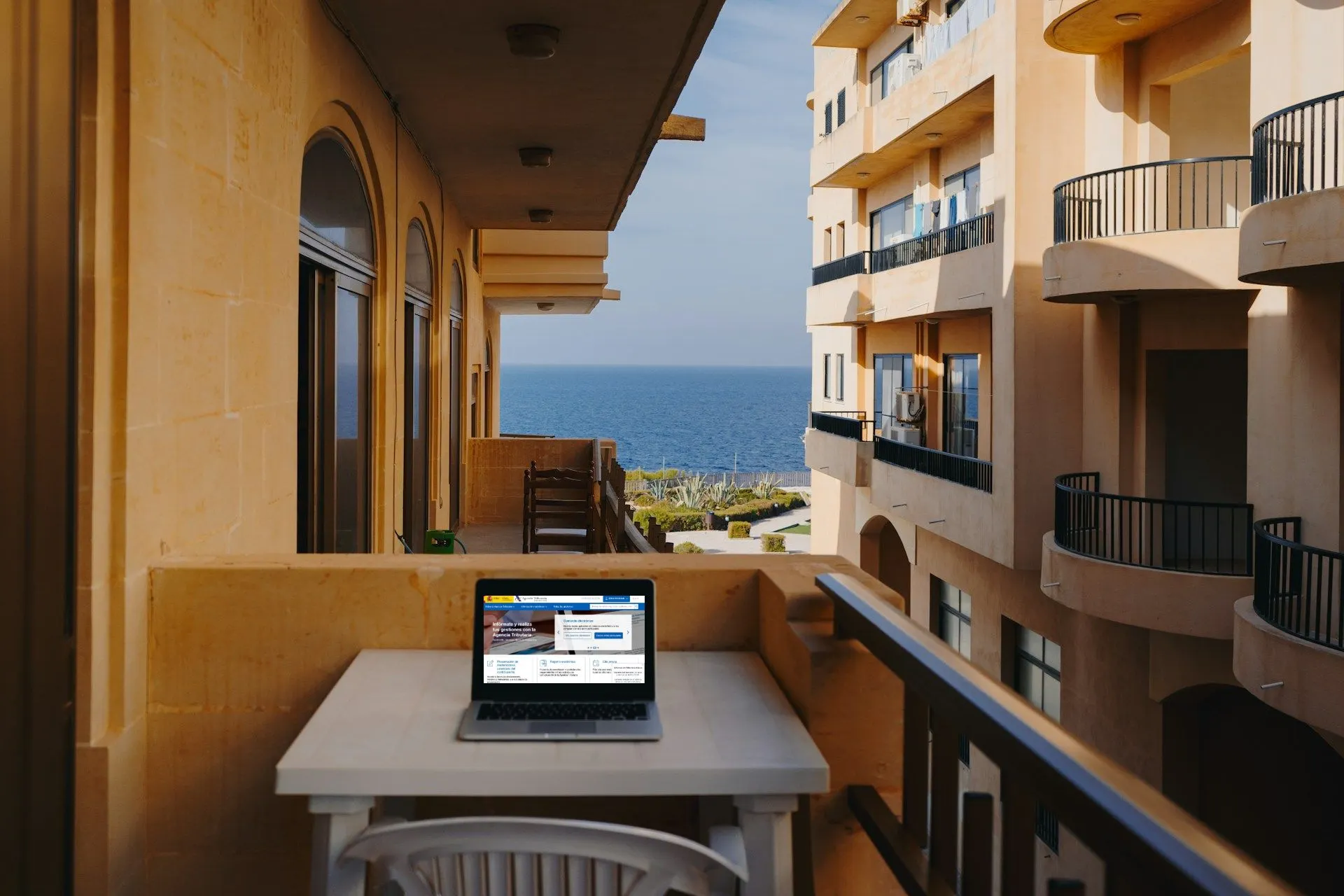
You can either complete it online yourself via the Agencia Tributaria website provided you have a Digital Certificate or a Cl@ve pin.
It’s important to keep in mind, however, that the process is quite complicated, even for native Spanish speakers, so if you’re not sure what you’re doing, it’s worth hiring a gestor to help you out and file it for you.
If you make a mistake, it could be very costly as it’s likely you will be fined for it.
A gestor will ask for information and evidence including:
- Information on dependents – husband/wife/legal partner/children and NIE/Resident cards
- Interest received from investments or bank account abroad
- The total amount you received from renting a property abroad and a copy of the rental agreement.
- Documentation of any property sold in Spain or abroad
- Pension payments
- As well as any income / profit you made passively from anything else.
READ ALSO: How to complete Spain’s Declaración de la Renta tax return
Advertisement
You may also be able to offset certain amounts you paid for private health insurance, dental work etc. but this will depend on your individual circumstances, as well as what region of Spain you live in. Ask your gestor what you’re able to claim back where you live.
You must also inform Tax Agency of any changes to your circumstances such as change of address, a new member of the family born during that year etc.
The tax on savings includes interest and dividend income, capital gains made on the sale or transfer of assets, income derived from life assurance contract and pensions annuity income.
In 2025 these tax rates are as follows:
Up to €6,000 – 19%
€6,000 to €50,000 – 21%
€50,000 to €200,000 – 23%
€200,000 to €300,000 – 27%
€ 300,000 upwards – 30%
Pensions and rent are taxed the same as general income tax:
From €20,200 to €35,200, the tax rate is 30%
From €35,200 to €60,000, the tax rate is 37%
From €60,000 to €300,000, the tax rate is 45%
More than €300,000, the tax rate is 47%
READ ALSO: What’s the difference between Spain’s wealth tax and the solidarity tax?
Advertisement
Be aware that you may also need to declare and pay wealth or solidarity tax on large fortunes during the same time as your income tax return.
Each region has slightly different rules on this, so ask a professional in your area.
You are required to pay wealth tax if after applying for regional allowances, the net result is positive or if the total gross value of your assets exceeds €2 million.
Spanish Wealth tax is a progressive tax, so the more you have, the higher the tax you have to pay.
The general rates range between 0.20 and 3.50 percent, depending on how much your assets are worth.
The highest rates are payable for those with a taxable base above €10,695 million.
Solidarity tax rates and allowances are the same across the country and only applies to those with net wealth above €3 million.
Our journalists at The Local are not tax experts. This article is intended to be helpful and informative, but before filing your tax return or making any financial decisions, you should always seek the advice of a professional accountant or gestor.


