


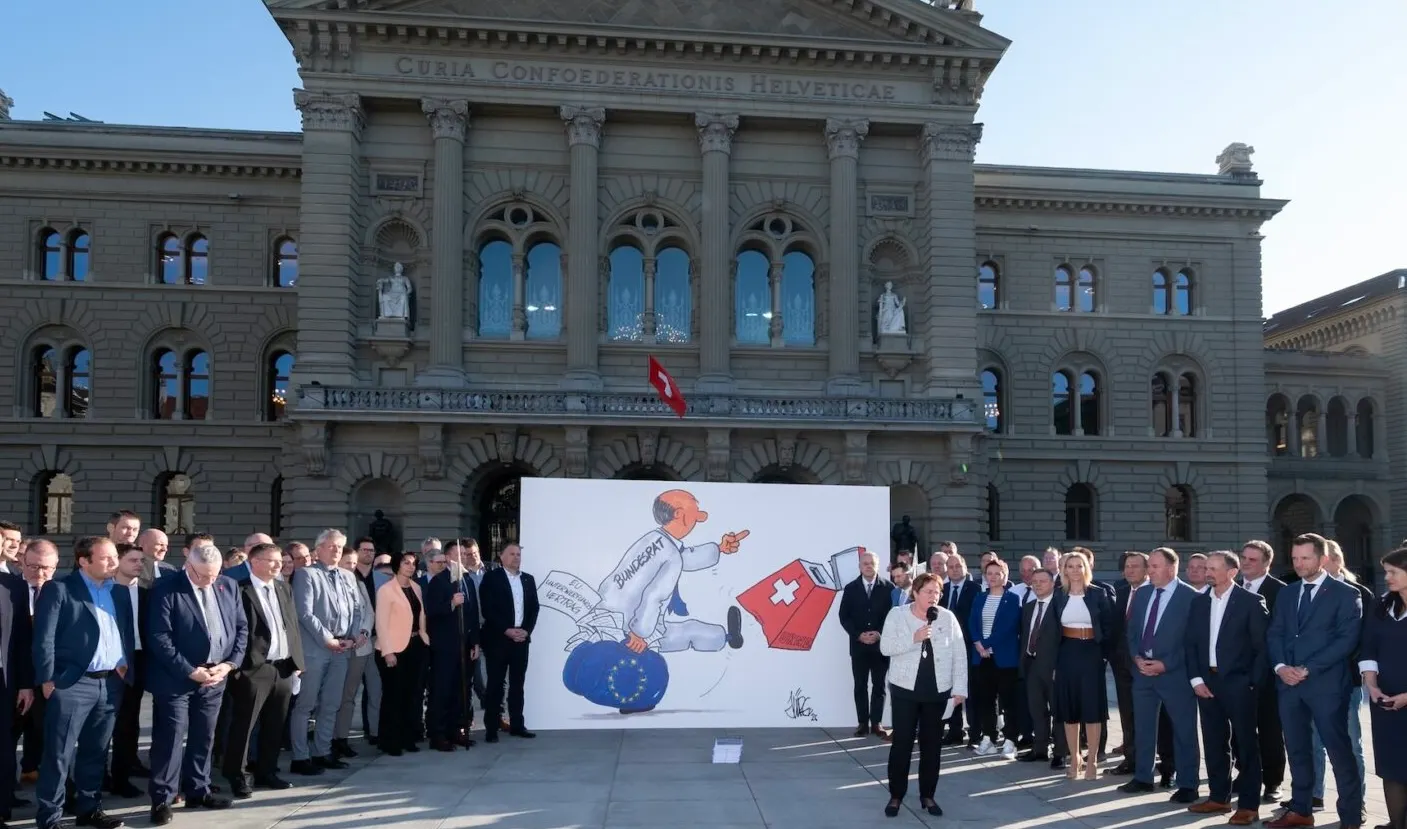
On March 2nd, Switzerland and the European Union signed a package of agreements intended to ‘deepen and harmonise’ ties between the two sides. But they are still far from being a done-deal.
The new agreements, known as Bilaterals III, were concluded – after a sometimes arduous process that included the Swiss delegation abruptly walking away from negotiations in 2021 – in December 2024.
Six months later, in June 2025, the Federal Council approved the pact and opened the consultation process.
According to the government, “The results of the consultation show broad support from Swiss political, economic, scientific, and civil society circles. A clear majority of the approximately 318 responses received were in favour.”
The package has not, however, been ratified in Switzerland yet, and still faces a long (and potentially bumpy) road ahead.
What is the next step?
In the coming weeks, the Federal Council is going to submit the package to the Parliament for its approval.
MPs in both chambers – the National Council and the Council of States – will launch a debate in this matter during future sessions.
However, a unilateral approval is highly unlikely: though most parties support the effort to strengthen Switzerland’s relations with the EU, one – the Swiss People’s Party (SVP) – does not, and its interference could derail the legislative proceedings.
The rightwing party has launched a campaign against Bilaterals III – and closer ties with the EU in general – claiming that the treaties would take away Switzerland’s sovereignty and force it to adopt European laws and regulations.
But regardless of what the Parliament decides in the end, the last word in the matter will be left to Swiss citizens.
Advertisement
Referendum is in view
The agreements’ fate will be ultimately sealed by Swiss voters.
Under the country’s direct-democracy system, the government must seek voters’ approval before introducing new laws, and Bilaterals III are no exception.
While no date for the vote has been set, it is likely to take place in 2027.
Advertisement
What is in this new package anyway?
Agreements cover a wide spectrum of topics, such as electricity supply, food safety, air and land transport, as well as healthcare.
They also ensure Switzerland’s participation in EU programmes: research, innovation, education, youth, sport, culture, and other areas.
Last but certainly not least, Bilaterals III also address the Free Movement of Persons – that is, issues related to immigration.
READ MORE: How will Switzerland benefit from new pact with the European Union?


