


During heatwaves, there is nothing more refreshing than plunging into the (relatively) cool waters of Switzerland’s lakes. But is swimming in Alpine lakes allowed — and if so, under what conditions?
Switzerland has over 200 mountain lakes, with the highest — the Riffelsee — located at an altitude of 2,757 metres at the foot of the Matterhorn.
But even if they don’t overlook the iconic mountain, all high-altitude lakes in Switzerland are set in very picturesque mountain settings.
Though their water temperature varies from icy to warm, they will always be cooler than the air temperature during heatwaves.
READ ALSO: Are Switzerland’s lakes warm enough to swim in?
According to MeteoNews weather service, for instance, typical summer temperatures of Swiss mountain lakes generally range from 17C to 26C.
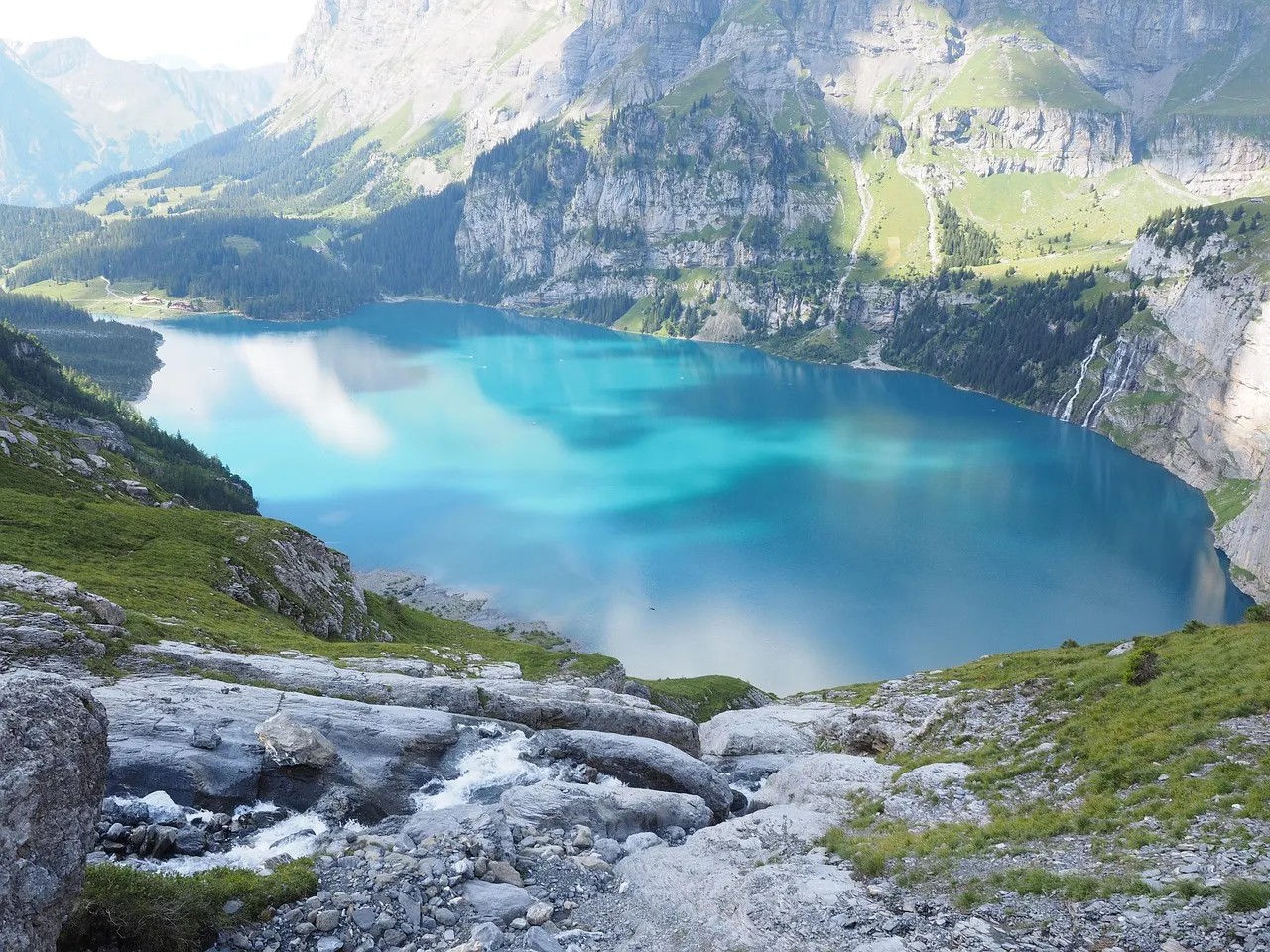
The higher you go, the cooler the water will be, especially in lakes that are fed by glacier meltwater — such as the Oeschinensee in the Bernese Oberland, where the water is always very cold — and swimming is allowed.
Can you swim in all the mountain lakes in Switzerland?
In most of them, yes (the same goes for the rivers as well).
However, some are off-limits to swimmers, for a variety of reasons.
They may, for example, contain ‘fish farms’, such as the Blausee in the Bernese Oberland.
Other ‘no swim’ Alpine lakes are those created by dams — the so-called ‘dammed’ (not damned) lakes.
In such cases, the ‘no-swimming’ signs will be clearly posted.
The majority of mountain lakes, however, are open to swimmers, though some may have designated areas where swimming is permitted and other areas where it is banned.
The general rule is this: swimming is allowed, unless specifically prohibited by a sign.
Advertisement
Are there any specific rules to follow?
There are no general regulations that are applicable to all mountain lakes in Switzerland.
Instead, they vary by municipality to which a particular lake belongs; some may be stricter (for instance — no jumping into the lake allowed) than others.
Most, however, will have signs telling swimmers and bathers to be aware of currents and whirlpools — swirling water that is formed when two opposing currents meet.
They will also focus on other safety measures like not leaving young children unattended in the water, or not swimming when there is no one else around.
Other typical rules include whether barbecuing on the shore is allowed, and how to dispose of the trash, since preserving the natural Alpine environment is a priority for Alpine regions.
There may even be regulations about drone flying.
As mentioned, all of them will be posted on lakeside signs, but you can also look them up ahead of time on the community’s websites.
Advertisement
What else should you know?
Though swimming in a lake (or a river, for that matter), is a pleasant experience, you should keep some important points in mind.
For example, you need to take care when jumping in, especially during a heatwave.
If your body is hot and the water cold (as mountain lakes tend to be), you could can suffer from the phenomenon known as “cold water shock”.
In extreme cases this can lead to drowning.
This can be avoided by submerging yourself slowly, rather than diving or running in, to give your body time to adapt. You can also splash water onto your face as you enter.
You should also stay close to the water’s edge.
READ ALSO: How to stay safe when swimming in Switzerland’s lakes and rivers this summer


