


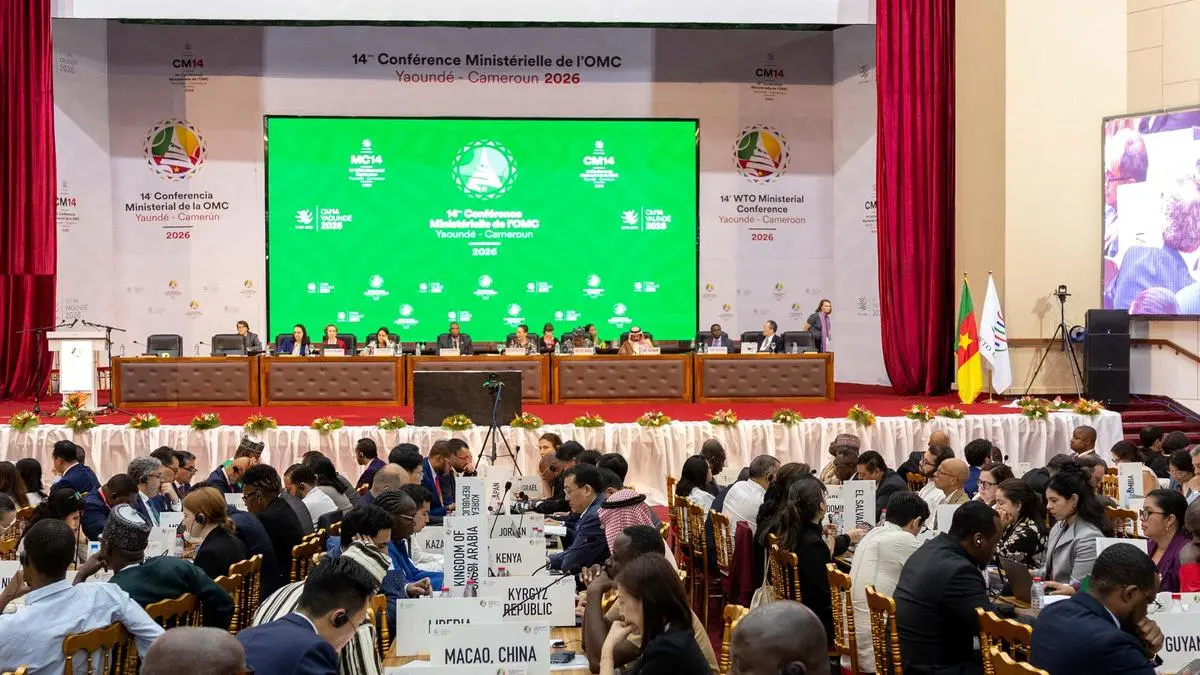
Delegates attend the World Trade Organisation (WTO) 14th ministerial meeting in Yaounde, Cameroon
| Photo Credit:
REUTERS
India successfully stalled the China-led investment facilitation for development (IFD) agreement at the WTO’s 14th Ministerial Conference (MC14) at Yaoundé, Cameroon, but found itself on the defensive as negotiations over the e-commerce tax moratorium went down to the wire on Sunday, the last day of the prolonged meeting.
New Delhi held its ground on the IFD pact, endorsed by 128 members, despite being isolated after fellow opponents South Africa and Türkiye withdrew their objections. Standing as the sole dissenter among 166 members, India argued that incorporating the plurilateral deal would bypass the “consensus” rule and set a dangerous precedent for non-mandated issues to eclipse core mandated priorities such as food security.
However, in the negotiations on e-commerce moratorium, the US demand for a permanent moratorium weighed heavily on India, which had called for a “careful reconsideration” of the moratorium itself to preserve revenue and policy space.
Moratorium Pressure
Sources said that there was great pressure on India to accept a four-five year moratorium this time, instead of the usual two-year one that has been the norm since 1998. Also important for India is the parallel extension of the moratorium on TRIPS Non-Violation Complaints (NVC), a mechanism that developing nations use to shield domestic policies from legal challenges.
Amid talks at the WTO on the need for a new architecture for better results, India continued to stress on the need for consensus. In his talks with WTO Director General Ngozi Okonjo-Iweala on Sunday, Commerce & Industry Minister Piyush Goyal acknowledged her continued efforts in building consensus for a successful MC14. “Emphasised the importance of a balanced and responsive WTO that effectively addresses the needs and aspirations of all Members, particularly developing countries and LDCs,” Goyal said in a post on `X’.
On Sunday, India, Oman, and South Africa submitted a draft declaration on WTO reforms, emphasising Special and Differential Treatment (S&DT) for developing countries and the need to uphold past mandates. This stands in direct contrast to the US agenda, which has increasingly questioned consensus-based decision-making in favour of plurilateral tracks and new issues. Washington has also intensified calls for objective criteria for “developing country” status, arguing that major emerging economies should no longer benefit from preferential treatment.
Food Security
On agriculture, India stressed that permanent solution on public stockholding for food security purposes, special safeguard mechanism, and cotton are long-pending mandated issues, which need to be delivered on priority.
India also underscored that the challenge of overcapacity and overfishing arises from heavily subsidised industrial fleets, and not from small-scale fishermen in India and other developing countries & LDCs. It made a strong case in the WTO forum for ensuring that emerging decisions remain fair and do not disproportionately impact vulnerable communities, per a government statement.
Published on March 29, 2026


