
Velcro has multiple practical applications.
Keystone / Gaetan Bally
Swiss engineer George de Mestral patented the Velcro fastener in the 1950s. However, the principle was initially met with scepticism and rejection. It was only when it was used on the Apollo moon missions and in sport that the product became wildly popular.

It is practical, but inelegant. Nevertheless, we deal with it almost every day. Can you imagine everyday life without Velcro?
According to an international jury, this Swiss idea is one of the 50 most important inventions of the 20th century. Like several other Swiss inventions, it changed the world.
More
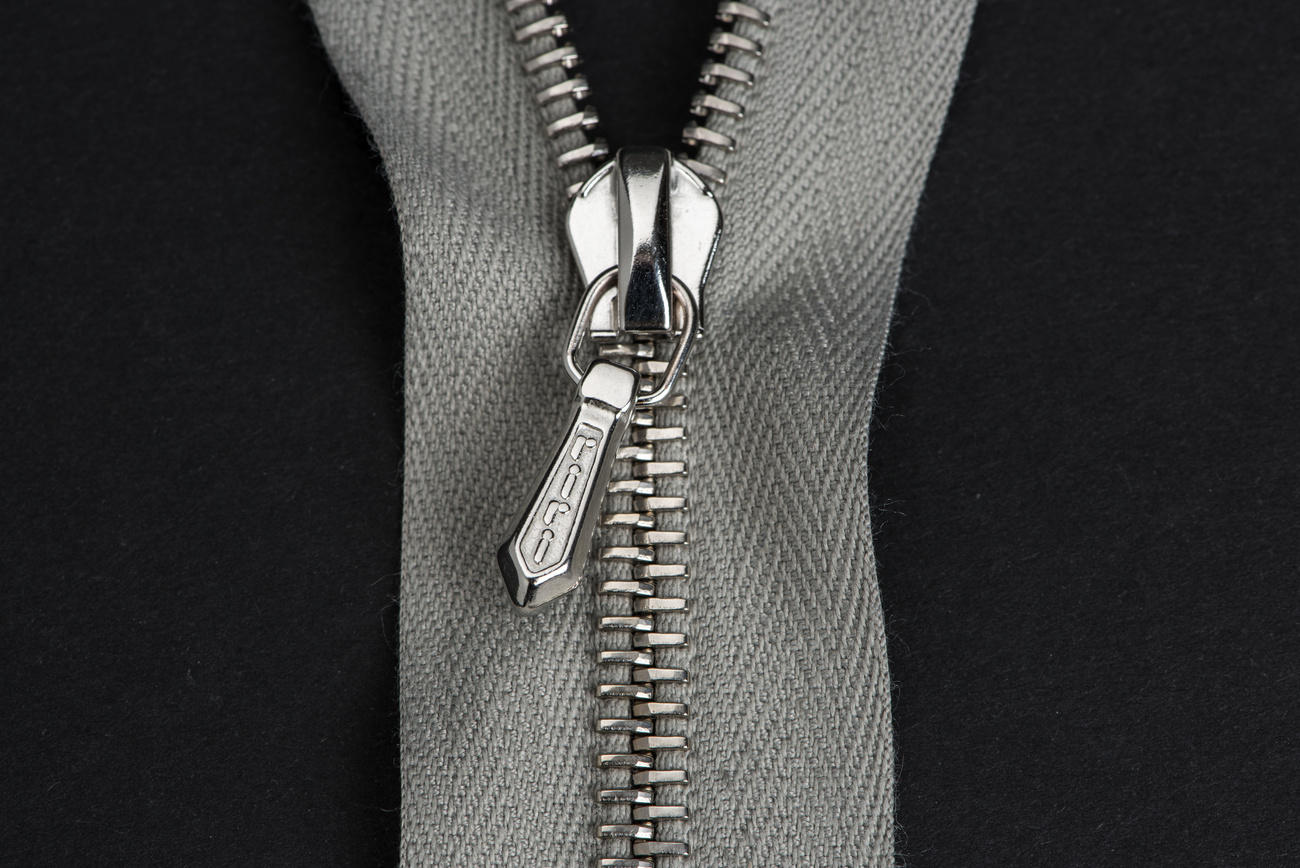
More
These Swiss inventions have become iconic
The principle is simple: a fluffy band on one side and tiny hooks on the other. If you press them together, they stay connected and can only be pulled apart with force.

Copyright (C) Dee Breger / Photo Researchers, Inc.
However, the hook-and-loop fastener had a long way to go before it became established as a principle for attaching and closing objects.
Modelled on nature
It was 1941 when George de Mestral, a 34-year-old electrical engineer from canton Vaud in western Switzerland, went hunting with his dog in the forest. Returning home, he was annoyed by the burdock seeds that had attached themselves to his dog and his clothes.
But they also aroused his interest: when he examined the seeds under a microscope, he realised that they don’t have spines but hundreds of tiny barbs, which made them stick to fabric and fur.
He spent years in his workshop trying to develop a mechanical fastening system based on the shape of the barbs and their textile counterparts.
He finally produced a prototype and submitted it for patenting in 1951 under the name “Velcro” – a combination of the French words velours (velvet) and crochet (hook). On March 16, 1954, he was granted the patent in Switzerland.
But de Mestral still had a major hurdle to overcome: how would his invention be produced on an industrial scale? He left his job, raised an enormous amount of venture capital and went in search of a manufacturer for the innovative machine that he would need.
After years of trials, a Swiss textile machine manufacturer was finally able to solve the problem, as the Schweizer Filmwochenschau reportedExternal link in 1959. “Belts with the new fastener are absolutely reliable,” raved the television journalist.
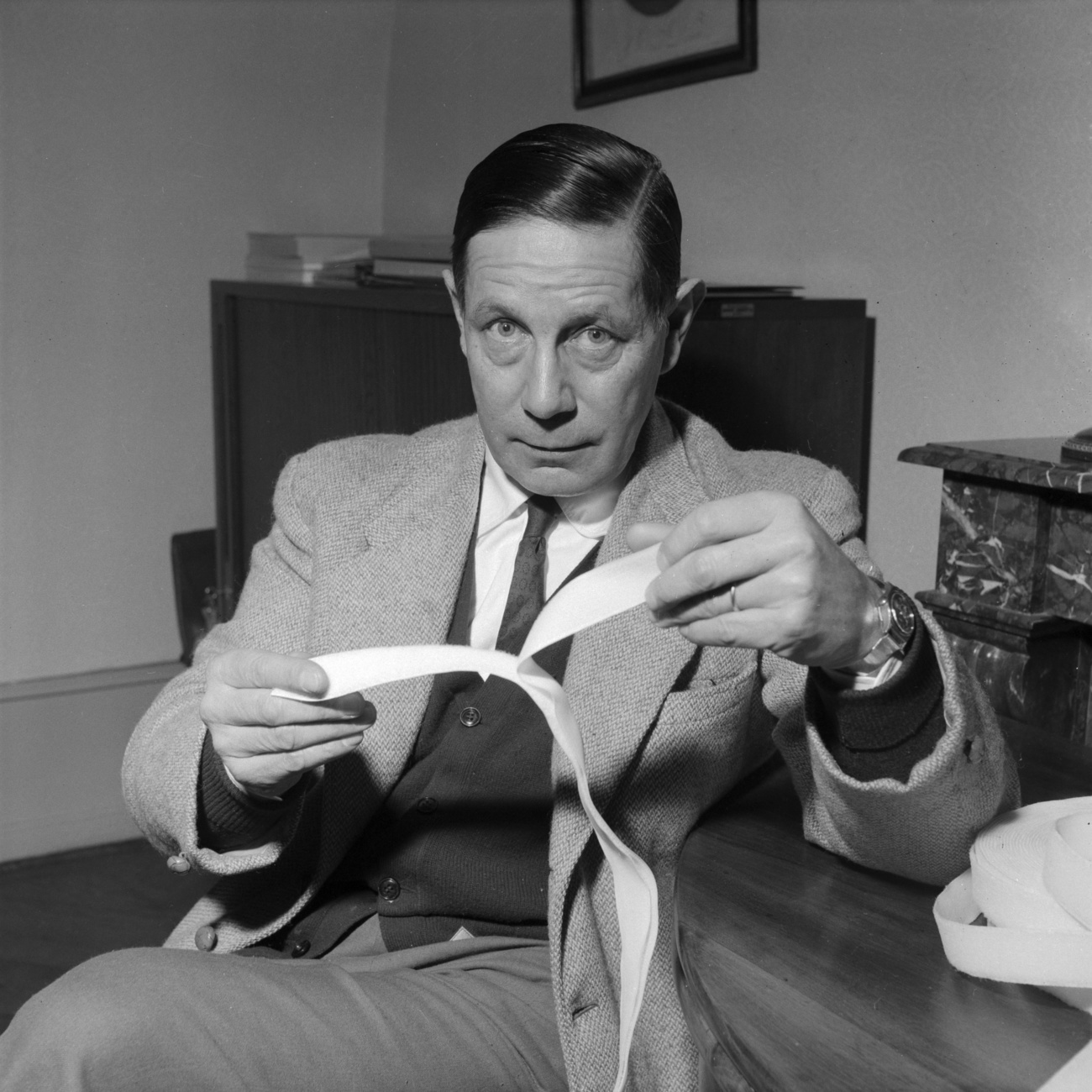
Georges de Mestral with his invention in 1959.
(KEYSTONE/PHOTOPRESS-ARCHIV/Alain Gassmann)
Diversions via outer space
Nevertheless, most people back then still didn’t seem to trust Velcro. The fashion industry gave the invention the cold shoulder and the product flopped. “The fashionistas of the 1960s wanted nothing to do with it,” wrote the Smithsonian magazineExternal link.
“It was extremely useful, but also extremely ugly,” wrote US magazine Mental FlossExternal link, explaining that the only group that found it appealing was the burgeoning aerospace industry.
“Astronauts didn’t want to fiddle with zippers and laces while trying to get in and out of their spacesuits, and they also needed a way to keep their various personal items and food from floating away in zero gravity,” it said.
The astronauts also didn’t mind the “ratchet” sound when opening the fastener, which, according to various reports at the time, seems to have downright shocked the fashion world.
As a result, the Velcro fastener ended up playing a supporting role in the first moon landing on July 21, 1969, as did the Omega Speedmaster and the University of Bern’s solar sail.
Worldwide success
The television reports showing, among other things, how the astronauts worked with Velcro generated enormous public interest worldwide. The system became synonymous with high-tech and reliability under extreme conditions. It was regarded as “space technology”, which was extremely fashionable at the time.
Meanwhile, the world of sport and the outdoor sector had also discovered the simple fastener. It was used in sports equipment, children’s shoes, orthopaedic splints, leisure wear and camping equipment.
Find out in this article which other innovative applications are modelled on nature:
More
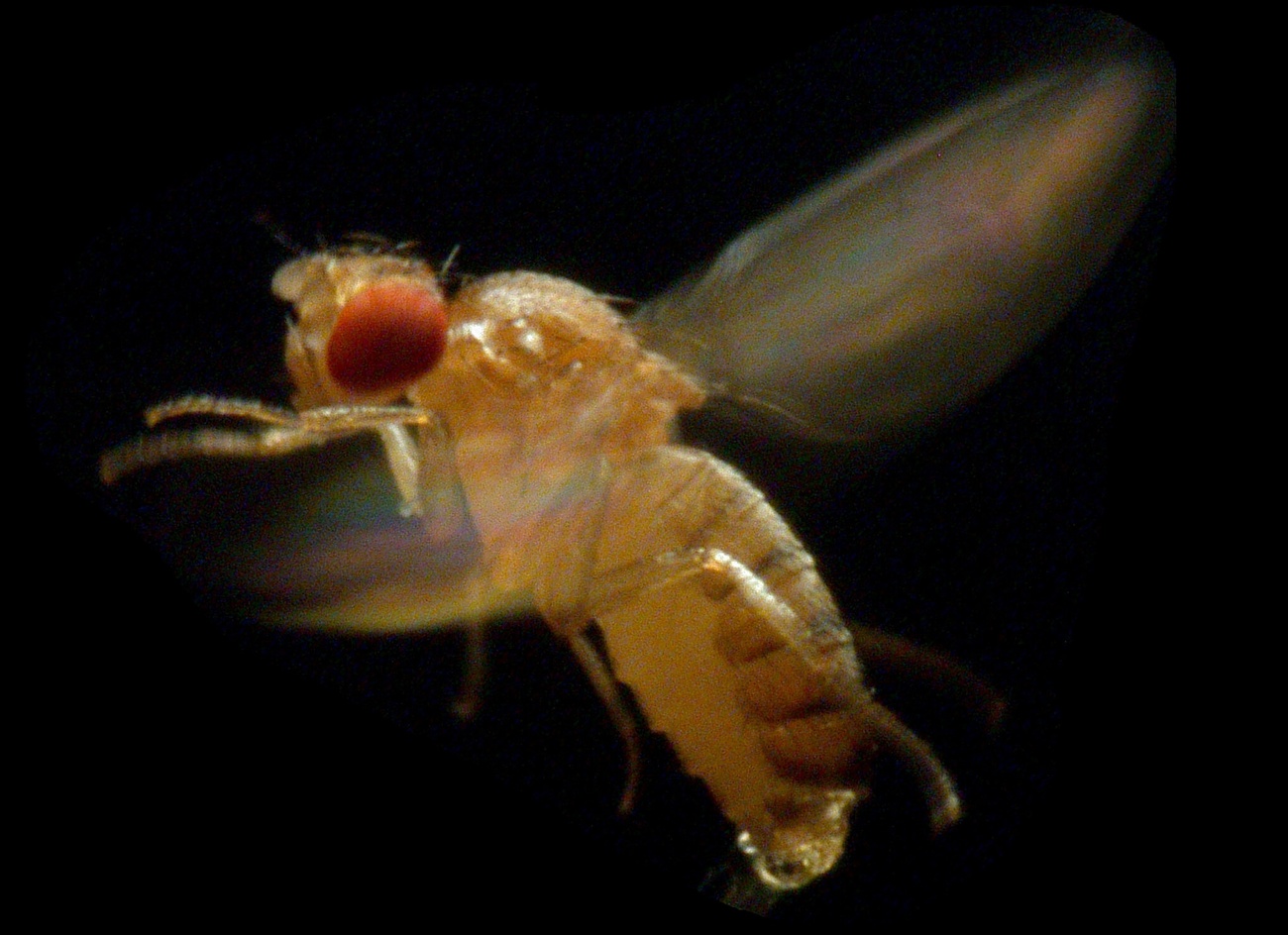
More
Studying fruit flies to help build better robots
The Velcro fastener finally became suitable for the masses thanks to the streetwear of the skater and hip-hop scene in the 1980s and 1990s, whose designers used it as a stylistic device. Sneakers with Velcro fasteners became cult.
Eventually, the fashion industry also got on board and has been using the fastener more and more in its designs – even in haute couture, which had previously turned up its nose.
High-tech and art
Since the patent expired in 1978, various manufacturers have developed the hook-and-loop fastener. The system is now also available with mushroom-shaped heads that snap into each other, made of metal or with magnets or nanoscale fasteners that stick to smooth surfaces.
And Velcro is no longer considered ugly. International artists such as Rachel Fitzpatrick and Yong Joo Kim have discovered the material and bring out the most beautiful side of Velcro in their works.
George de Mestral, who did not become rich from his invention and died in 1990 at the age of 82, would certainly have been delighted.
More

More
How a Swiss invention hooked the world
Edited by Balz Rigendinger. Adapted from German by Thomas Stephens
With our SWIplus app, you receive a summary of the most important news from Switzerland every day, plus the main news programmes from Swiss public television and personalised monitoring of developments in the canton of your choice. Find out more about the app here.