


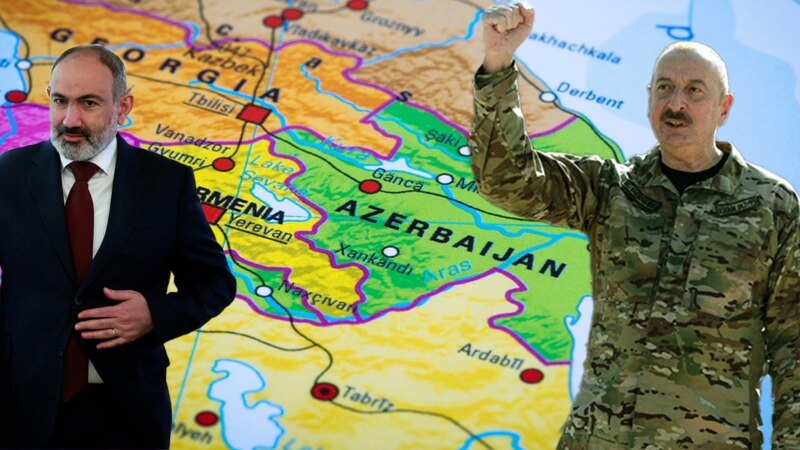
A US proposal to place the proposed Zangezur Corridor — a critical link between mainland Azerbaijan and its Naxcivan exclave via southern Armenia — under American management has deepened fault lines in the South Caucasus and stirred unease in Iran.
At stake is not just regional connectivity but the geopolitical order along Iran’s sensitive northern frontier.
For Iran, the 43-kilometer corridor through Armenia’s Syunik Province cuts to the core of its strategic calculations.
Hamidreza Azizi, a fellow at the German Institute for International and Security Affairs, warned that the plan would “deprive Iran of its natural land access to the South Caucasus through Armenia,” placing it at the mercy of a route “controlled by Azerbaijan or other international actors.”
Speaking to RFE/RL, he called the corridor “the last nail in the coffin,” a step toward what some observers term Iran’s “geopolitical suffocation.”
If Baku gains control or foreign management is introduced, Iran would lose leverage over its northward trade.
“Iran would be almost exclusively reliant on Azerbaijan for trade not only with the South Caucasus, but also with Russia and Europe,” Azizi noted, warning of “a serious blow to Iran’s geoeconomic standing.”
He added that sidelining Iran’s route through Armenia could also reduce its role in China’s Belt and Road Initiative, weakening its value as a partner to Beijing.
Security And Regional Order
Tehran’s main concern is clear: the corridor could expand Turkish influence and, now, bring a direct US presence.
“The biggest concern in Iran is that such a corridor would, once and for all, end any prospects for Iran’s involvement in…East-West transport,” Azizi said. A US-managed route heightens these anxieties by placing American interests “directly on Iran’s northern border.”
This shift comes as Russia’s leverage in the South Caucasus erodes amid the war in Ukraine and shifting power dynamics since the Second Karabakh War. Iran, once content to defer to Moscow, now finds its buffer under threat.
With “limited strategic options,” Tehran is engaging all major actors while seeking “closer political and security cooperation with Armenia.”
According to Azizi, Iran’s official statements and military drills it has held in the area since 2021 are less about confrontation than signaling unwillingness to accept unfettered foreign presence on its borders.
Control, Transit, And Sovereignty
The US proposal has been met cautiously in Yerevan and Baku.
Azerbaijan views the corridor as a vital transport link to Naxcivan and part of post‑war integration.
Armenia fears it could threaten its sovereignty and insists any route remain under Armenian control, wary that true “corridor” status could mean surrendering authority.
Azerbaijan, meanwhile, is adamant that “there is no desire for any third party involvement,” said Richard Giragosian, director of the Regional Studies Center in Yerevan.
For Baku, the corridor is about unimpeded access to Naxcivan; any foreign supervision — American, European, or Russian — is unacceptable.
A Real Proposal Or Just A Stunt?
For Washington, the project highlights an attempt to exploit a rare power vacuum in the region as Russian influence wanes amid a souring of relations between Moscow and both Baku and Yerevan.
Giragosian voiced skepticism about the plan: “I don’t take the proposal very seriously…skepticism better defines the view in both Baku and Yerevan.”
He called it a “reckless real estate deal” and questioned whether Washington grasps the region’s complexities.
“It’s more about pursuing a [Nobel] Peace Prize for President Donald Trump…without any real preparation and little potential for follow through.”
Russia’s management of Armenia’s railway networks and Western sanctions also raise feasibility issues.
“It would make it complicated, because…a US private company going in and managing road and rail while it’s Russian owned or managed,” Giragosian said.
For Tehran, the corridor debate reflects deeper anxieties about encirclement, isolation, and loss of leverage.
Iran’s options to counter any project are limited, constrained by recent setbacks in the Middle East and last month’s conflict with Israel.
Tehran hopes for renewed Russian resistance to a Western presence, but shifting power dynamics leave Iran with diminishing influence.
Meanwhile, both Armenia and Azerbaijan remain wary of surrendering control or sovereignty, clinging to their own visions of what the corridor should be.
Ultimately, the Zangezur Corridor has become less a route of transit than a flashpoint where competing visions of sovereignty, influence, and regional order collide.


