


The UN Security Council is expected to vote next week on a revised resolution aimed at restoring commercial shipping through the Strait of Hormuz, as global powers remain divided over how far to go in confronting Iran’s blockade of the critical waterway.
The latest draft, put forward by Bahrain, has reportedly been scaled back after opposition from veto-wielding members China, Russia, and France, who objected to earlier language that would have authorized countries to use “all necessary means” to secure the waterway.
That led to a delay in holding the vote, which was originally scheduled for April 3, then April 4, then rescheduled again.
Diplomats said the vote has now been postponed until next week, although no new date was announced.
The Associated Press reported that a revised version of the text now allows only for “defensive measures” to ensure safe passage through the strait and adjacent waters, marking a compromise aimed at avoiding a veto while still enabling some form of coordinated response.
The vote comes at a pivotal moment in the war that began with joint US-Israeli strikes in late February, with Iran’s effective closure of the strait roiling global energy markets and sparking longer-term fears of fallout from blocked fertilizer and supply chain shipments.
China has remained publicly opposed to any resolution that could legitimize the use of force, with Fu Cong, Beijing ambassador to the UN, saying that “any such authorization would inevitably lead to further escalation and serious consequences” as he urged members to prioritize a political settlement.
“Accepting a military response to the strait’s closure would legitimize use of force, preemptive strikes, and unilateral security enforcement, at least from Beijing’s perspective,” wrote Jonathan Fulton, an expert on China in the Middle East at Zayed University in Abu Dhabi, in his newsletter tracking China in the region. “China doesn’t have the hard power to prevent this outcome, but it does have a veto on the UN [Security Council] and there’s no way it’s going to dilute the value of that power.”
Russia took a similar position, arguing that the focus should be on ending hostilities rather than expanding security mandates at sea. Before Bahrain released its revised final draft, Russia’s UN Ambassador Vassily Nebenzia said the proposal “does not solve the puzzle.”
France has signaled it may be open to the revised language, emphasizing the need for narrowly defined defensive measures in its comments at the UN on April 2.
Diplomacy Over How to Confront Iran’s Chokepoint Strategy
The outcome of the vote remains uncertain, with diplomats closely watching whether the changes are sufficient to secure support — or at least abstentions — from the council’s most powerful members — Britain, China, France, Russia, and the United States — all of whom maintain veto power.
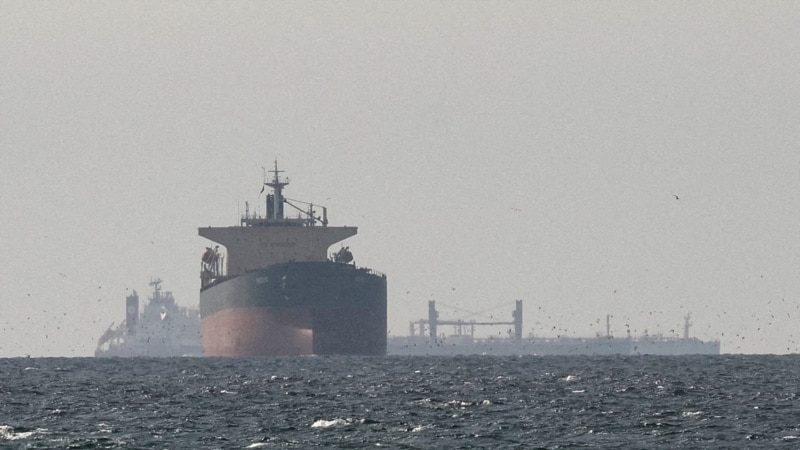
Iran has largely shut down traffic through the Strait of Hormuz, targeting vessels and tightening its control over one of the world’s most important energy chokepoints, where roughly one-fifth of global oil and gas supplies typically pass.
Tehran has also floated its own proposal for managing the strait, saying it is working with neighboring Oman on a system that would require ships to obtain permits and special licenses to transit the waterway.
European Union foreign policy chief Kaja Kallas rejected the concept, saying on social media that “international law doesn’t recognize pay-to-pass schemes.”
She also held an April 2 call with Chinese Foreign Minister Wang Yi about the war in Iran and how it is affecting the global economy.
“Iranian attacks on civilian ships, and the threat of more, have brought traffic in the Strait of Hormuz to a near halt,” Kallas said on social media. “This is why restoring safe, toll-free freedom of navigation in the strait, consistent with the Law of the Sea, is an urgent priority.”
Only a trickle of ships have sailed through the Strait of Hormuz since the war began. Those have mostly been vessels associated with nations that Iran considers friendly, and a system is emerging whereby Tehran pre-approves transit along a route that hugs close to its coast. Pakistan, for example, reached a deal for 20 ships to cross under its flag, and other Asian nations have also secured safe passage.
A container ship signaling French ownership also exited the Strait of Hormuz on April 3, in what appears to be the first known transit by a vessel linked to Western Europe since the start of the war.
The standoff at sea has become one of the central flashpoints, amplifying its economic fallout far beyond the region.
US President Donald Trump has signaled that Washington will not take the lead in reopening the waterway, instead urging countries that rely more heavily on Gulf energy supplies to act.
Gulf states, many of which host US forces and have been targeted by Iranian strikes, have so far refrained from direct retaliation, wary of escalating into a wider regional war.
The humanitarian and economic stakes are also rising. UN officials warn that disruptions to energy supplies are already straining economies in Asia and could soon hit Europe, while developing countries face the risk of a deepening cost-of-living crisis.
UN Secretary-General Antonio Guterres warned on April 2 that the situation was nearing a breaking point.
“We are on the edge of a wider war that could engulf the entire region,” he said, highlighting the risks posed by the near shutdown of the Strait of Hormuz.
“When the strait is strangled,” he added, “the world’s most vulnerable cannot breathe.”


