


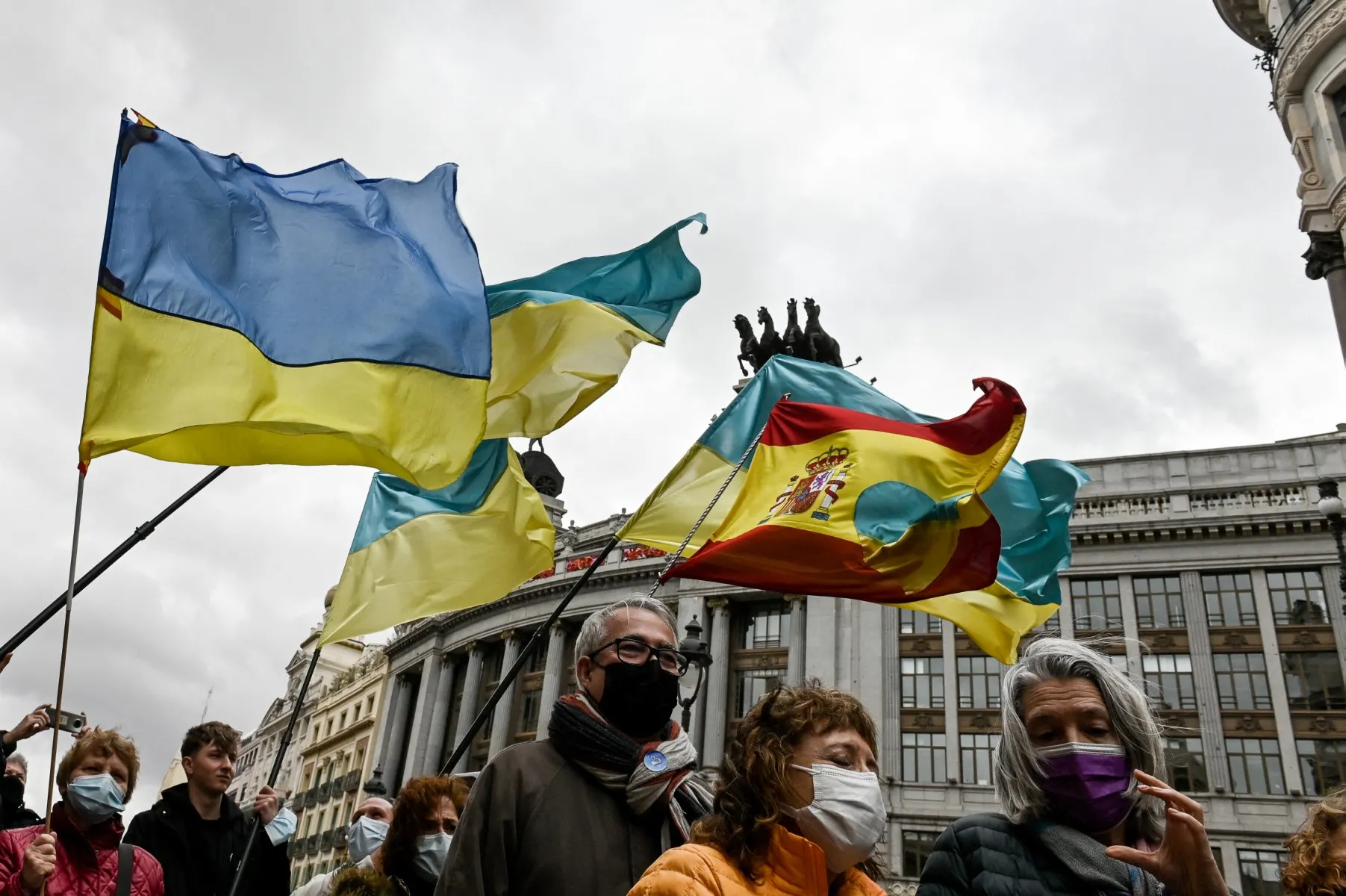
New advice from Spain’s Immigration Ministry has revealed that Ukrainians will not be included in the government’s controversial mass regularisation process that could see as many as 800,000 undocumented migrants given residency rights in the country.
Ukrainian nationals will not be included in Spain’s upcoming mass migrant regularisation, information released by the Immigration has confirmed.
The Socialist (PSOE) government in January approved a decree which will give at least 500,000 undocumented migrants the right to work and reside in the country.
READ ALSO: The myths surrounding Spain’s mass regularisation of migrants
According to the Funcas think-tank, however, around 840,000 undocumented migrants lived in Spain at the beginning of January 2025.
Many Ukrainians in Spain, however, are on short-term residency stays due to the war with Russia. Government figures show that over the past four years, more than 264,000 have been granted temporary protection in Spain, with around 30 percent of them being children (77,688).
These figures put Spain fourth in the European Union in terms of the number of temporary protection grants issued to people arriving from Ukraine, accounting for 5.4 percent of the total.
Those without papers, however, will not be able to benefit from the government’s mass regularisation programme.
Posting on social media on Easter Monday, the Ministry of Inclusion, Social Security and Migration stated that “the extraordinary regularisation process is not intended for all foreign nationals”.
Advertisement
It goes on to specify in the case of Ukrainians: “If you arrived in Spain as a displaced person due to the conflict in Ukraine and hold a residence permit for temporary protection, this special procedure does not apply to you.”
“In the coming weeks, specific information will be provided for people with temporary protection,” adds the post.
Though it is now confirmed that Ukrainians cannot benefit from the measure, as The Local has already reported on, much of the misinformation on social media suggests that this amnesty will principally benefit African migrants who arrived in Spain on boats.
In reality this is a tiny proportion of the people who will benefit.
The vast majority of paperless migrants affected by the blanket regularisation are Latin American. Funcas data shows 70 percent of undocumented migrants in Spain come from South American countries, while Central America and the Caribbean account for around 17 percent.
Advertisement
The timeline for the application process remains unclear, however.
The Ministry previously outlined the application window as beginning in the “first few weeks” of April. However the new update provided no new information on when the process will begin, leaving many in Spain to expect it to be delayed.
Spanish media reports that the pro-immigration Regularización Ya movement is confident that the final text will be published before 15 April and that, in light of this delay, the government will put in place “all necessary measures to ensure that no one is left out of this historic opportunity”.
READ ALSO: Q&A – How Spain’s mass regularisation of undocumented migrants will work


