


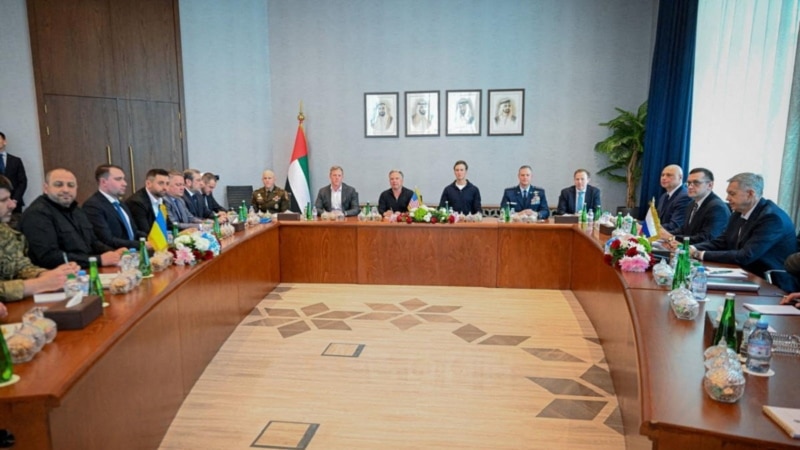
Russian and Ukrainian officials have begun a second day of US-brokered talks aimed at ending Moscow’s nearly four-year-old war on Ukraine, as negotiators grappled with major sticking points about Ukrainian territory and security guarantees.
Kirill Dmitriev, who is the Kremlin’s lead envoy, said on February 5 there had been “progress” and positive movement in the meetings. Ukraine’s lead negotiator, Rustem Umerov, said the first day of discussions had been “meaningful and productive, focusing on concrete steps and practical solutions.”
Ahead of the Abu Dhabi talks, both Russian and Ukrainian officials hinted at glimmers of progress. The meetings include current and former intelligence agency officials from both countries, and have focused narrow topics.
Ukrainian President Volodymyr Zelenskyy said that another exchange of prisoners of war could be coming soon, also a possible sign of progress.
However, Russia launched one of its largest drone and missile barrages of the war on the eve of the talks, pounding Ukraine’s energy infrastructure and deepening misery for civilians suffering through a bitterly cold winter.
Kremlin spokesman Dmitry Peskov told reporters that Russia’s position remains unchanged and that it is “absolutely clear and well understood by both Kyiv and the American negotiators.”
After initially holding face-to-face talks in months immediately following February 2022, Moscow and Kyiv did not hold direct negotiations until May of last year. President Donald Trump has been frustrated that the war continues to rage, despite his making resolution of it a top foreign policy priority.
The White House’s lead negotiator Steve Witkoff, who has met seven times with Russian President Vladimir Putin, attended the Abu Dhabi negotiations, along with Trump’s son-in-law, Jared Kushner.
The gap between two sides’ positions has narrowed somewhat, with the main sticking point being the question of territory in Ukraine’s Donbas region that Kyiv controls but Moscow claims.
Zelenskyy has proposed setting up a demilitarized zone, possibly with European peacekeepers. Russia has decidedly rejected that option.
Kyiv is also seeking binding security guarantees from the United States and other Western allies, that would obligate outside countries to come to Ukraine’s aid if Russia were to attack again in the future.
Ukrainian political analyst Ihor Reiterovych urged the West to offer stronger guarantees for Ukraine—and to avoid a repeat of the 1994 Budapest Memorandum. That agreement, signed by the United States, Russia, and Britain, guaranteed Ukrainian territorial integrity in exchange for Kyiv eliminating its nuclear arsenal.


