


Despite capturing Venezuela’s president, Nicolás Maduro, and his wife, Cilia Flores, Donald Trump’s intervention in the nation has so far been relatively light-touch: That is to say, it hasn’t racked up a huge bill. The United States doesn’t have troops on the ground, isn’t deploying any major resources, and has reportedly already secured a $2 billion oil deal.
As such, markets have been fairly indifferent to the action, despite it raising geopolitical tensions. Their reasoning is likely to be that an apparent win for the world’s largest economy is good news for everyone—particularly if it comes without too much conflict and cost.
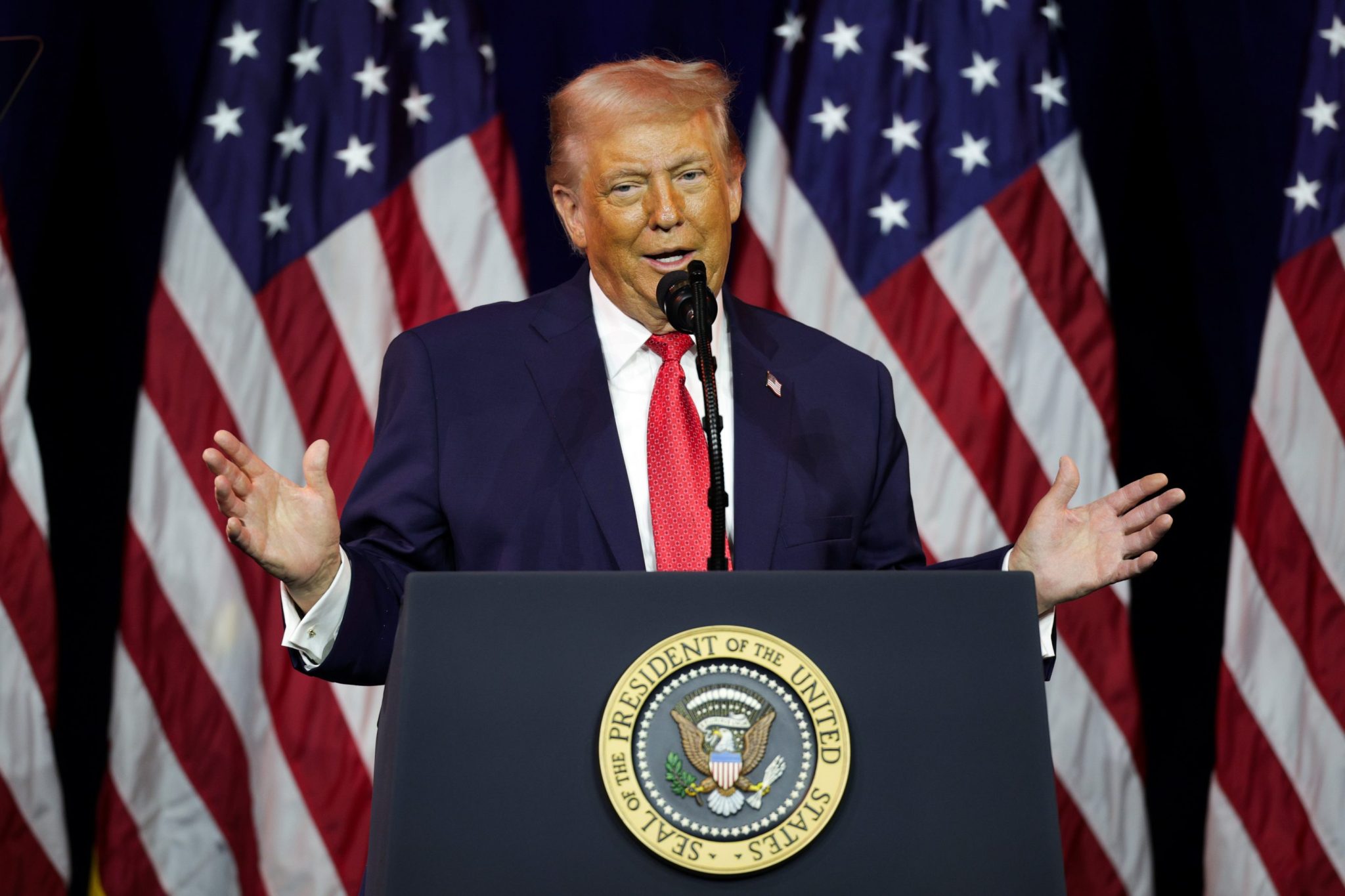
On the latter point, a snag has emerged: President Trump has now suggested the U.S. may end up reimbursing the “tremendous amount of money” needed to be spent by oil companies to rebuild Venezuela’s infrastructure.
The reasoning behind the U.S.’s interest in accessing Venezuela’s oil industry is clear: According to self-reported figures, the nation claims to have the largest oil reserves in the world, estimated at around 300 billion barrels. These haven’t been audited, and as Apollo’s Torsten Sløk wrote in a note to clients: “Venezuela’s self-reported crude oil reserves tripled from around 100 billion barrels in the early 2000s to 300 billion barrels in the late 2000s due to the reclassification of Orinoco Belt heavy oil as ‘proved.’”
“Much of the oil is extra-heavy, which has low recovery and a high cost to produce. There was no large new discovery or production increase to justify a tripling of reserves through exploration alone.”
That said, the opportunity for America to diversify its oil supplies, and potentially direct stock away from its economic rival China, may still be too good to pass up.
Previously, President Trump had claimed America’s major oil companies would be the ones putting their hands in their pockets to build the infrastructure needed to access this proverbial gold mine.
But speaking to NBC News earlier this week, he said that while the Venezuelan oil industry could be expanded and running within the next 18 months, “it’ll be a lot of money.” He added: “A tremendous amount of money will have to be spent, and the oil companies will spend it, and then they’ll get reimbursed by us or through revenue.”
The president declined to speculate how much oil companies would spend (and how much the U.S. government may be on the hook for as a result), simply saying it will be a “substantial” amount of money “but they’ll do very well.”
Counting the cost
Before the suggestion that the U.S. government may end up footing the bill for rebuilding Venezuela’s oil infrastructure, analysts were of the opinion that the action would do little to move the economic needle. As Michael Pearce, chief U.S. economist at Oxford Economics, wrote in a note to clients Monday: “The U.S. attack on Venezuela over the weekend dramatically increases uncertainty about the future of its political regime, but the impacts for global oil prices and geopolitical tensions appear limited. Therefore, we won’t change our baseline forecast for the U.S. economy.”
He highlighted that trade and financial linkages between the nations are far smaller today than previously, after decades of sanctions and political pressure. American exports to Venezuela were just $3.6 billion over the past 12 months, less than 0.2% of total exports, while imports are similarly small and banking-sector exposure is low.
But other economists are already nervously eyeing the longer term, questioning whether tensions will escalate and the U.S. will be forced to employ a heavier (and more expensive) hand which has ramifications for America’s sizeable budget deficit. The likes of Paul Donovan at UBS said earlier this week this would be a key concern for investors.
Desmond Lachman, senior fellow at the American Enterprise Institute, said the same thing: “My problem is that the budget deficit is so bad to begin with, and Venezuela is certainly not going to improve it. If anything, Venezuela makes it worse, so I think we’ve really got a big budget problem.”
This story was originally featured on Fortune.com

