


Onshore, women in this tropical zone gather to mend torn nets, sort the day’s catch, and prepare their harvests for the market.
Among them is Christina Guevarra, who gently frees a blue swimming crab from her net. “From February to May, we are grateful,” she told the UN ahead of the International Day of the Tropics marked annually on 29 June. “But after these months, especially when the rainy season begins, we have to find other ways to earn.”
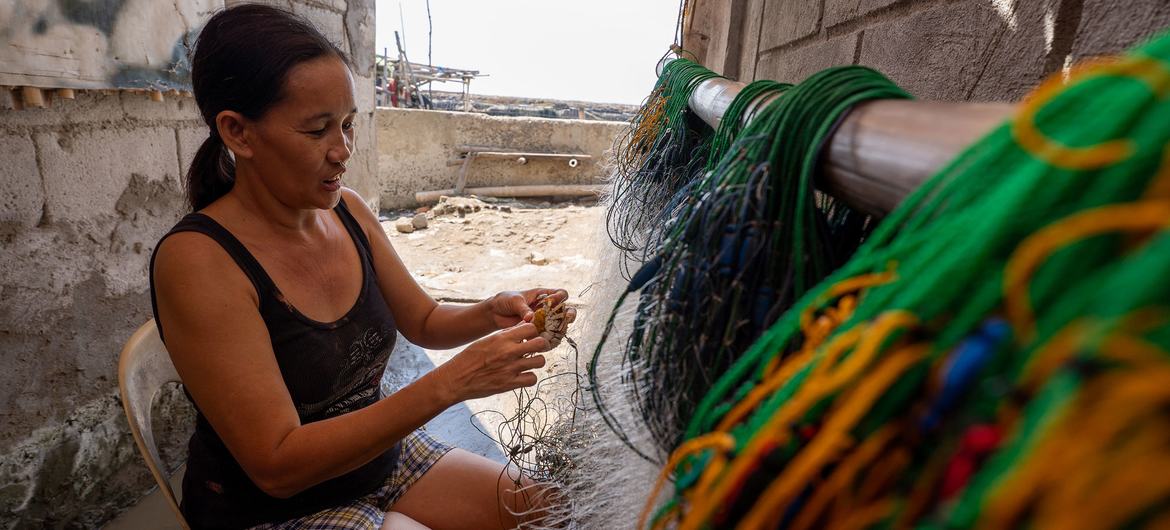
Christina Guevarra removes crabs from fishing nets.
Simple but hard life
Christina’s family, like many others in Sasmuan, relies on the river’s bounty, a livelihood increasingly threatened by dwindling fish populations and environmental degradation.
“It’s difficult in coastal communities like ours because we are so dependent on the river’s harvests,” she explained. “Life for us fishers is simple, but it’s also hard.”
For generations, the local people have depended on the Sasmuan Pampanga coastal wetlands, part of a watershed that drains into Manila Bay.
But pollution, poor waste management, and unsustainable practices now imperil its biodiversity and the local economy.
“The wastes we see in the river also come from upstream communities,” said Irene Villar, Assistant Head of Pampanga’s Environment and Natural Resources Office. “Even with proper waste disposal and policies in place, enforcement remains a challenge.”
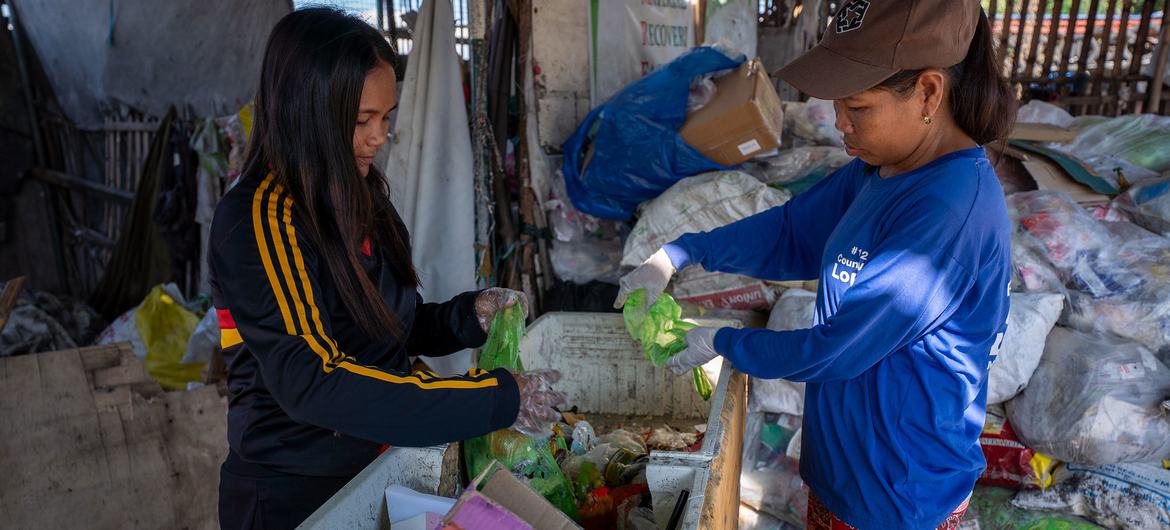
Edna Bilacog and Rose Ann Tungol have been supporting their families as waste segregators.
To address these issues, the Integrated River Basin Management (IRBM) Project which is financed by the Global Environment Facility, implemented by the UN Development Programme (UNDP) has partnered with the Provincial Government of Pampanga and local groups to promote sustainable practices including not only on conserving waterways but also on uplifting vulnerable communities—especially women.
In Sasmuan, women like Edna Bilacog and Rose Ann Tungol find work at a Materials Recovery Facility, sorting household waste. Their pay, about 175 pesos a day (US$4), is well below the local minimum wage. “What we earn barely meets our needs,” they admit, but their work helps sustain their families.
Net gain
Others, like Maricar Guevarra, have relied on traditional crafts. A skilled weaver for over 20 years, she earns about $4 per repaired net and $13 for a large one known as a panti, which takes four days to complete. “This has been my main source of income, especially when my husband fell ill,” she said. To make ends meet, she also does laundry and sells home-cooked meals.
Women also lead the crab trade, detangling crustaceans from nets and preparing them for market, though unsustainable aquaculture from nearby fishponds threatens their livelihood. In response, many have diversified. During the off-season, they work as helpers, labourers, or store employees in nearby towns.
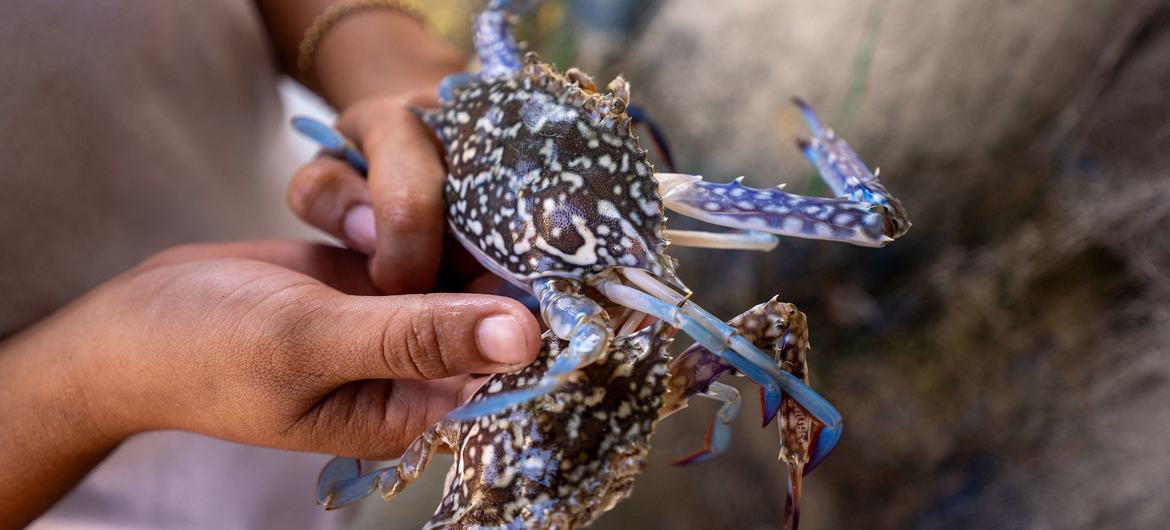
The blue swimming crab is abundant in the Sasmuan Pampanga coastal wetland.
In the village of Batang 2nd, a women’s group turns sea purslane, a wild riverbank weed, into atchara (pickled salad), while on the mainland, Patricia Culala has built a business around crab paste. “The fat from the crab is the tastiest part—that’s what I preserve and sell in bottles,” she explained. “Through this business, I was able to send my children to school.”
The women of Sasmuan are both resilient and innovative. But without sustainable solutions, their future remains uncertain. Fair wages, community-led conservation, and responsible river management are essential to preserving the wetlands, and the lives they nourish.


