


Climate and science correspondent

 Michael Brown
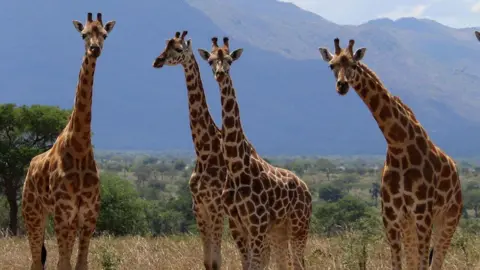
Giraffes are one of the world’s most distinct and well-loved creatures, always thought to be one species.
But now scientists at the International Union for Conservation of Nature say we can welcome three more species of the world’s tallest mammal.
It’s not the first time researchers have suggested there are four species of these giants strolling on our planet, but the latest assessment puts an official stamp on it.
How did scientists work it out? And what does it mean for the future of the animal?
Scientists compared the skull size and head shape of different giraffes and concluded there was enough genetic diversity for four groups to be considered as different species.
The researchers looked at natural features across Africa such as deserts, rivers and valleys that could have separated animals in the past, meaning they evolved separately from each other.
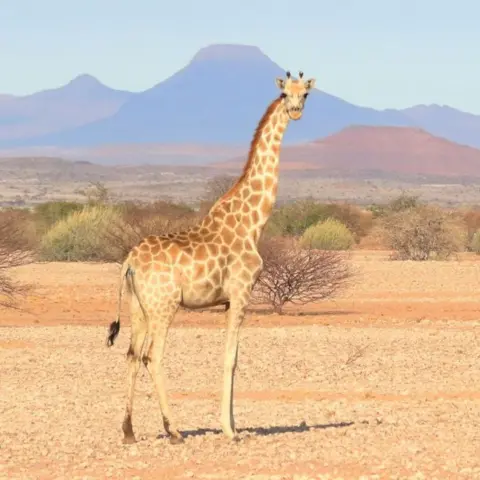
Say hello to the Southern giraffe, one of the newly-recognised species.
 Michael Brown
This giraffe lives in Angola, southern Botswana, Namibia, southern Zimbabwe, Zambia, and southwestern Mozambique.
Two rivers (the Kunene and Zambezi) and rainforests in the Congo Basin probably separated the animals from overlapping with other giraffes.
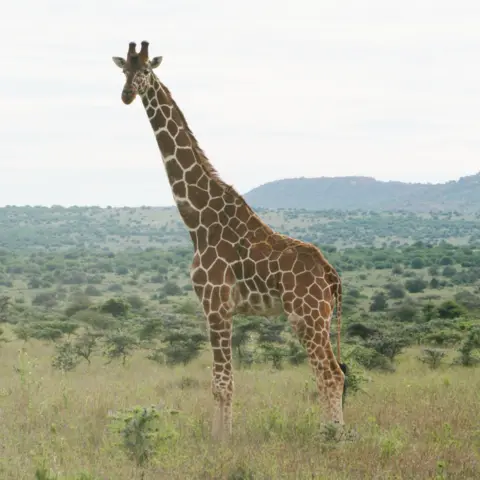
The second new species is the Reticulated giraffe.
 Michael Brown
This giraffe lives in the open savannas and wooded grasslands of Kenya, Somalia, and Ethiopia.
Scientists think the Tana river, Ethiopia’s mountains and towns separated this animal from other giraffes in the north of the region.
It is also a migrating animal, which means it may have passed by other giraffes when it could have cross-bred.
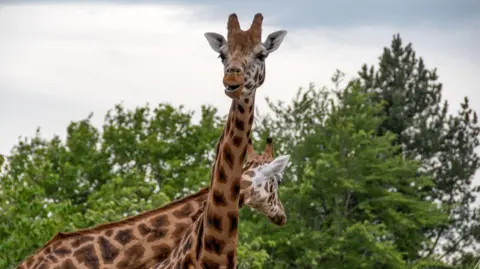
The third species we can officially recognise is the Northern giraffe.
 Getty Images
This animal lives in western Ethiopia, central and western Kenya, eastern South Sudan and Uganda.
Scientists say the Nile River and Lake Victoria, as well as its migration pattern, separated this giraffe from others.
The fourth and final species is the beautiful Masai giraffe, with its distinctive leaf-pattern hide.
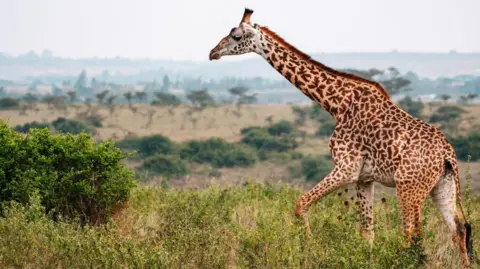 Getty Images
It lives in Kenya, Tanzania and Uganda, separated from the Northern giraffe by Lake Victoria and the Nile River.
Although its pattern makes it seem like it could be a marker of being a separate species, the scientists say that the hides vary even within one population of giraffes and as the animals age.
The International Union for Conservation of Nature (IUCN) says that identifying genetic difference is “vital” for conservation and managing giraffe populations.
“The more precisely we understand giraffe taxonomy, the better equipped we are to assess their status and implement effective conservation strategies,” said co-author of the report Michael Brown of the IUCN.
As a single species, the giraffe was classed as vulnerable to extinction, although some of the sub-species were increasing in numbers.
The IUCN will now re-assess the vulnerability of the four new species and their sub-species and says it hopes to better protect the majestic animals with the new information.


