


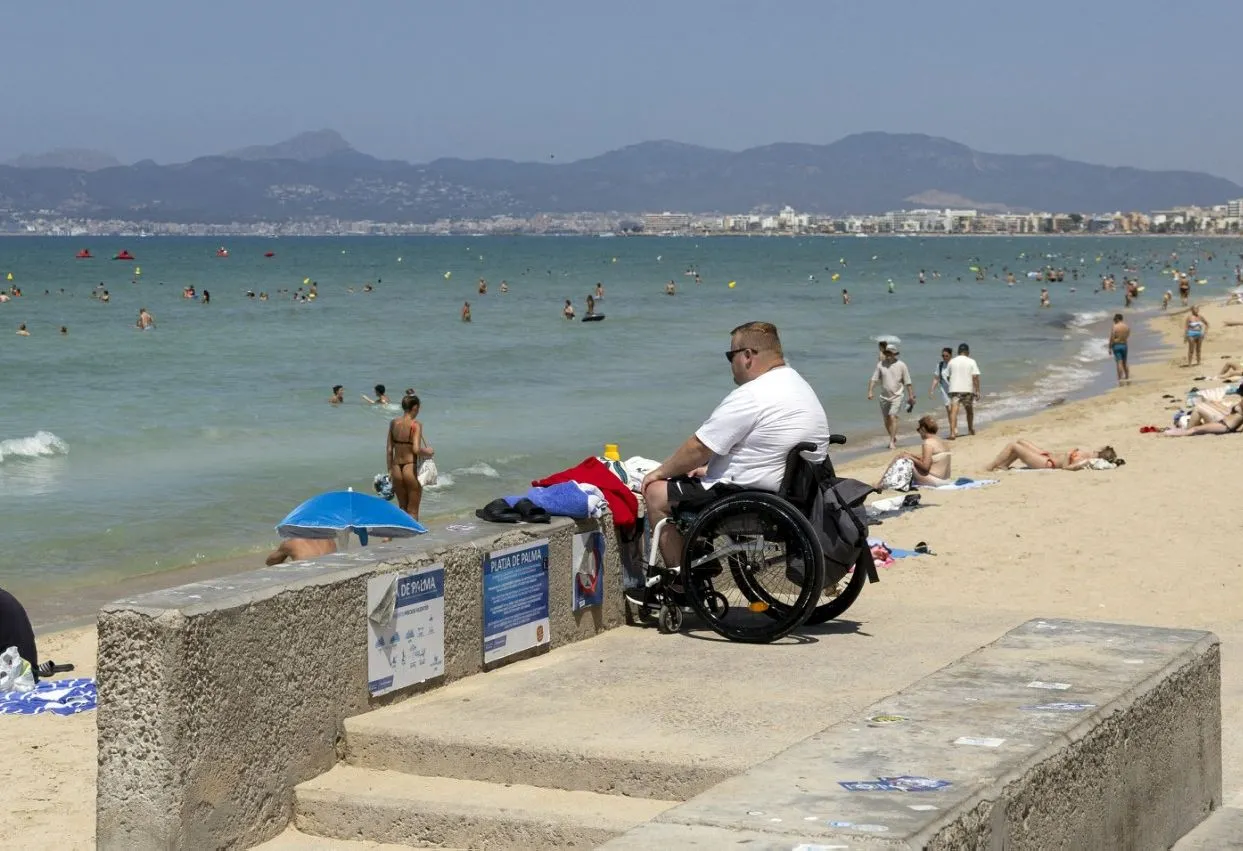
A royal decree widening access to healthcare in Spain will also align co-payment systems, expanding access to discounted and free prosthetics and wheelchairs for around 7 million people in the country.
Millions in Spain will soon be given access to discounted co-payment programmes for prosthetics and wheelchairs, with some even becoming completely exempt from payment.
More than 7 million people are to benefit from expansions to co-payments systems for purchasing prosthetics in Spain, as part of wide-ranging healthcare reforms announced this week.
Spain’s leftist government recently passed a new regulation governing the procedure for recognising the right to healthcare and public-funded treatment for foreign nationals residing in Spain without legal residency.
READ ALSO: Q&A – Who gets access to Spain’s public healthcare under new rules?
It is the “effective consolidation of the principle of universality of the national health system,” according to the official government press release.
However, the royal decree approved on Tuesday also reinforces free access to other essential healthcare services, including expanding orthopaedic products such as wheelchairs, prosthetics and other support devices.
This change is being undertaken by bringing prosthetic payments into line with pre-existing pharmaceutical and medicinal copayment systems.
As a result, more than seven million people, many of whom are already exempt from pharmaceutical co-payments in Spain, will now also be exempt from paying for specialist medical equipment like wheelchairs, the cost of which will be partly or fully covered by the Spanish healthcare system.
The main objective of the measure is to ensure that all people, regardless of their legal or economic situation, can access public healthcare without barriers.
Advertisement
Orthopaedic prosthetics and wheelchairs
The co-payment measure for prosthetics, wheelchairs and other support devices will bring it into line with the model already applied to medicines.
How does it work?
From now on, contributions to be paid by the user will be calculated on the basis of the product’s price and will depend on income level, following a structure similar to that of other co-payment systems in Spain.
How much are the discounts?
Many will become eligible for free wheelchairs and prosthetics, but others will gain access to discounted equipment.
People with incomes equal to or greater than €100,000 will have to pay 60 percent of the cost of the product.
For active insured persons with incomes between €18,000 and €100,000, the contribution will be 50 percent while those with lower incomes will pay 40 percent.
In the case of pensioners, the co-payment will be 10 percent of the price, except for higher income groups.
Some products included in reduced contribution categories will also have a 10 percent co-payment charge.
The regulation also provides for a maximum limit on the amount that users must pay, which will be established by ministerial order.
Advertisement
What about those already exempt from co-payments in Spain?
This essentially means that individuals and groups who were already exempt from pharmaceutical co-payments, such as low-income pensioners, people with disabilities, beneficiaries of certain social benefits and vulnerable groups, will not have to pay for the products.
Are these changes definitely going ahead?
Yes. The measure was approved by royal decree by the Spanish Cabinet, as part of the wider changes announced, which allows it to bypass parliament as Socialist Prime Minister Pedro Sánchez’s coalition government lacks a workable majority.
READ ALSO: How to get healthcare as a tourist in Spain


