


In a small village in the province of Málaga, a mesmerising celebration called ‘Los Rondeles’ takes place on two different dates in December.
Spain has so many different festivals that it’s hard to keep track of them all, from the beautiful and traditional to the the crazy and the downright wacky.
As we approach the Christmas season, there are several other religious festivals apart from the main obvious ones.
One of these is Los Rondeles, held in the village of Casarabonela in the province of Málaga, in Andalusia.
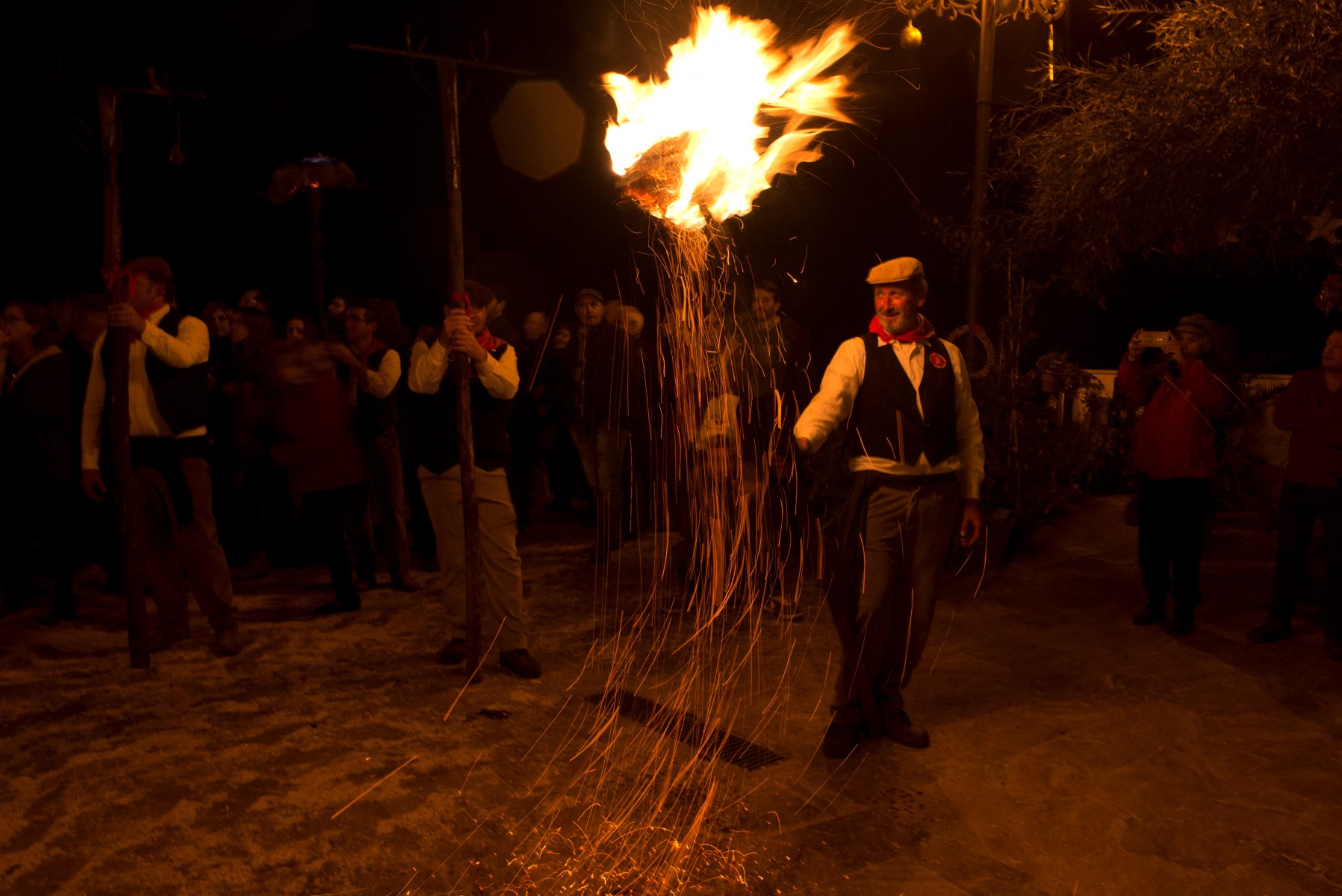
A man takes part in the Fiesta de los Rondeles procession dedicated to the Virgin Mary. Photo: JORGE GUERRERO / AFP
On the night of December 12th, on the eve of the feast of Santa Lucía, the villagers all join together to light and burn rondeles, which are rolled wicker mats soaked in a flammable oil.
It’s an atmospheric tradition to watch as burning torches fill the streets, along with religious statues carried on participants shoulders, similar to what happens during Easter or Semana Santa.
Advertisement
This festival though as a very different origin. Although it’s not clear when it actually started, it dates back the processions of the olive oil millers, carrying their lit wicker baskets, to show thanks to the Holy Shepherdess – ie. the Virgin Mary for a good harvest.
It’s a Malagueño version of Thanksgiving, if you will.
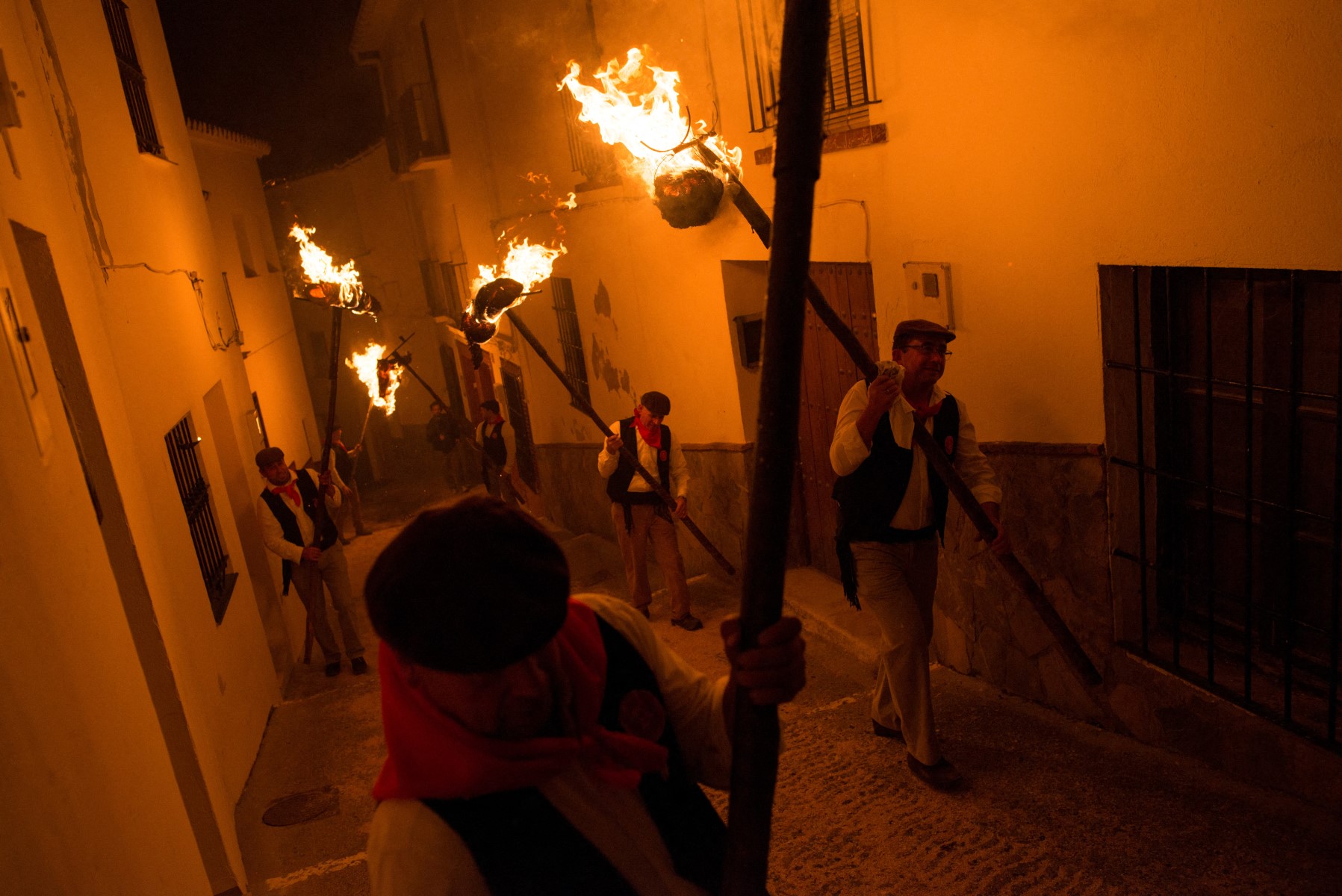
The rondeles are made from rolled wicker mats soaked in oil. Photo: JORGE GUERRERO / AFP
The festivities begin around 10pm when the fire that will burn the oil-soaked mats is blessed.
The rondeles are then lit and the procession begins from the square next to the Veracruz Shrine up to the highest part of the village – the Santiago Apóstol Parish Church.
A statue of the Virgen de los Rondeles also accompanies them, carried by more locals.
The whole procession is carried out to a soundtrack of traditional instruments, such as Moorish castanets, creating a dramatic atmosphere.
Once the whole party reach the Caño de Álora fountain around midnight, the flames are dampened down with the water and the procession ends at the Santiago Apóstol church, which used to be the site of an old Moorish mosque.
Here a prayer is sung to the Virgin, and her statue is left then, before extinguishing the flames completely. This signals time for the partying and revelry to begin, which goes on until the early hours of the morning.
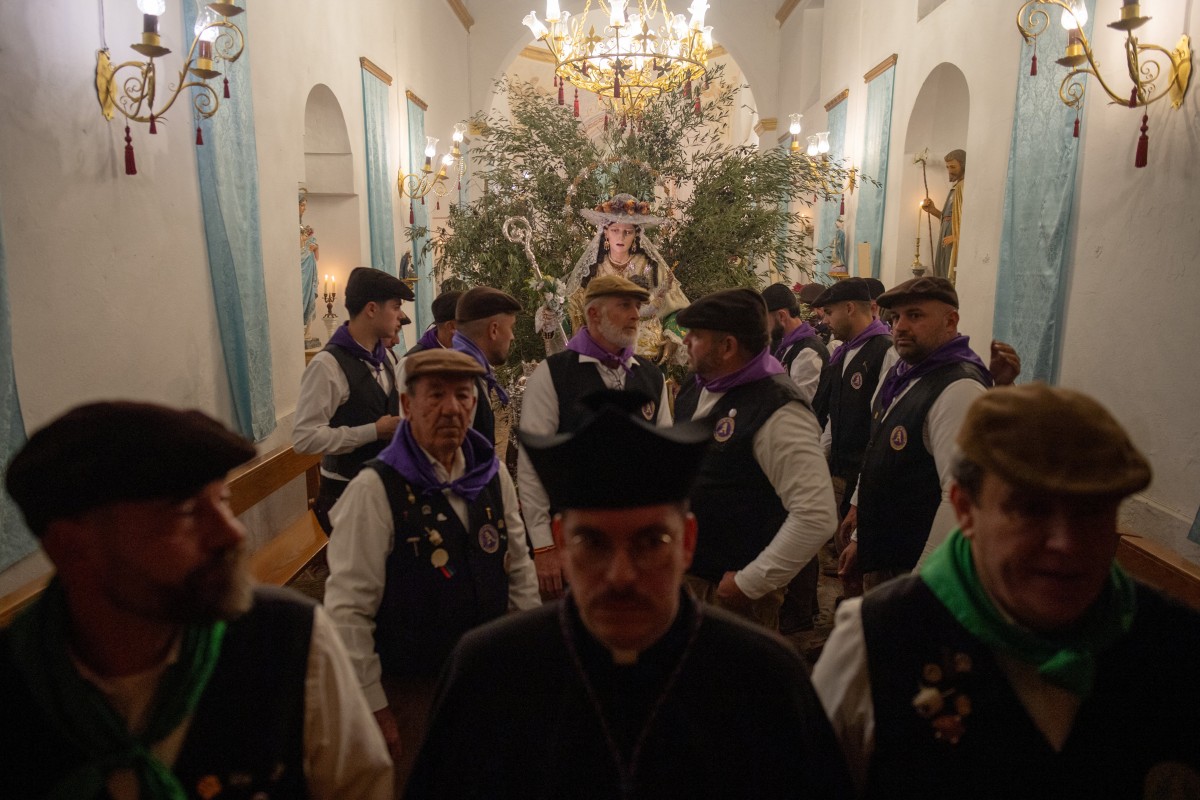
A hymn is sung for the Virgin Mary at a local church. Photo: JORGE GUERRERO / AFP
Advertisement
Then, on the the second Saturday after December 12th (this year on December 20th), the statue is carried back to its original shrine with another procession.
This time, the rondeles are carried by children (although they’re not lit) and Christmas carols are sung en route.
The route is instead illuminated by small oil lamps lining the way, placed outside each home.
If you get the chance to visit on December 20th or you plan a trip in time for next year’s celebration it’s well worth it to experience this unique tradition.


