


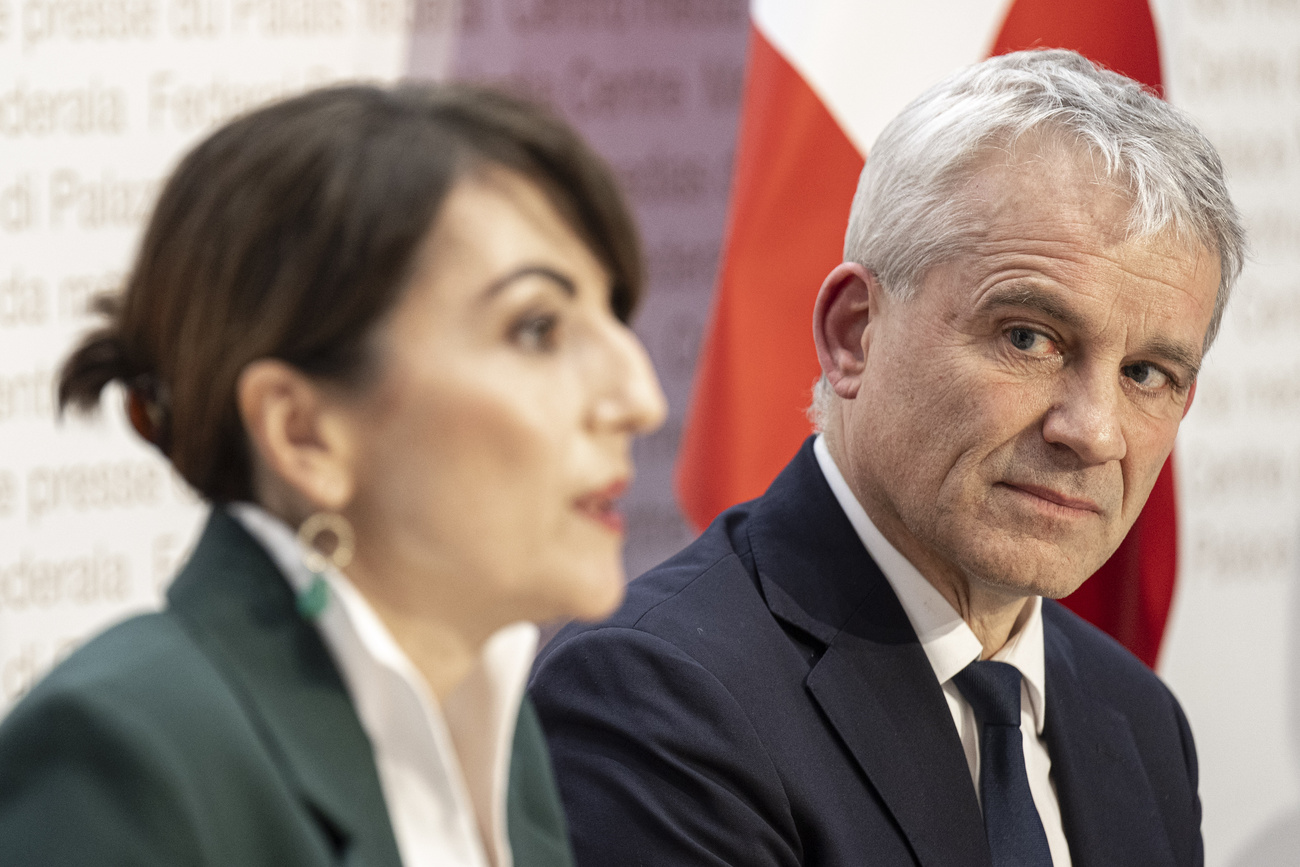
Beat Jans (right) und Eva Wildi-Cortes present the action plan
Keystone / Julien Grindat
Swiss justice minister Beat Jans has presented Switzerland’s new strategy for combating organized crime. The strategy addresses the growing threat posed by criminal networks.
+Get the most important news from Switzerland in your inbox
At the federal level, various legal adjustments are to be incorporated into a legislative package to combat organized crime.
With this strategy, the federal government, cantons, and municipalities aim to combat organised crime across all levels of government and mitigate the resulting social and economic damage.
+ “Switzerland too attractive to crime gangs”
“Disinformation, cyberattacks on critical infrastructure, terrorism, and violent extremism endanger the well-being of the population,” said Jans.
The strategy comprises three strategic goals, including measures to raise awareness and provide training to help authorities, businesses, and society better recognise the risks of organized crime in Switzerland.
+ Dirty money “remains threat to society”
Laws changes pending
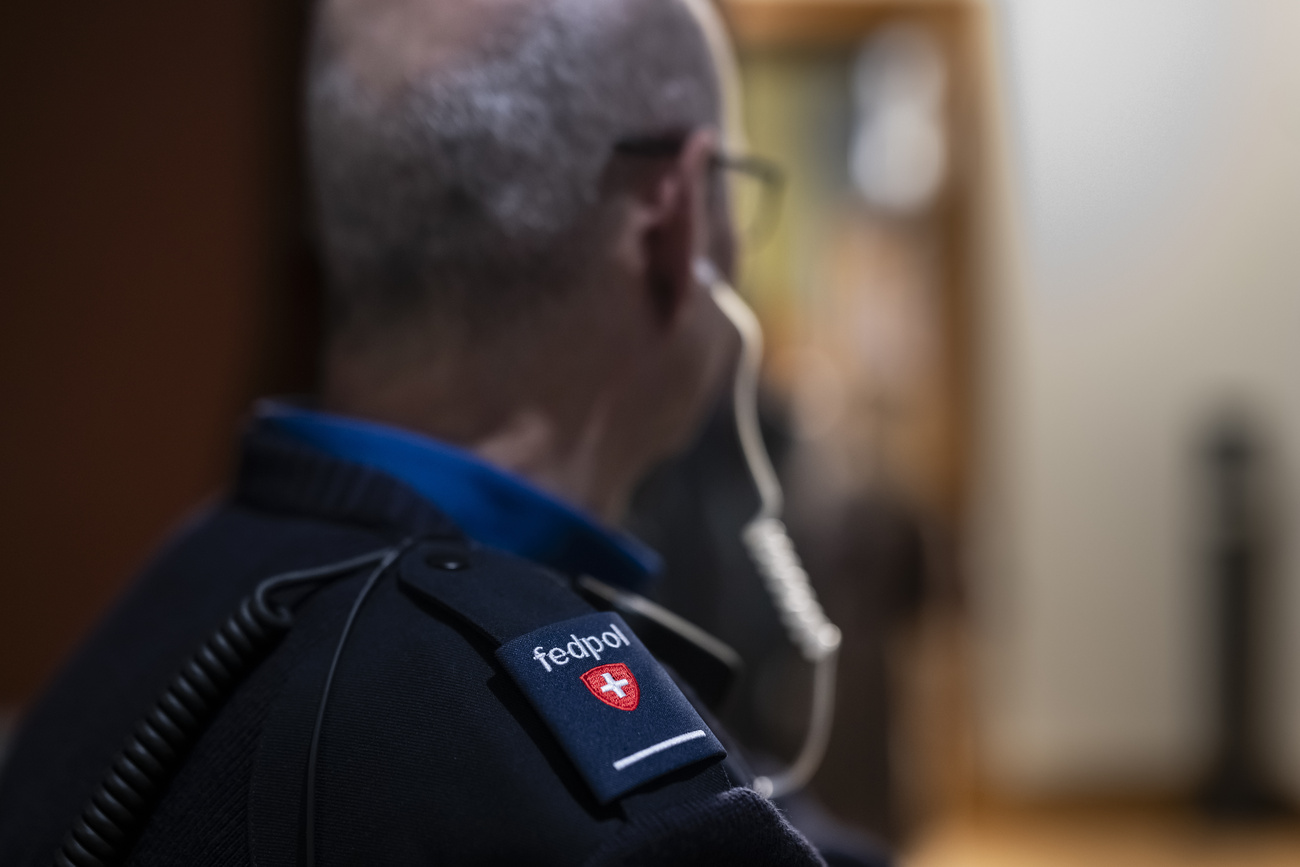
The Federal Office of Police (Fedpol) is already conducting awareness training for potentially affected authorities and will expand this effort.
More
More
Switzerland to adopt a national strategy to combat organised crime
Legal adjustments will make it easier for civilian authorities and organisations to report suspicious observations to law enforcement. “This includes, for example, lists of indicators for federal employees and new contact points,” says Eva Wildi-Cortés, Director of the Federal Office of Police.
The strategy aims to intensify cooperation between the federal government, cantons, and municipalities. Among other things, it seeks to create a legal framework to enable stakeholders to better exchange information and cooperate.
National and international information exchange will be strengthened, for example through joint investigation teams. Combating money laundering plays a central role.
“Organized crime is abusing our financial center to launder illicit funds,” said Jans.
Confiscating assets
Legal adjustments are to be developed to simplify the detection and prosecution of money laundering, as well as the freezing and confiscation of suspicious assets.
“We are currently far from being able to follow up on all leads regarding money laundering because we lack the resources. We want to create the necessary resources here,” said Jans.
Legislative adjustments are also planned in the area of criminal prosecution to enable simpler and faster sanctioning of criminal behavior by organised crime gangs.
The strategy will be implemented through a National Action Plan (NAP), which will be developed by the end of 2026. Measures requiring legislative changes will be bundled into a legislative package and are expected to be available as a consultation draft by the end of 2027.
Non-legislative measures, such as employee training, will be implemented from 2026 onwards.
200 new jobs
The federal government, cantons, and municipalities are to jointly provide the resources necessary for implementing the strategy.
The Federal Department of Justice and Police (FDJP) is examining alternative financing models for the Money Laundering Reporting Office Switzerland (MROS) by the end of 2026 and is developing a plan for increasing resources at the Federal Criminal Police Office (BKP).
These proposals will be submitted through the regular budget process. Parliament has also instructed the government to create up to 200 new positions at the BKP over the next ten years.
Translated from French by DeepL/mga
We select the most relevant news for an international audience and use automatic translation tools to translate them into English. A journalist then reviews the translation for clarity and accuracy before publication.
Providing you with automatically translated news gives us the time to write more in-depth articles. The news stories we select have been written and carefully fact-checked by an external editorial team from news agencies such as Bloomberg or Keystone.
If you have any questions about how we work, write to us at english@swissinfo.ch.


