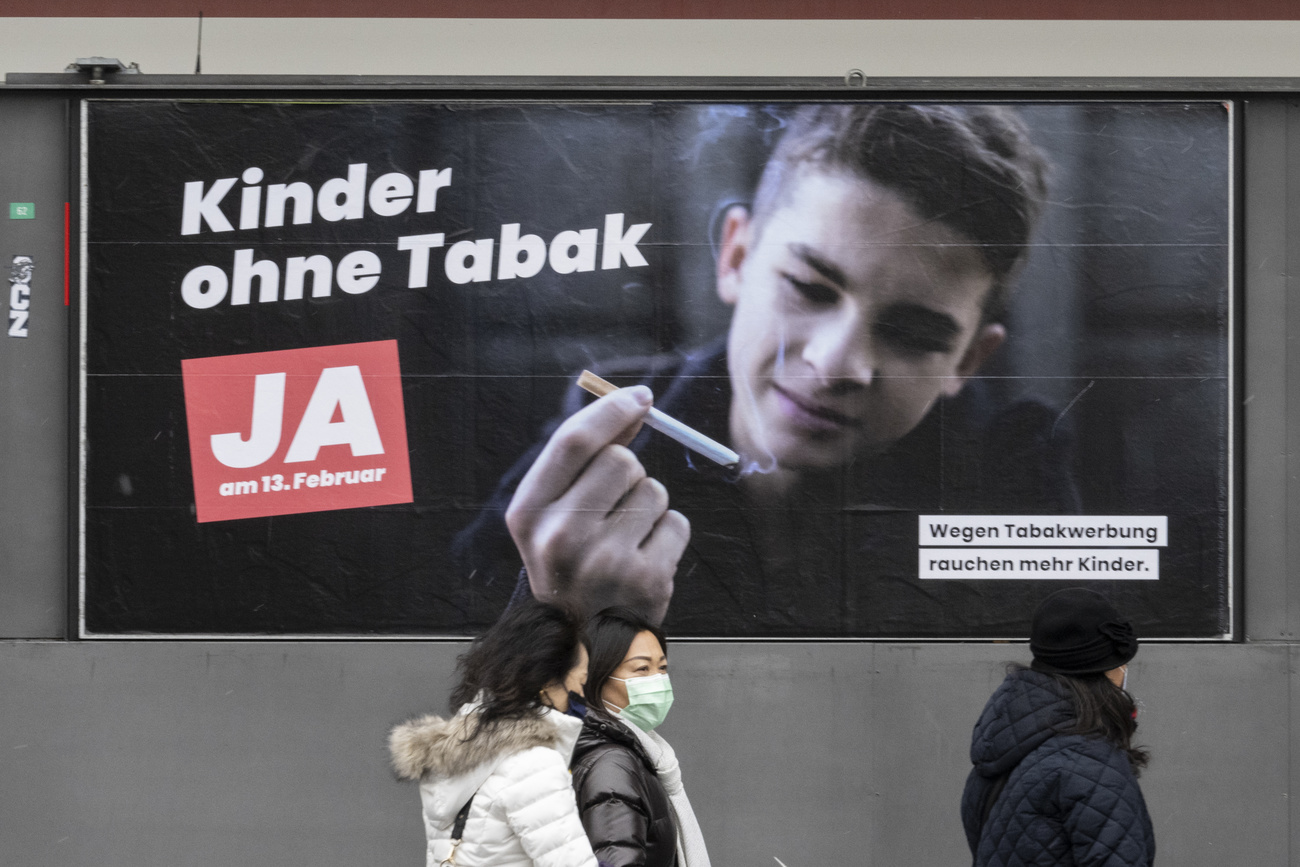
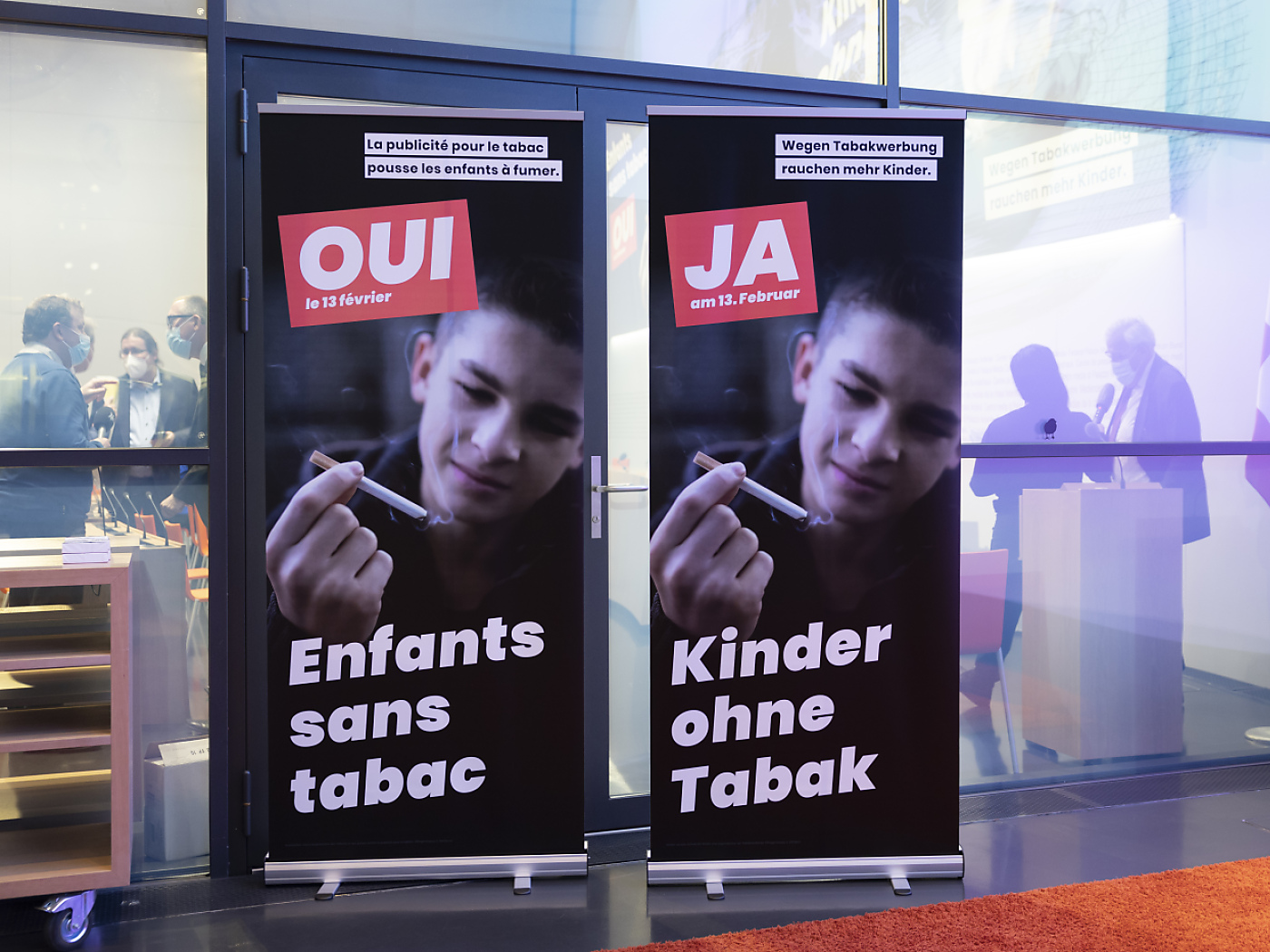
In 2022, 56.6% of Swiss citizens voted in favour of the “Children and young people without tobacco advertising” initiative, which called for a ban on “all forms of tobacco advertising accessible to children”.
Keystone-SDA
Generated with artificial intelligence.
Tobacco advertising will be banned in Switzerland to protect children, with a few exceptions. On Wednesday, parliament approved the implementation of the “Children and young people without tobacco advertising” initiative.
Tobacco causes around 10,000 deaths a year in Switzerland, representing one of the main public health problems. The health costs run into billions of Swiss francs.
In 2022, 56.6% of Swiss citizens voted in favour of the “Children and young people without tobacco advertising” initiative, which called for a ban on “all forms of tobacco advertising accessible to children”. The Federal Council’s revision of the law concludes the process.
More
More
Swiss back further restrictions on tobacco advertising
This content was published on
Voters have agreed to limit advertising for tobacco products that may be seen by young people in Switzerland.
The ban affects print media, events open to young people and sponsorship. The internet, apps and other electronic media are also affected, unless an age-control system is put in place.
The two chambers of parliament have agreed on an exception for the print media. Advertising may be permitted in the inside section of newspapers that are sold mainly by subscription and have a readership of at least 98% adults. An exception has also been made for publications intended primarily for the foreign market or exclusively for industry professionals.
In both chambers, left-wing parliamentarians fought to remove this exception. For Senator Flavia Wasserfallen of the Social Democratic Party, this provision is arbitrary. “Readership changes regularly. Newspapers should check every six months whether or not they can place advertising in their publication. Who’s in charge?” she declared.
More
More
Switzerland close to further restricting tobacco advertising
This content was published on
Switzerland moves a step closer to restricting tobacco advertising in the print media as one chamber of parliament votes in favour of measures.
The exception to the ban still allows around 50 newspapers to print tobacco advertising, pointed out Health Minister Elisabeth Baume-Schneider. She cited Le Nouvelliste and BaslerZeitung, which are read by thousands of young people. While this is good for democracy, it is not good for prevention. “Only a general ban will ensure that advertising does not reach young people,” she said. By 25 votes to 19, the senators followed the House of Representatives.
Public places
Tobacco advertising will also be banned in places accessible to minors, including cinemas. However, such advertising may be permitted provided that it is neither visible nor accessible to minors. Similar rules apply to sponsorship of events.
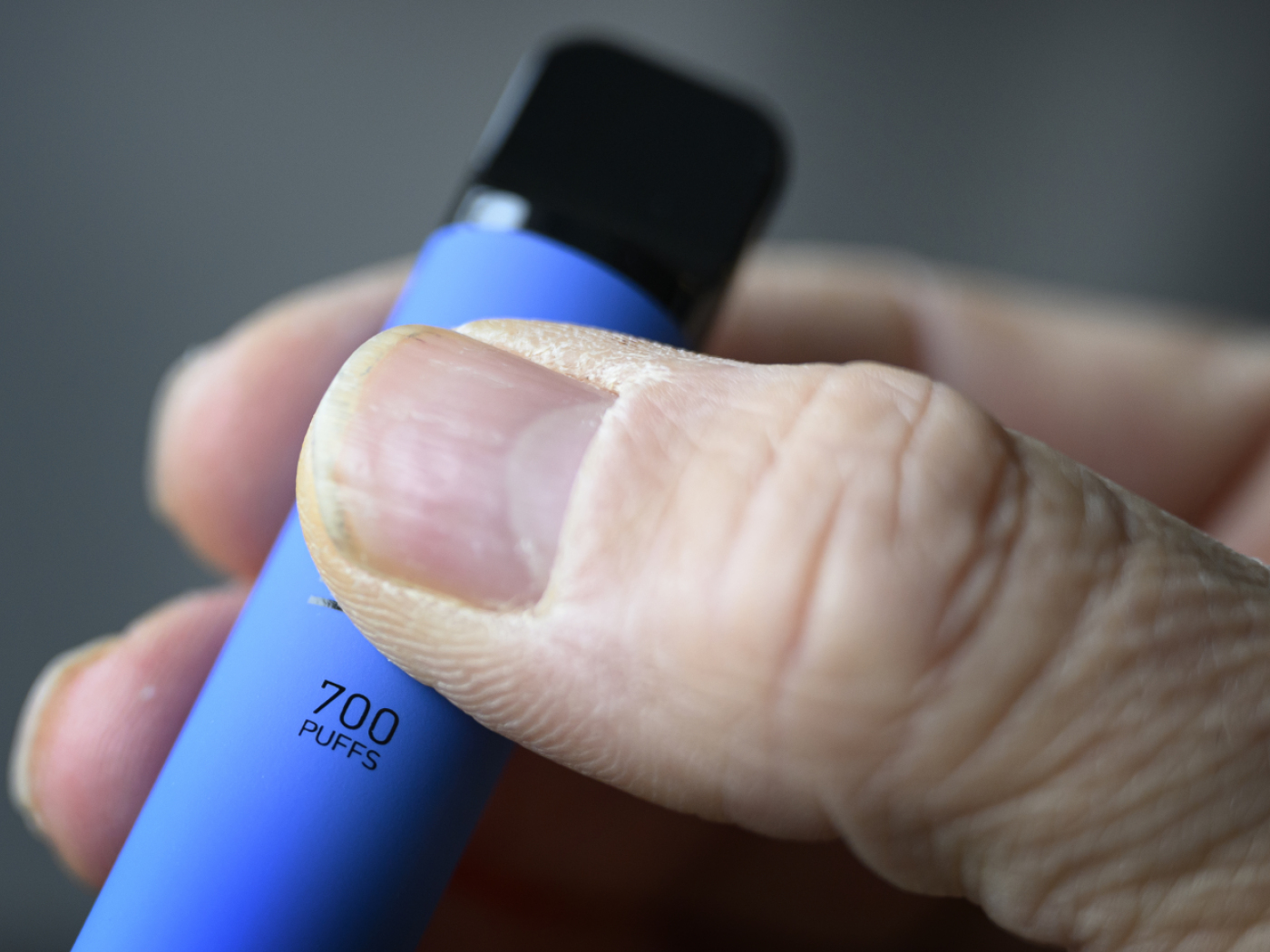
Parliament has also taken measures regarding the promotion of tobacco products and electronic cigarettes. Such promotion will be prohibited if it takes the form of the free distribution of products.
By 24 votes to 19, the senators also endorsed the House of Representatives’ position on mobile vendors. They should be affected by a ban on promotion in places accessible to minors, unless the advertising is neither visible nor accessible to minors. For the health minister, the proposal is “acceptable”. It is clear on the logos worn by vendors”, she said.
With regard to the promotion of cigars and cigarillos by means of tastings and customer promotions, the Senate agreed with the House of Representatives by 23 votes to 19. This is only permitted where it is intended solely for adults.
What is your opinion? Join the debate:
Translated from French by DeepL/sb
We select the most relevant news for an international audience and use automatic translation tools to translate them into English. A journalist then reviews the translation for clarity and accuracy before publication.
Providing you with automatically translated news gives us the time to write more in-depth articles. The news stories we select have been written and carefully fact-checked by an external editorial team from news agencies such as Bloomberg or Keystone.
If you have any questions about how we work, write to us at english@swissinfo.ch
More
Most over-65s in Switzerland regularly use the internet
This content was published on
The digital divide is narrowing faster than expected in Switzerland. A study published on Wednesday reveals that nine out of ten over-65s use the internet.
Will Swiss president be forbidden from speaking English to counterparts?
This content was published on
Switzerland’s president, Karin Keller-Sutter, should use one of the country’s four national languages when communicating with international organisations, and not English, according to a motion that passed on Wednesday.
Canton Valais gives CHF10 million to Blatten after devastating landslide
This content was published on
Canton Valais is releasing CHF10 million ($12.1 million) in emergency funds for the mountain village of Blatten, which was wiped out by a devastating glacier collapse last week.
Elderly Swiss-Tunisian man held in prison in Tunisia
This content was published on
An 81-year-old Swiss-Tunisian dual national is being held in a Tunisian prison. The former manager of the UN refugee agency UNHCR was arrested a year ago, according to Amnesty International.
Major traffic jams expected in Switzerland for Whitsun weekend
This content was published on
Long traffic jams can be expected near the Gotthard Tunnel, the main north-south transalpine route in Switzerland, on Friday and Saturday afternoons due to the Whitsun holiday.
Swiss defence minister launches probe into alleged spy links with Russia
This content was published on
Swiss Defence Minister Martin Pfister has launched an investigation into the alleged disclosure of sensitive information by the cyber division of the Federal Intelligence Service to Russia.
Small and medium-sized businesses (SMEs) in Switzerland are extremely pessimistic about ongoing geopolitical tensions and US President Donald Trump’s tariff policy, according to a survey.