


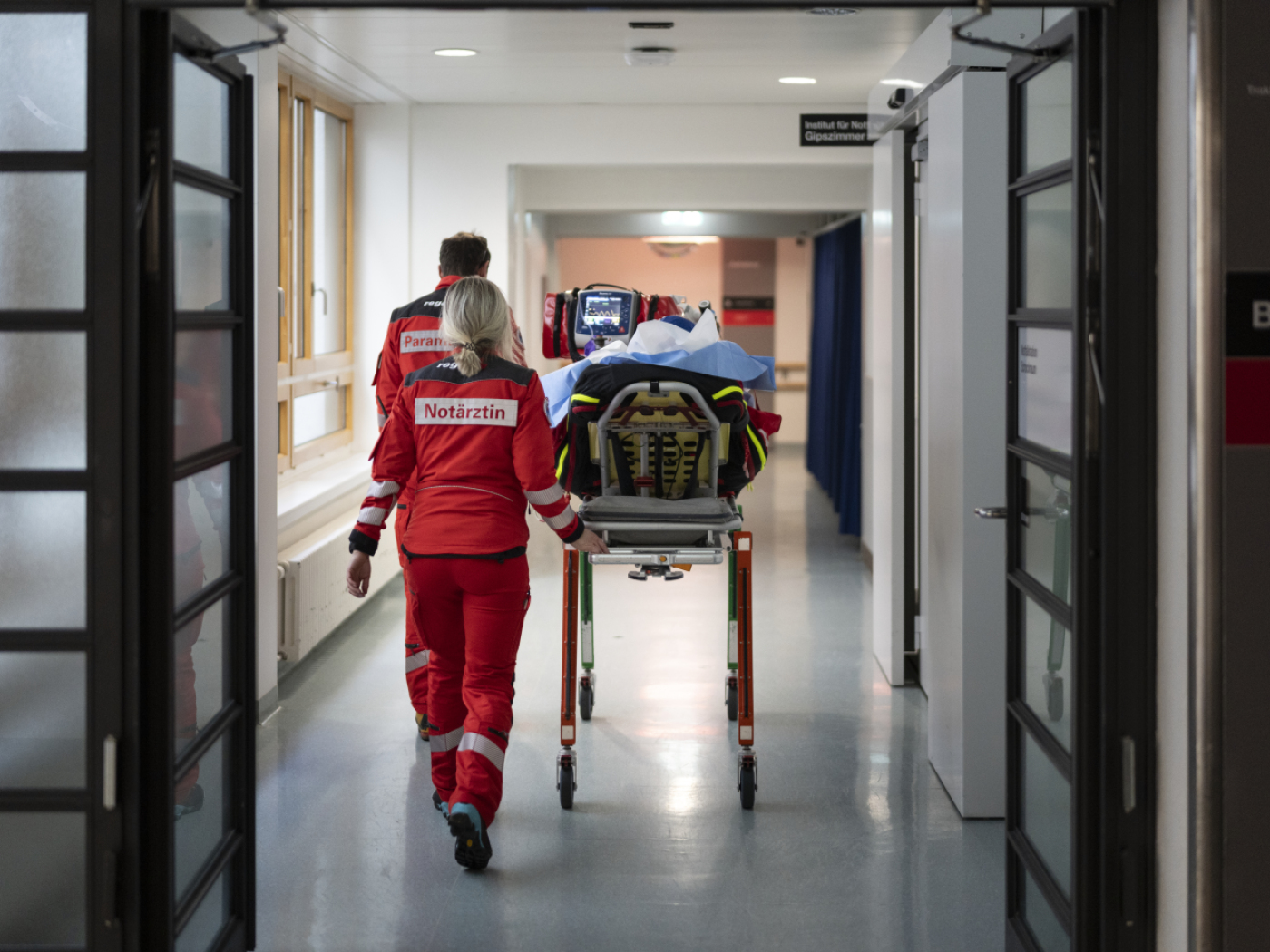
Hospitals postpone operations due to fire victims
Keystone-SDA
In some Swiss hospitals, surgeries had to be postponed to prioritise the urgent treatment of the Crans-Montana bar fire victims.
“However, the coordination between the various hospitals is working extremely well and they are supporting each other,” said the University Hospital Zurich (UZH) in response to an enquiry from the Keystone-SDA news agency on Saturday. In the meantime, other Zurich hospitals have taken over patients and emergencies from UZH.
+Get the most important news from Switzerland in your inbox
However, the UZH emergency department is open at all times and ready to accept additional and other patients. Intensive care beds are also available at all times.
Planned operations at Zurich Children’s Hospital (Kispi) also have to be postponed, as reported by Swiss public broadcaster SRF. Five people injured in the fire are being treated at Kispi. They are all under the age of 18 and are in an induced coma. A double-digit number of operations are required for their treatment. Additional operating theatres would have to be opened for this.
More

More
Swiss bar fire likely started by sparklers on champagne bottles, says prosecutor
The University Hospital in Lausanne is caring for 22 seriously burnt patients. A postponement of planned operations is currently being examined, said a spokesperson. A decision will be made over the course of the weekend. Operations at Geneva University Hospital have returned to normal, a spokesperson confirmed. Three of the five injured patients admitted after the fire were taken abroad on Friday afternoon.
Some hospitals like the Inselspital in Bern did not carry out any scheduled operations over the festive period. Surgeries were limited exclusively to emergencies and urgent procedures. This meant that the necessary capacity was available to admit and treat injured patients from Crans-Montana. Additional staff were mobilised as required.
Adapted from German by DeepL/ac
We select the most relevant news for an international audience and use automatic translation tools to translate them into English. A journalist then reviews the translation for clarity and accuracy before publication.
Providing you with automatically translated news gives us the time to write more in-depth articles. The news stories we select have been written and carefully fact-checked by an external editorial team from news agencies such as Bloomberg or Keystone.
If you have any questions about how we work, write to us at english@swissinfo.ch


