


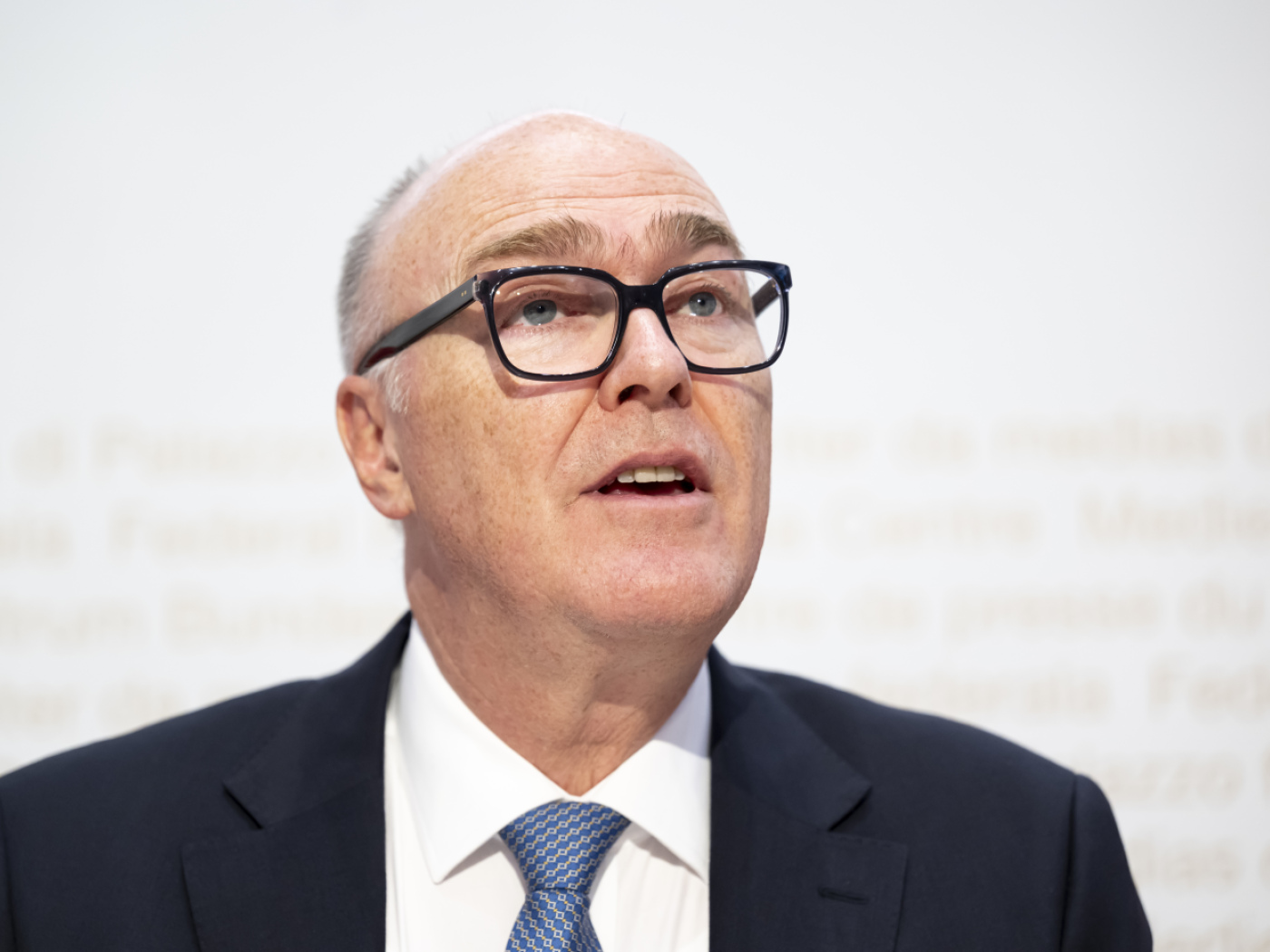
Pfister has to explain Swiss mini-military spending in Munich
Keystone-SDA
At the 62nd Munich Security Conference, Defence Minister Martin Pfister spoke for the first time about Switzerland’s relatively modest defence spending.
+ Get the most important news from Switzerland in your inbox
Pfister told Swiss public broadcaster SRF on Saturday evening in Munich that Switzerland has come under fire for spending less than 1% of its gross domestic product (GDP) on defence. By comparison, NATO member states have committed to investing around five times that amount – around 5% – when defence is measured in broader terms.
More
More
Value added tax: the Swiss government’s all-purpose tool
Pfister met his counterparts from Estonia, Latvia and Lithuania, as well as from Slovenia and Ireland, to outline Switzerland’s defence and security policy, defence ministry spokesperson Renato Kalbermatten told the Keystone‑SDA news agency on Saturday. The discussions also looked at potential areas of cooperation and the option of holding joint exercises.
This was the first time that Pfister had attended the high-level international meeting in Munich.
More
More
Next Ukraine negotiations to be held in Geneva
Swiss Justice Minister Beat Jans also underlined the need for close international cooperation to protect Switzerland from a range of threats. He held talks with his German and Austrian counterparts, as well as Europol Director Catherine De Bolle, focusing on cross‑border cooperation and data sharing in the fight against organised crime.
+ How Geneva returned to the world stage – momentarilyExternal link
He also discussed human rights issues with the UN High Commissioner for Human Rights, Volker Türk. Meanwhile, more than 100 cantonal police officers were deployed to Munich to help secure the area around the conference venue.
+ What can the Swiss foreign minister – and the OSCE – achieve in Moscow?
In the run‑up to the conference on Friday, Foreign Minister Ignazio Cassis held a series of diplomatic meetings with NATO Deputy Secretary General Radmila Shekerinska, Brendan Hanrahan, the European director at the US State Department, and his Georgian and Syrian counterparts. His talks focused in particular on the role of the Organisation for Security and Cooperation in Europe (OSCE) in European security, as well as the peace process in Ukraine and the Middle East.
Translated from German and French by AI/sp
We select the most relevant news for an international audience and use automatic translation tools to translate them into English. A journalist then reviews the translation for clarity and accuracy before publication.
Providing you with automatically translated news gives us the time to write more in-depth articles. The news stories we select have been written and carefully fact-checked by an external editorial team from news agencies such as Bloomberg or Keystone.
If you have any questions about how we work, write to us at english@swissinfo.ch


