


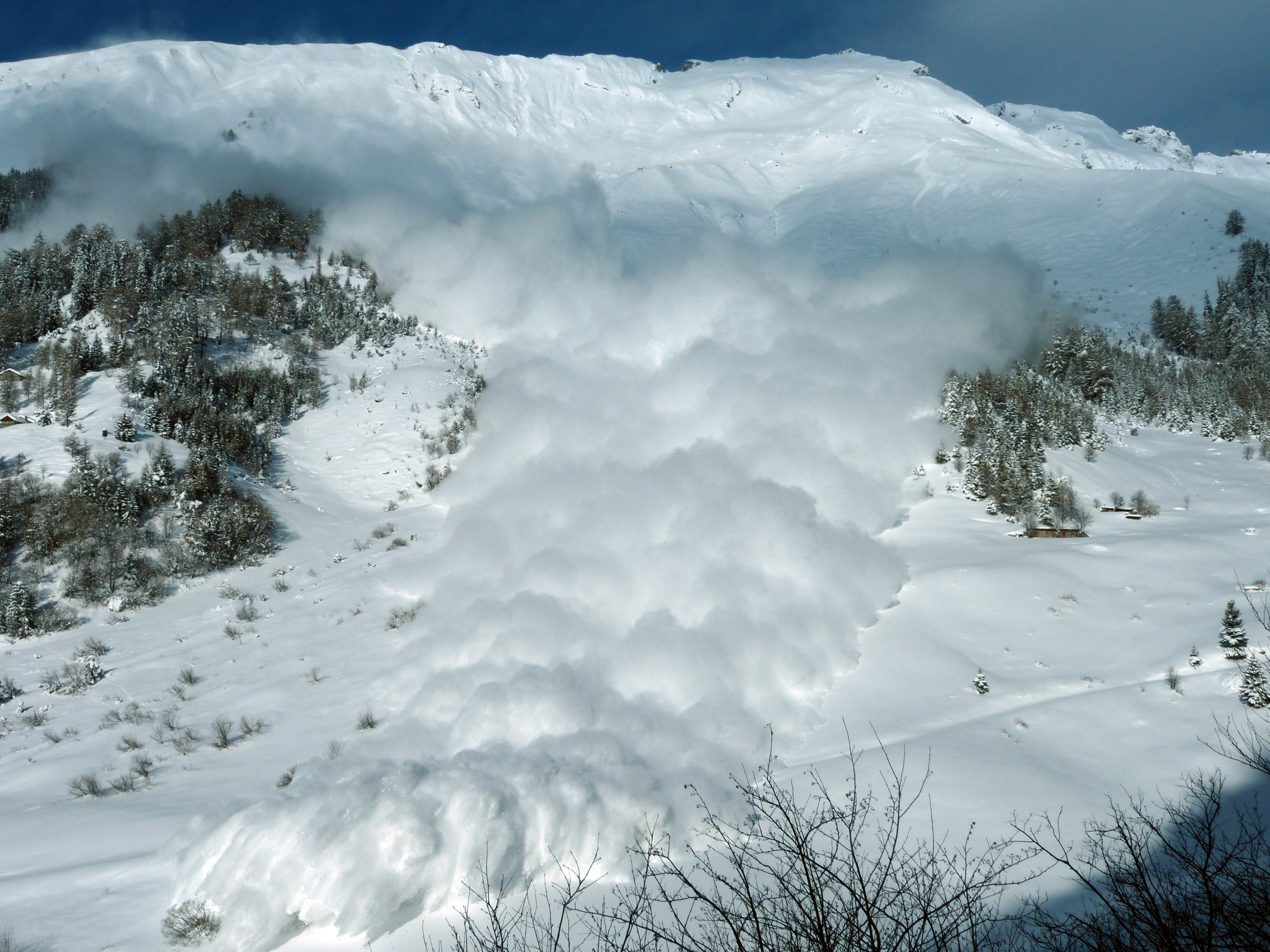
Predicting the slide: AI now makes it possible to identify most avalanches with a high degree of accuracy.
SLF
Mountains are not silent. They vibrate, creak and shift. And now, algorithms are learning to listen to them. Swiss researchers are experimenting with artificial intelligence to analyse seismic signals and detect avalanches at an early stage, with the goal of preventing accidents.

Avalanche risk is currently at its highest level in different parts of Switzerland. Fresh snow is gathering on weak, “sugary” layers within the snowpack which previously formed during long periods of cold, dry weather. Strong winds create uneven snowdrifts, and additional snowfall – or the weight of a single skier – can cause a fracture and trigger the collapse of entire parts of the mountain.
This process does not happen silently. “When an avalanche is in motion, it produces sound waves and ground vibrations with specific time-frequency characteristics,” says Cristina Pérez, a researcher at the Swiss Federal Institute for Forest, Snow and Landscape Research (WSL).
In the past, the methods designed to detect these seismic signals generated many false alarms. Today, thanks to artificial intelligence (AI), Pérez and her colleagues can detect the majority of ongoing avalanches with a high degree of accuracy.
In the future, early avalanche detection with the help of AI could allow authorities to evacuate villages and proactively close roads and railway lines, preventing potentially deadly accidents.
More than 90% of avalanche signals detected with AI
Without the help of AI, it was difficult for Pérez and her colleagues to automatically detect the signals of an avalanche. Detection systems, based on seismic sensors installed in the ground, triggered a pre-alert whenever vibrations exceeded a certain threshold.
The problem, Pérez explains, is that many different signals – such as earthquakes, or vibrations caused by a passing car – can exceed this threshold and be mistaken for an avalanche. “Before AI, many other sound sources triggered the alarm, even when no avalanches were occurring,” she says.

Simeon and Pérez install seismic and infrasound sensors at the Vallée de la Sionne test site, canton Valais.
Johannes Aichele – SLF
AI has significantly reduced false alarms. The system is now able to automatically detect more than 90% of avalanches. Pérez and WSL researcher Andri Simeon have developed an AI model capable of recognising in real time and learning the patterns of avalanche seismic signals.
Simeon explains that the process works in a similar way to large language models (LLMs), such as those which power chatbots like ChatGPT. But instead of filling in gaps in text, Simeon’s model is trained to reconstruct missing parts of seismic signals and identify the “seismic signature” of an avalanche, distinguishing it from that of a helicopter or road traffic. “The model learns to recognise different signals and helps us tell them apart,” he says.
Two decades of seismic data
One major advantage of the WSL model is that it is trained on the institute’s seismic records dating back to 1999. According to Pérez, this is a relatively unique situation worldwide.
Ten years ago, she did doctoral research at the University of Barcelona, which already collaborated with the WSL on certain projects. “We have over 20 years of seismic recordings – one of the longest time series of avalanche data in the world,” she says.
In addition to these historical datasets, Pérez can draw on the institute’s experience using AI to gauge regional avalanche danger. Highly specialised predictive models estimate the probability of avalanche release and expected size by combining meteorological forecasts and simulations of snowpack layering. The outcome is a danger level forecastExternal link on a scale from one to five, with five indicating the highest danger.
“Until five or six years ago, human experts analysed meteorological measurements, field observations, and outputs from snowpack models. As the volume and complexity of data grew, it became increasingly difficult to combine everything into a consistent forecast,” says Frank Techel, a WSL scientist and avalanche forecaster with over 15 years of experience working on Switzerland’s national avalanche bulletin.
>> Avalanches do not always have a destructive effect:
More
More
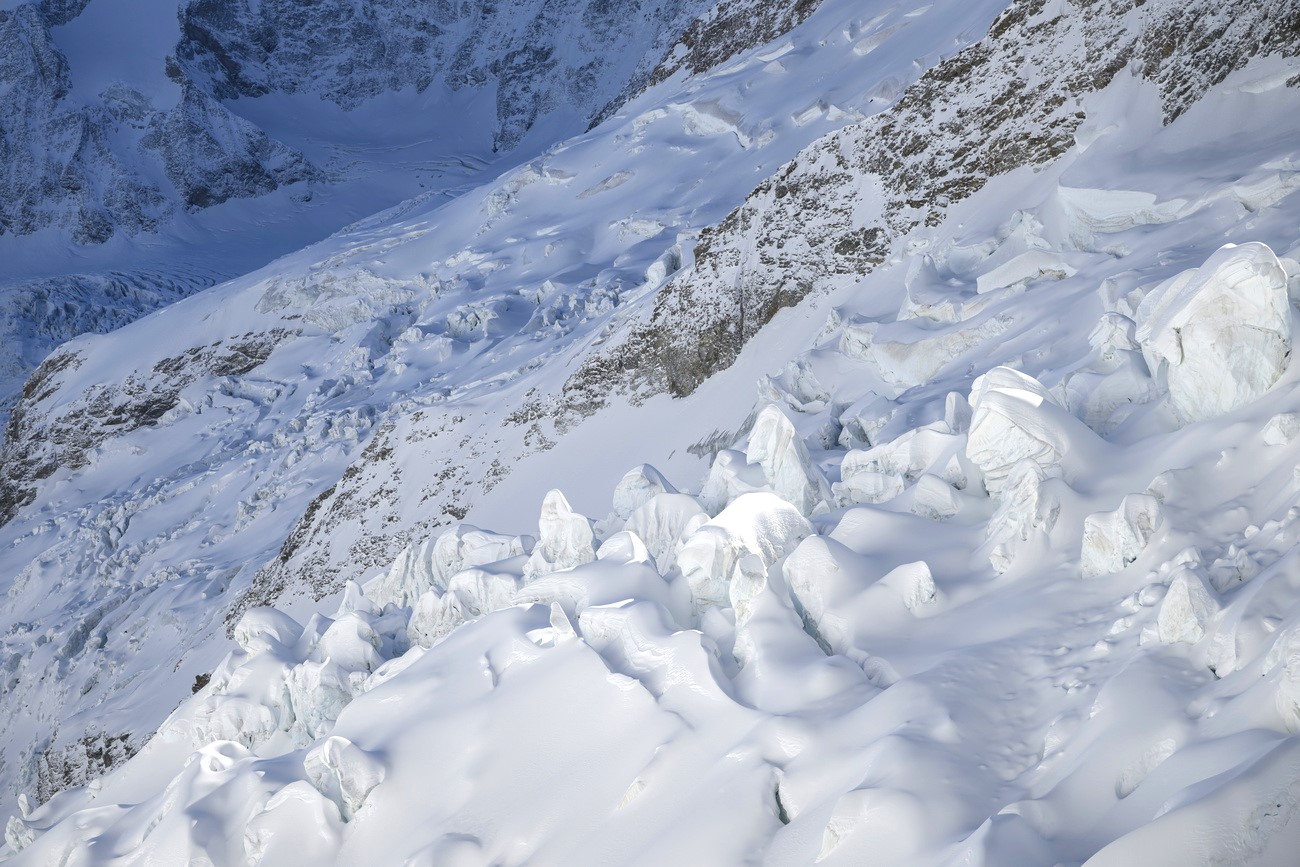
The beneficial effect of avalanches on Alpine glaciers
‘I still go through the data myself’: AI’s limits
Even though AI has helped experts in Switzerland make sense of vast and complex data, it is not infallible. Techel emphasizes that human oversight remains essential, as AI can sometimes produce incorrect results. This happens especially when avalanche danger is at the highest levels, because extreme conditions are rare and therefore less represented in the historical dataset.
“I still go through the data myself and formulate a forecast. Then I use the models to test my hypotheses,” Techel says.
Pérez acknowledges that her model has limitations too. For one thing, small avalanches produce signals that hardly emerge from background noise, making them difficult to detect by machines. “We are still working to maximise detection rates while reducing false alarms,” she says.
International studies also show that AI models struggle with rare eventsExternal link and complex signal patternsExternal link, often due to limited training data or misinterpretation of non-avalanche situations.
Nevertheless, Pérez believes that within a few years these models could potentially become reliable enough to be used in inhabited areas and high-risk zones. Meanwhile, similar approaches have been developed by WSL researchers to monitor large landslides, such as those which struck the Swiss villages of Blatten and Brienz. In future, researchers may therefore be able to automatically detect both avalanches and landslides thanks to AI.
“Our dream is for these models to be used in real time to help secure roads, railways, and villages,” Pérez says.
Edited by Reto Gysi von Wartburg/dos


