


Photo: Fars News (Reuters)
Amid reports Iran and the US are considering charging vessels a “toll” to transit the Strait of Hormuz, maritime insiders say such a move could backfire if other countries decide to charge ships for passing through natural maritime chokepoints.
“This is international free passage,” Olav Myklebust, a Norwegian oil tanker manager says, “so the rules are very clear.” According to the UN Convention on the Law of the Sea (UNCLOS), ships engaged in “innocent passage” through a country’s territorial waters cannot be charged a fee.
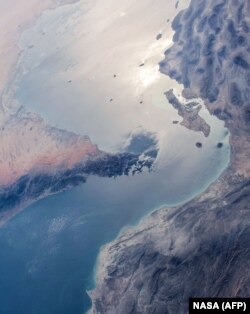
Despite clear wording around rules for innocent passage, the UNCLOS charter also states that ships can be charged for “specific services” rendered. Iran could potentially organize convoys through the strait and demand fees for that service. But, Myklebust points out, “Iran has no [naval] vessel left to escort them” after the country’s navy was largely destroyed in the early days of the 2026 conflict with the US and Israel.
On April 8, following a cease-fire which paused that war, US President Donald Trump told ABC News that America is considering a “joint venture” with Tehran to charge tolls for passage through the strait.
Iran’s Deputy Foreign Minister Kazem Gharibabdi had earlier declared Tehran was working on a protocol with Oman to require “permits” from ships wanting to pass the Strait of Hormuz. Oman has since denied it is seeking fees.
Dimitris Ampatzi, a maritime risk and compliance manager with MarineTraffic, told RFE/RL that if shipping companies are forced to liaise with the Iranian military to transit the Strait of Hormuz “we could see delays, rerouting decisions, and in some cases reluctance from shipowners to enter the area.”
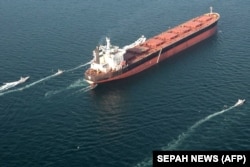
Myklebust, who has made multiple crossings of the Strait of Hormuz on tankers, says that regardless of the legality of tolls, “I think that for the moment [shipping firms] will have to accept paying this [reported fee of] $2 million.” Companies are likely to pay up, he says, due to insurance firms that will insist all risks are mitigated as far as possible before agreeing to cover vessels transiting the strait.
Fees of potentially up to $2 million per ship, Myklebust says, would be, in some cases, a relatively small price to pay. Many individual crude oil carriers passing through the Strait of Hormuz are capable of carrying hundreds of millions of dollars worth of oil in a single shipment.
For smaller vessels that can sail over relatively shallow water, Myklebust says it could be possible to avoid Iranian waters altogether by skimming the southernmost point of the Strait of Hormuz, in Omani waters.
Several ships have passed through the strait in recent days, with some reported to have paid fees to Iran. Some 22 ships have been attacked by Iran in the Persian Gulf since US-Israeli strikes were launched against Iran on February 28.
Despite optimism in the oil markets in the wake of the April 7 cease-fire, Ampatzidis says any potential toll system on the Strait of Hormuz will be felt by consumers. “If transit [through the strait] becomes less efficient or more costly this could put upward pressure on freight rates and, potentially, energy prices.” However he adds, “the extent of the impact would depend on how restrictive or stable the arrangements are in practice.”


