


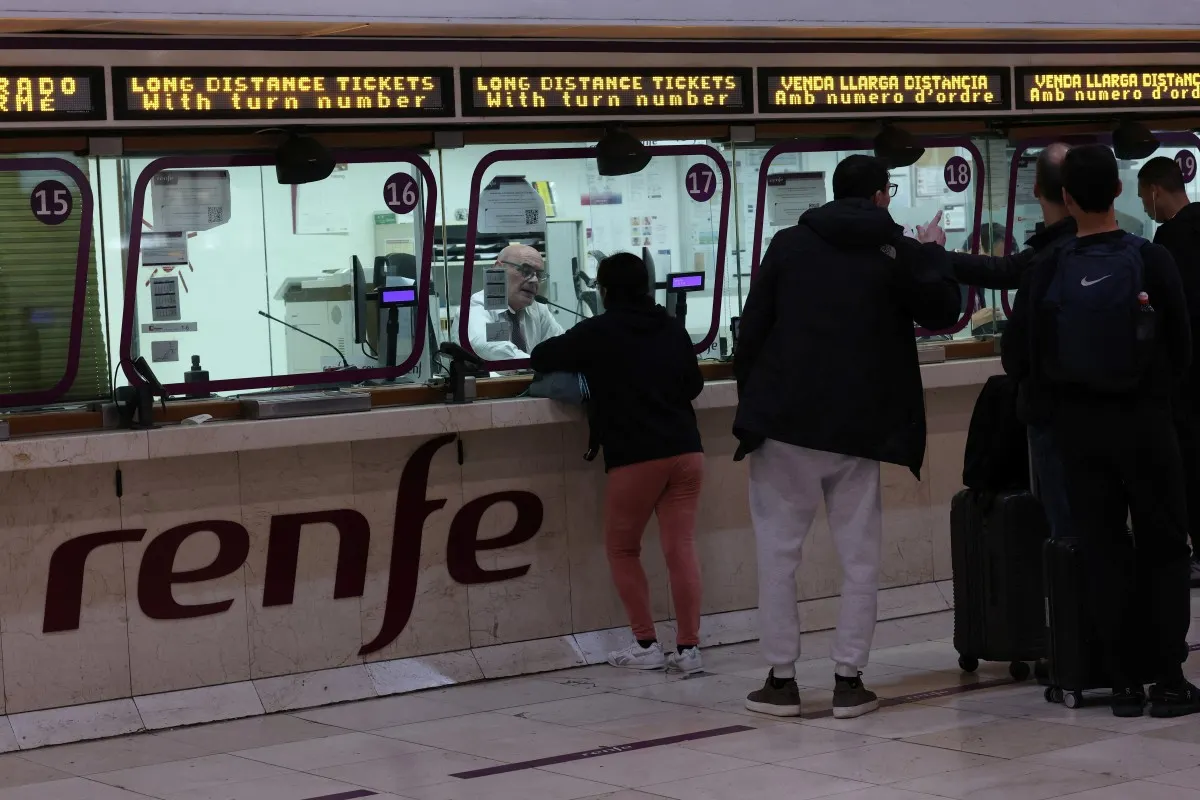
With public confidence low following a recent deadly crash in Córdoba, Spain’s public railway company is to launch a bus company to help deal with delays and suspended services during infrastructure works planned for the coming years.
Spain’s state rail operator Renfe will create its own bus company to transport passengers on sections where rail traffic is suspended, ahead of planned infrastructure works for the coming years.
These rail works will, Renfe states, cause more suspensions and cancellations moving forward such as those currently between Málaga and Antequera, where the AVE high-speed train from Madrid is not running and passengers are being transported by bus or on Rodalies’ services.
READ ALSO: Spain plans to cut Madrid-Barcelona high-speed train to under two hours
Renfe on Tuesday announced its decision to create the company, in which it will hold a 49 percent stake. An as of yet unnamed bus company was awarded the long-term service contract of 10 years, extendable for a further 5 years, that will hold a 51 percent stake.
Renfe’s new company will have drivers on its payroll and a fleet of 50 to 100 coaches, according to Spanish daily El País.
“It has been concluded that the traditional tendering model is insufficient to respond to the magnitude of the anticipated scenario, among other reasons due to the shortage of available buses, the lack of drivers, low competition in tenders, and the difficulty of mobilising sufficient resources in a market with resources committed to regular and more stable services over time,” a Renfe statement in the Spanish press explained.
According to a statement, disruptions to the Spanish rail network are expected to increase in the coming years due to “the unprecedented growth in infrastructure improvement works” planned by Adif, such as the renovation of the Madrid-Barcelona high-speed line, scheduled to begin shortly on the Madrid- Zaragoza section.
Renfe says it is open to “a new approach to ensure the coverage and quality of alternative services in the coming years,” highlighting that it is the only of Spain’s three high-speed rail operators that is rolling out alternative plans.
Advertisement
This has allowed it, for example, to provide replacement bus services between Madrid and Málaga while rivals Ouigo and Iryo are waiting for Adif to complete reconstruction of a section that was damaged by the storms in February.
The estimated cost of company creation is €61.5 million, which the operator claims will result in savings of between €9 million and €13 million per year compared to what is currently spent on hiring bus companies on an ad hoc basis.
This comes as public confidence in Spain’s rail system has fallen in recent months.
Reports in the Spanish press show that operators and ticket sales platforms have detected a slowdown in demand following the deadly train accident in Adamuz, Córdoba, in January.
READ ALSO: ‘Don’t fear it’ – How safe is high-speed train travel in Spain?


