


Spain’s economy could face a “significant slowdown” due to the Middle East war, the Bank of Spain said on Friday, although it still predicts growth of 2.3 percent in 2026.
This forecast is slightly above the 2.2 percent growth it predicted in December, supported by a robust first-quarter expansion, estimated between 0.5 percent and 0.6 percent, the central bank said.
The Spanish economy, the European Union’s fourth-largest, posted growth of 2.8 percent last year, one of the fastest rates in the bloc.
“The central scenario anticipates a marked slowdown in the pace of activity, shaped by an international context dominated by the conflict in the Middle East,” the Bank of Spain said, warning of potential “episodes of financial market instability”.
Advertisement
The bank stressed the conflict has driven up energy prices and there was “great uncertainty” over how long it will last and the possible impact on the economy.
Inflation could reach 3.0 percent in Spain this year, up from the previously projected 2.1 percent, reflecting the rise in energy costs in recent weeks, it said.
Spain’s annual inflation rose to 3.3 percent in March, up from 2.3 percent the previous month, driven by higher fuel costs, according to preliminary data released earlier on Friday by national statistics office INE.
Socialist Prime Minister Pedro Sánchez’s government has sought to cushion the economic impact of the war with a package of 80 measures worth €5.0 billion ($5.78 billion) approved Thursday by parliament.
The measures include cuts to value-added taxes on gas and fuel expected to reduce pump prices by as much as 0.3 euros per litre, or roughly €20 per tank for the average car.
Additional support includes a direct subsidy of €0.2 per litre of fuel for transport operators, farmers, ranchers and fishermen, along with lower electricity taxes.
“The plan is designed so that this external shock does not have a lasting effect on inflation or household income,” the economy ministry said in a statement.
Advertisement
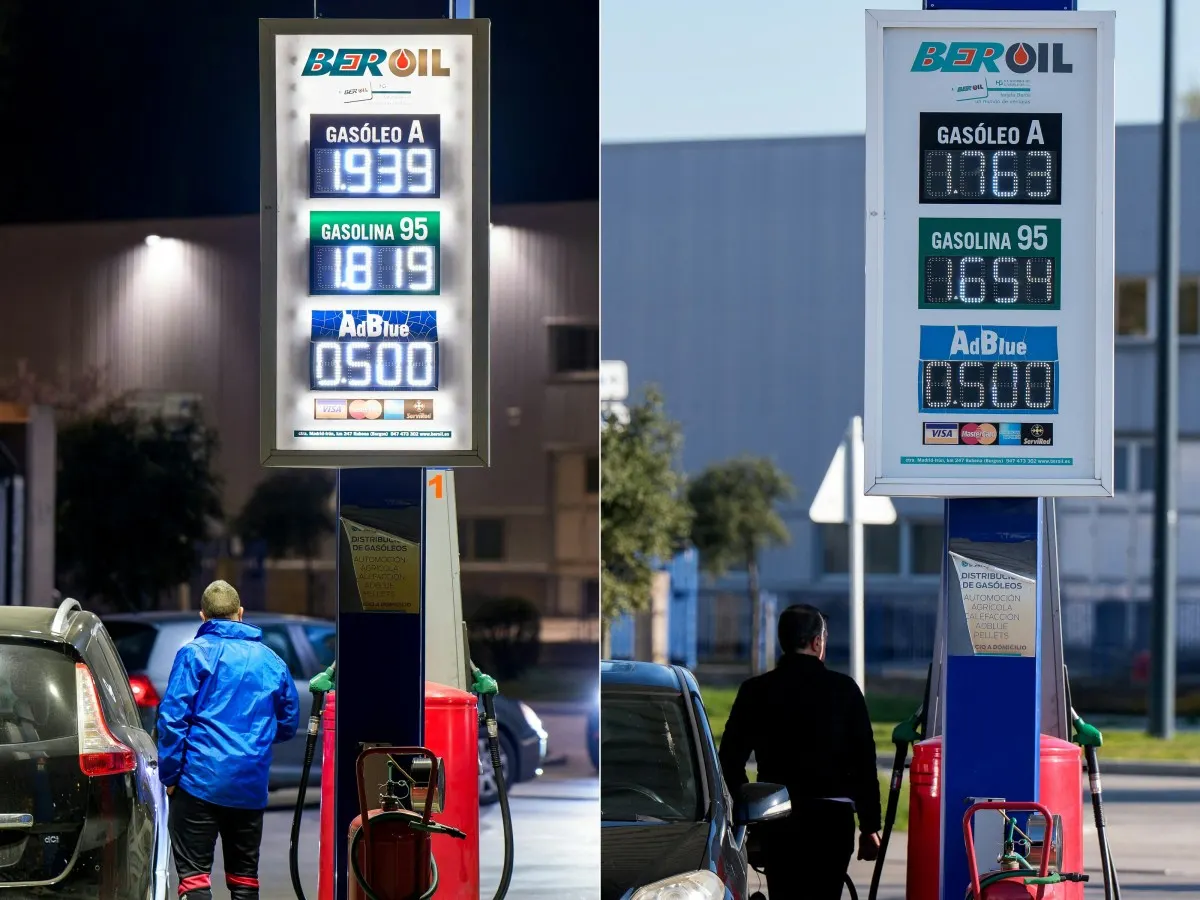
Gasoline prices in Spain surged from €1.48 per litre on February 28th, when the US-Israeli bombings against Iran began, to 1.78 euros per litre over the weekend before the measures come into effect.
They had eased to €1.56 per litre as of Thursday, according to government data.
The government predicts that Spain will be less impacted by the war than many of its European neighbours, thanks to its investment in renewable energy and a diversified energy supply.
Renewable power makes up around 55 percent of Spain’s energy mix, while the country imports most of its crude oil from the Americas and Africa.
Spain’s economy has outperformed its peers since 2021, supported by lower energy costs, strong domestic consumption, and a rebound in tourism following the end of the COVID-19 pandemic.
READ ALSO: Rent, fuel and bills – Spain to spend €5 billion to ease Middle East war fallout


