


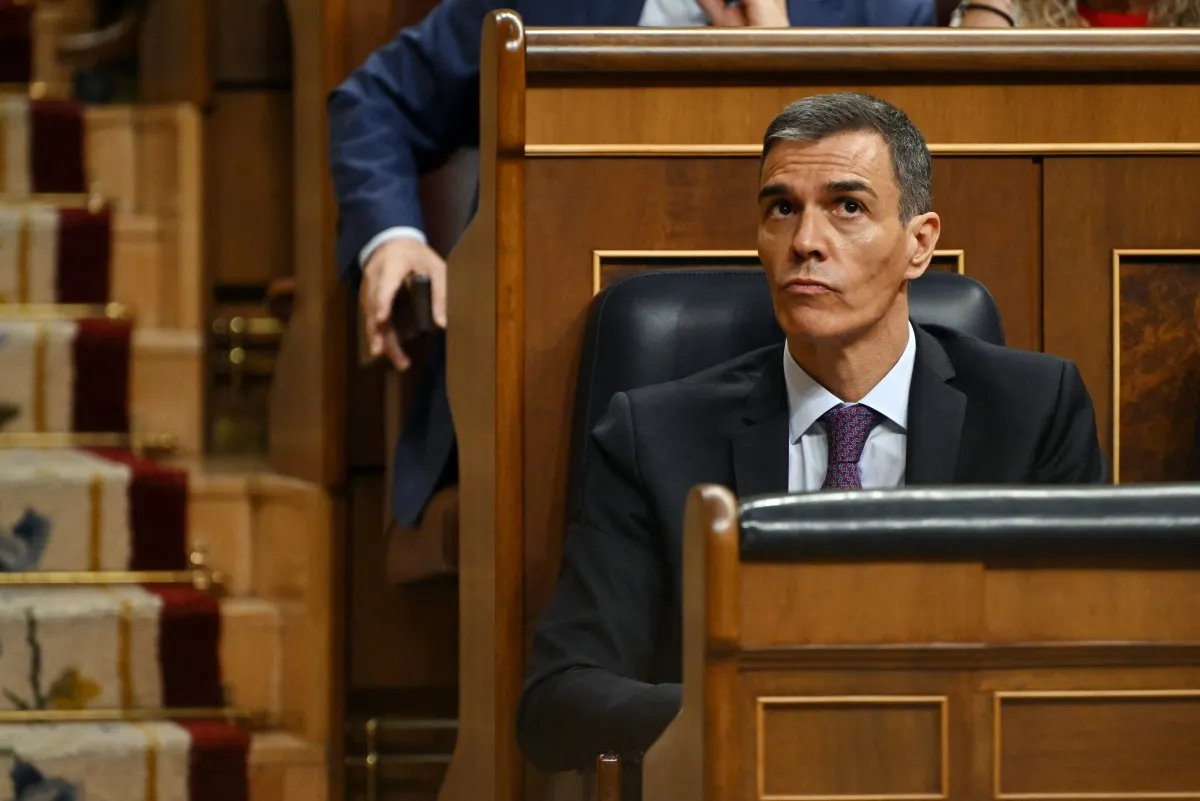
Spain will enter 2026 without a new budget for a third straight year after lawmakers on Thursday once again blocked the minority left-wing government’s spending and deficit plans.
Since its formation in 2023, Socialist Prime Minister Pedro Sánchez’s coalition has been unable to push a budget through the hung parliament, limiting its ability to launch new spending initiatives.
This is the second time in two weeks that lawmakers have rejected the government’s proposed spending ceiling and deficit reduction timetable for 2026-2028.
Approval of the ceiling is a key first step toward submitting a new budget and replacing the 2023 accounts, which have been automatically extended.
Advertisement
The proposed 2026 spending ceiling would have set expenditures at €212 billion ($246 billion), an 8.5-percent increase over the current framework, while forecasting a public deficit of 2.1 percent of annual economic output next year.
Lawmakers on Thursday rejected the bill by 177 votes to 166, with five abstentions.
As expected, the main opposition conservative Popular Party joined forces with far-right Vox and Catalan separatists Junts — who recently broke with the government — to oppose the plan.
Under the Spanish constitution, the existing budget can be automatically extended under certain conditions if lawmakers fail to approve new accounts.
The impasse has not prevented the European Union’s fourth-largest economy from growing faster than many of its peers.
Spain’s economy expanded 3.5 percent in 2024 and is forecast to grow 2.9 percent this year, more than double the rate predicted for the eurozone.


