


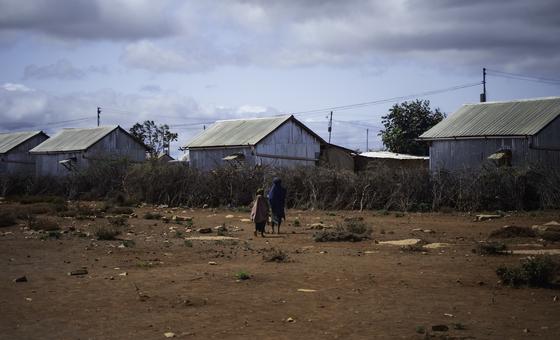
More than 1.8 million children under five are also at risk of acute malnutrition between now and June, according to latest analysis published on Tuesday by the IPC food security monitoring platform (see our UN News explainer on the platform here).
The worrying development comes after the October to December Deyr season rains failed and crop production fell. Those most impacted are poor farmers, pastoralists, and internally displaced people.
Drought, displacement, aid shortfalls
In Somalia, drought, insecurity and conflict in the centre, south and some parts of the north – driven by insurgency, competition over resources and other factors – have displaced people while also disrupting livelihoods and access to markets.
The situation was further compounded by high local and imported food prices, alongside a reduction in humanitarian assistance.
The IPC – a UN-backed initiative – uses a scale from one to five to measure the severity of food insecurity that helps governments and humanitarians to classify crises.
Millions going hungry
The experts estimated that a staggering 6.5 million Somalis are facing acute food insecurity, or IPC Phase 3 and above, compared to 3.4 million during the first quarter of 2025.
Over two million are at emergency level, or Phase 4.
“Most of the pastoral and agropastoral people in northern, central, and southern regions are classified in Phase 3,” they said.
“These livelihoods face significant food consumption gaps, rising acute malnutrition, and are relying on crisis or emergency coping strategies just to meet basic food needs.”
The IPC analysis revealed that this year, 1.84 million young children are suffering or will suffer from acute malnutrition, with 483,000 cases of severe acute malnutrition (SAM).
The condition – also known as severe wasting – is the deadliest form of malnutrition, according to the UN Children’s Fund (UNICEF).
Step up action
Acute food insecurity in Somalia is expected to worsen through March during the dry Jilaal season, the hottest period of the year.
Forecasts indicate that the Gu rainy season from April to June is likely to be average in most areas of the country which should lead to the gradual restoration of water and pasture resources.
As a result, the number of people at IPC Phase 3 or above is likely to drop to 5.5 million, “however, acute food insecurity will remain widespread, and the slight improvements will be uneven across livelihood zones.”
The IPC called for urgent scale-up of lifesaving humanitarian assistance to “hotspot” areas where high levels of acute food insecurity and acute malnutrition intersect.
Other recommendations include ramping up aid in rural and underserved areas; strengthening coordination to facilitate integrated response combining food security, nutrition, health, and water, sanitation and hygiene (WASH) and other sectoral interventions, and improving targeting of humanitarian assistance to ensure it reaches those most in need.


