


A decade ago, the UN General Assembly adopted the Nelson Mandela Rules — a set of 122 guidelines setting minimum standards for the treatment of prisoners, inspired by one of the world’s most influential former political prisoners – the South African civil rights icon, Nelson Mandela.
These rules aim to ensure safety, security and respect for human dignity, offering clear benchmarks for prison staff.
Despite this, prison systems worldwide continue to face deep-rooted challenges. The General Assembly convened on Friday to discuss how to better protect societies from crime by focusing on rehabilitation and preparing inmates for life after prison.
Overcrowded cells
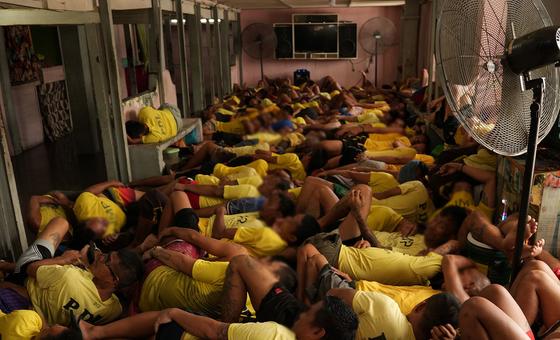
“Prison cells are overflowing,” said Ghada Waly, Executive Director of the UN Office on Drugs and Crime (UNODC), noting that 11.5 million people are currently imprisoned globally.
“Overcrowding deprives people of their most basic rights, including access to healthcare, clean water and sanitation,” she warned. Yet prison services remain underfunded, under-prioritised and undervalued.
These systemic failures not only endanger inmates and staff but also weaken efforts to reintegrate former prisoners — posing risks for the wider community, added General Assembly President Philémon Yang.
Women behind bars
The number of women in prison has increased by 57 per cent over the past 20 years — nearly triple the rate of men.
Most systems are not equipped to meet their specific needs. “This is not safe. And this is not humane,” said Ms Waly.
Women in detention are especially vulnerable, facing greater risks of sexual violence, limited access to reproductive healthcare and separation from their children.
Time for bold reform
“We need a bold vision — one that goes beyond bricks and bars to focus on people and their potential,” said Ms Waly, urging governments to reimagine how prisons are managed.
Handled responsibly, prisons can support public safety, justice and the rule of law. But today’s prison environments often remain dangerous and counterproductive.
UN officials stressed that rehabilitation must be at the heart of reforms, including support systems that reduce the likelihood of reoffending and help former prisoners reintegrate into society.
“The true measure of justice is not how we punish,” Mr Yang concluded, “but how we protect, rehabilitate, and build a better future for everyone, everywhere.”


