


A potentially catastrophic super typhoon has made landfall in the Philippines – the sixth typhoon to hit the country in a month.
Man-Yi, known locally as Pepito, touched down at 21:40 local time (13:40 GMT) with maximum sustained wind speeds of 195 km/h (121mph) along the coast of the eastern Catanduanes island, the state forecaster said.
It has warned of a “life-threatening storm surge”, heavy rains and severe winds, and hundreds of thousands of people had been evacuated ahead of the storm’s arrival,
At least 160 people are known to have died in the five previous earlier storms.
Super Typhoon Man-Yi is expected to impact a large area, BBC Weather reports.
There will be widespread heavy rain in northern areas, with more than 300mm (11 inches) expected to fall on Saturday and Sunday – leading to potential flooding and increasing the risk of mudslides.
Winds of up to 270km/h are also expected, as are waves of up to 15m (49ft) in eastern coastal areas.
The capital, Manila, may be spared the worst of the winds as the storm tracks to its north, before crossing the island of Luzon – the largest and most populous island in the Philippines – and heading offshore by Monday.
Dozens of flights have been cancelled due to the incoming storm, according to local broadcaster ABS-CBN News.
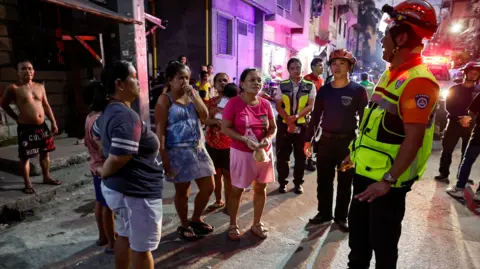
At least 500,000 people are reported to have fled as the storm nears. The head of the country’s civil defence, Ariel Nepomuceno, has urged those living in the storm’s projected path to comply with evacuation orders.
“It is more dangerous now for those in landslide-prone areas because the ground has been saturated by the consecutive typhoons,” Mr Nepomuceno said.
Glenda Llamas is among those who have had to leave their homes.
“We are terrified of the typhoon, as it may intensify and the waters can rise,” she told the AFP news agency from a shelter in the eastern Albay province.
“If we didn’t evacuate we wouldn’t be able to get out later, we don’t have anyone else in the house but us.”
“We already have a lot of phobia due to the previous calamities that happened here like floods, strong winds and other disasters,” said Melchor Bilay, who was evacuated to a school further south, in Sorsogon province.

 EPA
EPAWhile typhoons are not uncommon in the Philippines, forecasters say it is unusual to see so many tropical storms in the Pacific at the same time during the month of November.
Tropical Storm Trami dumped one month’s worth of rain over large swathes of the northern Philippines in late October, leaving dozens of people dead.
This was followed by Typhoon Kong-rey, in which at least three people were killed. It was also the biggest typhoon to directly hit Taiwan in nearly 30 years.
Typhoon Yinxing affected the north of the island of Luzon earlier this month, where it brought nearly 250mm (10in) of rain in some areas.
There has since been Typhoon Toraji and, earlier this week, Typhoon Usagi, which brought a three-metre storm surge and torrential rainfall exceeding 200mm (8 inches).
The United Nations’ climate change body, the IPCC, has said that while the number of tropical cyclones that happen globally is unlikely to increase due to a warning planet, it is “very likely” they will have higher rates of rainfall and reach higher top wind speeds.
This means a higher proportion would reach the most intense categories.


