


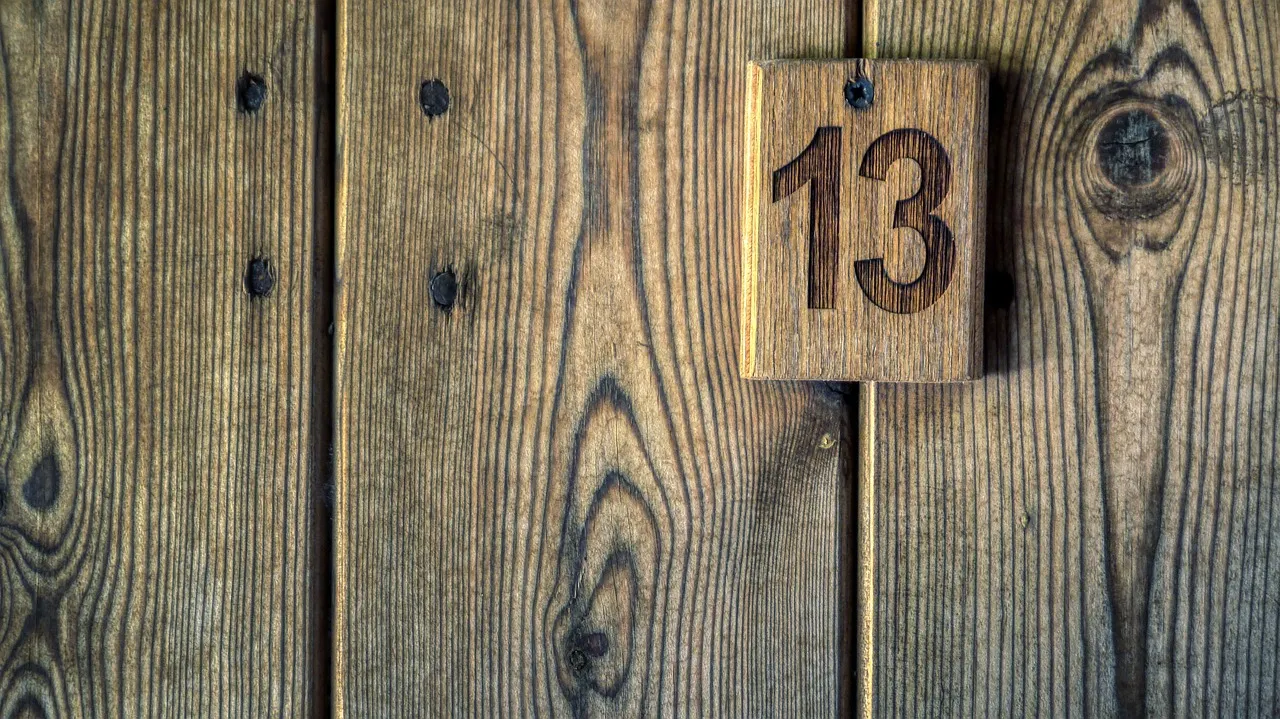
It will soon be Friday the 13th and, just like most countries, Switzerland has its own list of strange superstitions.
Overall, the Swiss are very pragmatic and rational but, like people everywhere, they sometimes believe in truly weird things — and not just on Halloween.
Some beliefs and superstitions are the same as in other countries and have taken hold in all of Switzerland’s linguistic regions— for instance, fear of number 13 or of black cats crossing the road in front of you — while others are derived from local customs.
Here are some of them.
Step on (in) it
Not surprisingly, one of the superstitions that has taken root pretty much everywhere in Switzerland has to do with cows.
More specifically, many people believe that if you accidentally step into cow’s dung (not that anyone would actually do it on purpose), you will come into money.
That’s a good thing, because you will need it to buy a new pair of shoes.
Advertisement
The devil lives in the Alps
At the border of cantons Vaud and Valais, stands the glacier of Les Diablerets, which in French means the abodes of devils. Many people believe it is so named after the evil spirits who roamed — and possibly still roam — there.
However, the Swiss have adopted a…”devil-may-care” attitude about this legend; after all, Les Diablerets is one of the most popular ski domains in both cantons, so to hell with the superstitions.
Casting a spell
Witches have a prominent role in superstitions, particularly in the Swiss-German part, where they are called “hexen.”
If you want to know if someone is a witch, you have to lick them on the forehead. If it tastes salty, indicating that the person is indeed a witch or a sorcerer, you must rush into a church and collect dust from three angles. Then pick up three different types of wood and light it to “smoke” the witch.
Advertisement
More witches…and cows
Sorcerers, it is believed, can put their spells on all creatures big and small, including cattle.
If that happens to a bull of yours, draw a cross on the inside and outside of the barn, light a fire, and throw in flowers from the churchyard to ward off the spell.
And if you accidentally step into dung on your way out of the barn, all the better!
The “13” controversy
When it comes to number 13, three opposing views prevail in Switzerland.
One maintains that it is unlucky and to be avoided at all costs. Among them are SWISS airline, which doesn’t have row 13 on any of its aircraft, and another is University Hospital in Zurich, which doesn’t have room number 13.
In the opposing camp is the casino in St. Moritz, where 13 is celebrated as a lucky number. On the 13th of each month, visitors have the opportunity to take part in a raffle at 12:13 a.m. and possibly receive a main prize.
Then there is a third group in Switzerland — those who don’t care one bit about number 13. In fact, rumour has it they want to launch a referendum to eradicate number 13 once and for all.
Advertisement
Plant a tree
Of course, not all superstitions relate to bad luck.
One of the good ones relates to a wedding tradition.
Some newlyweds in Switzerland plant a tree outside their home to bless their union, and bring good luck and fertility to the marriage.
Lucky charms
In some parts of the country, a pig is seen as a symbol of good luck, particularly at New Year, when people offer their friends and loved ones marzipan pigs as New Year gifts.
This belief dates to the Middle Ages, when owning a lot of pigs was a sign of wealth and prosperity.
There is no research to indicate whether this method is more effective than stepping in cow dung.
It may just be a matter of luck.


