


BAKU, Azerbaijan, June 5. Central Asia is a
region of increasing strategic relevance for Saipem. We see strong
opportunities to expand our presence, both through direct project
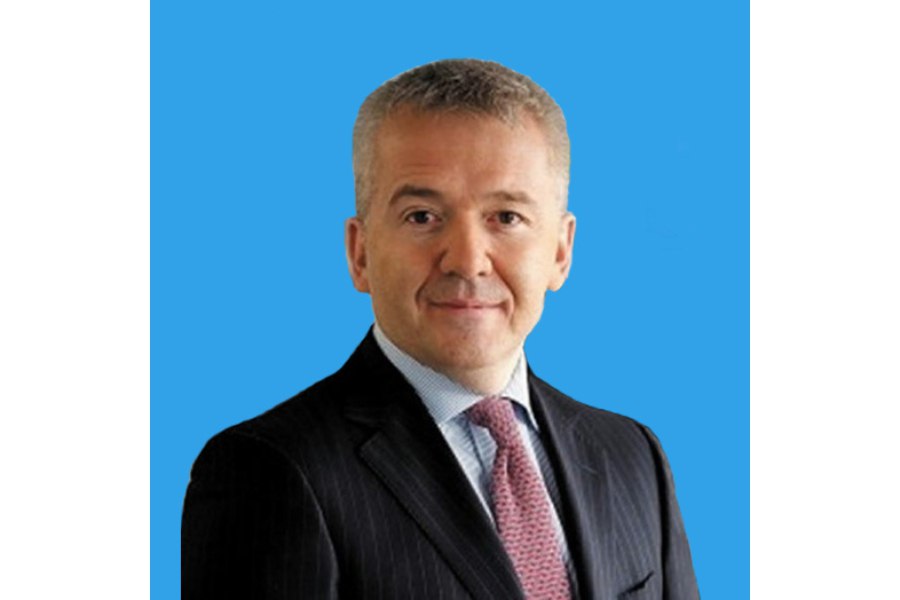
involvement and strategic partnerships, said Ernesto Ferlenghi,
Saipem’s Country Manager for Romania, Azerbaijan, Kazakhstan, and
Türkiye, in an exclusive interview with Trend.
With decades of experience in complex onshore and offshore
energy projects, Saipem is positioning itself to play a leading
role in building the infrastructure that connects Central Asia’s
landlocked energy producers to international markets. The company’s
core strengths lie in engineering and project delivery across
pipeline systems, LNG logistics, refineries, and energy transition
assets.
Enhancing connectivity through engineering
excellence
“Saipem plays a pivotal role in enhancing energy connectivity
between Central Asia and global markets,” Ferlenghi noted. “Through
our engineering and project delivery capabilities, Saipem
contributes to building resilient, efficient infrastructure that
connects landlocked producers to international markets –
particularly through pipeline corridors, LNG logistics, and
industrial hubs”.
As environmental standards evolve globally, Saipem is also
bringing its low-carbon expertise to the region. “We also bring
experience in low-carbon solutions, helping align regional projects
with evolving environmental and decarbonization standards that are
increasingly required by global investors and buyers,” he said.
The company’s current focus is on sectors where it can deliver
high technical and integrated value – from pipeline systems and
upstream processing facilities to refining and the integration of
renewable energy into conventional infrastructure. In parallel,
Saipem is exploring industrial decarbonization, hydrogen
development, and carbon capture solutions tailored to the region’s
energy transition goals.
Expanding regional presence and long-term
partnerships
“We are already active in Azerbaijan and are evaluating
opportunities in Kazakhstan and Uzbekistan, where national roadmaps
support both energy exports and sustainability-driven investments,”
Ferlenghi added.
He emphasized that Saipem aims to foster long-term partnerships
in the region, based on local content, innovation, and
environmental responsibility. “Our goal is to build long-term local
content partnerships while delivering quality, safety, and
innovation – with special attention to environmental issues”.
He further noted that Saipem is reinforcing its commitment to
sustainable development and local empowerment in Central Asia and
the Caspian region, combining long-term investments in human
capital with cutting-edge technologies aimed at supporting the
energy transition.
“In the area today we have approximately 330 people and over 60%
are local,” Ferlenghi said. He noted that Saipem’s approach to
local development is deeply rooted in education and community
empowerment. “As all over the world, our strategy is based on
long-term investments in education development projects,
empowerment of local communities to contribute to their economic
development, and preserve cultural heritage”.
In Azerbaijan, Saipem runs annual training sessions for students
at local schools and universities. These programs are designed to
enhance students’ technical understanding and raise awareness about
safety and healthcare. “These training sessions improve the
understanding of safety and healthcare among school and university
students,” Ferlenghi added.
Beyond education, Saipem is looking to play a more active role
in addressing the region’s evolving energy landscape. “Saipem wants
to be part of the challenge of the Central Asia region that has now
entered a new phase to address the growing domestic energy demand,
setting a path to a low-carbon economy,” Ferlenghi said.
With a long history in the traditional energy sector, Saipem is
adapting its expertise to meet new environmental expectations. “We
meet the needs of the traditional energy sector by offering
technologies that enhance energy efficiency and reduce emissions,”
Ferlenghi noted.
Green technologies for a low-carbon
future
He pointed to Saipem’s distinctive portfolio of green
technologies, which includes offshore wind capabilities and carbon
capture solutions. “This is why Saipem can be the ideal partner for
the increasing demand for green technologies in the region,” he
said. One example is Saipem’s proprietary Bluenzyme solution, an
enzymatic carbon capture technology designed to help reduce
emissions efficiently and sustainably.
Ernesto Ferlenghi further added that Saipem is reaffirming its
long-standing commitment to the Caspian and Central Asian region by
positioning itself as a key partner in its sustainable
development.
“We’ve been working in Kazakhstan since 1995 and in Azerbaijan
since 1996,” he said. “Our involvement reflects a commitment to
providing innovative, sustainable and technologically advanced
solutions for complex energy projects”.
Saipem has played a major role in several landmark energy
developments. In Kazakhstan, the company was instrumental in the
Kashagan oil field project, executed between 2009 and 2016. The
project faced extreme environmental and technical challenges, from
harsh weather conditions to shallow waters and frozen soils. Saipem
managed the engineering, procurement, construction, and
installation (EPCI) of offshore infrastructure, including 95
kilometers of underwater pipelines linking offshore platforms to
onshore facilities.
“This was a record-breaking achievement,” Ferlenghi said. “It
included the longest pipeline shore pull in floating conditions,
spanning 10 kilometers. It was executed in an isolated area with a
very shallow profile, and significant attention was paid to
environmental conservation”.
In Azerbaijan, Saipem contributed to the development of the
Azeri-Chirag-Gunashli (ACG) oil field and was awarded a contract
for Shah Deniz Stage 2, one of the most ambitious gas field
developments in the region.
Supporting the next phase of
energy
Looking ahead, Saipem aims to support the region’s energy
transition with a suite of innovative technologies. “We are
implementing energy efficiency improvements, process optimization,
carbon capture, utilization and storage (CCUS), and hybridization
of power generation systems,” Ferlenghi explained.
Among Saipem’s forward-looking projects is the production of
blue ammonia using natural gas from the region. The process
involves capturing CO₂ with proprietary enzymatic technology and
building environmentally sustainable plants to produce fertilizers.
“This initiative addresses both climate change and food security,
anticipating future population growth,” the country manager
concluded.


