


Refugees are trained as care assistants in the Bernese Oberland
Keystone-SDA
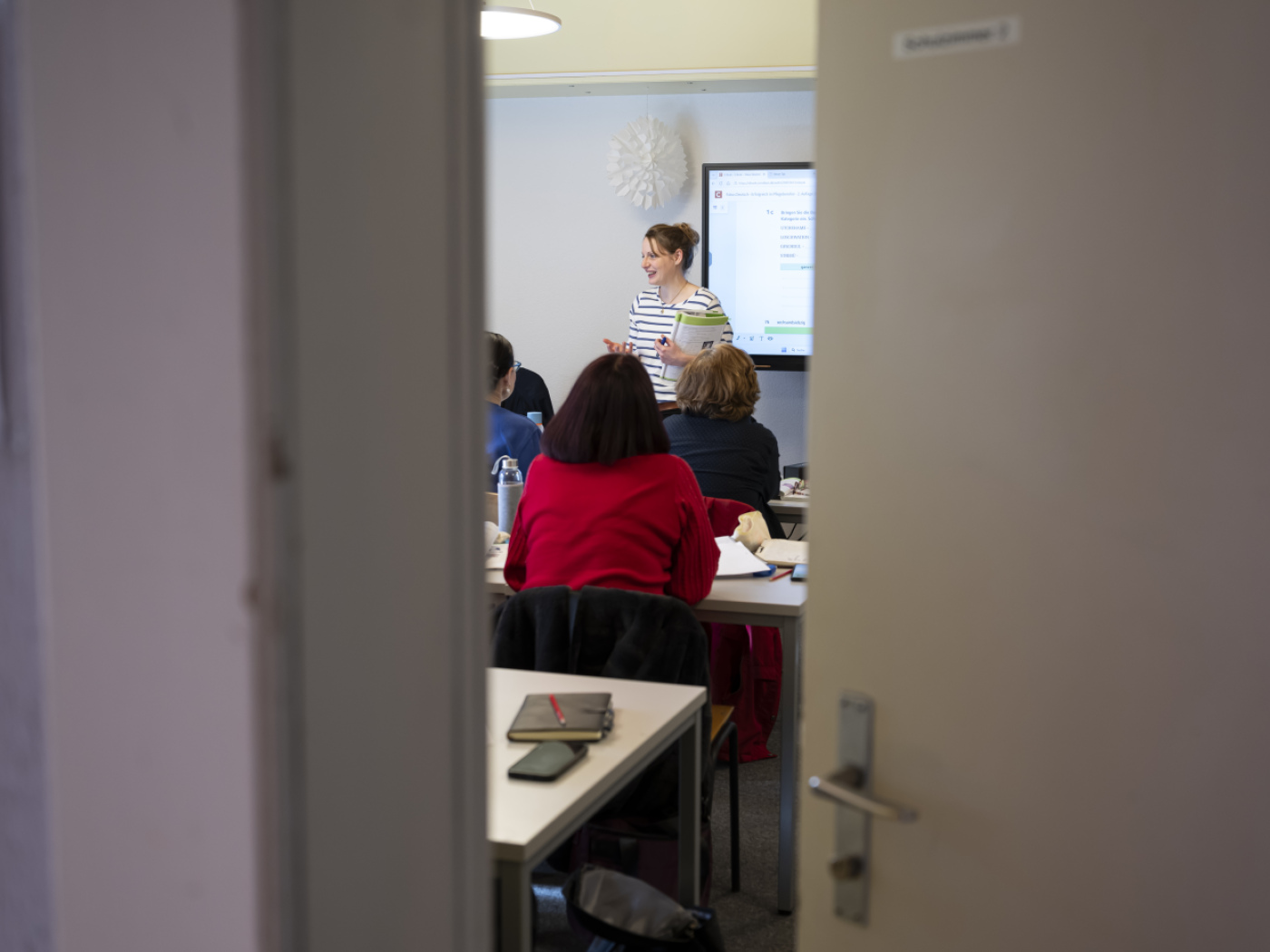
In the refugee training centre in Ringgenberg in western Switzerland, 32 people with asylum or refugee status are currently training to work in nursing care.
+ Get the most important news from Switzerland in your inbox
The centre has been operated by the Bernese Oberland Asylum Association on behalf of canton Bern since August 2025. Over roughly 20 months, refugees receive language tuition and vocational training to help them move into jobs in the care sector.
Ringgenberg is the canton’s second training centre of this kind, after the one in Bellelay. “This shows that early integration is the right approach to give refugees real prospects and help them settle into society from the start,” said Pierre‑Alain Schnegg (Swiss People’s Party), the canton’s director of health, social affairs and integration, during a visit to the centre.
The canton said the initiator of these training programmes – which are unique in Switzerland – also thanked the municipality of Ringgenberg. The local authorities had agreed to convert the former collective accommodation into a training centre.
Fully booked
The first two modules, each with 16 participants, are already fully booked. Once all four courses are up and running, around 60 people will be in training.
All participants in the first group passed their A1 language exam in December. Alongside their language lessons, the trainee nursing assistants also completed practical placements at 14 institutions across the Bernese Oberland. In the final module, they finish their training with a Swiss Red Cross (SRC) certificate.
The first certificates were awarded in Bellelay in mid‑January, according to the authorities. Around 120 people are currently training there, and another centre is planned in Sumiswald.
Translated from German by AI/sp
We select the most relevant news for an international audience and use automatic translation tools to translate them into English. A journalist then reviews the translation for clarity and accuracy before publication.
Providing you with automatically translated news gives us the time to write more in-depth articles. The news stories we select have been written and carefully fact-checked by an external editorial team from news agencies such as Bloomberg or Keystone.
If you have any questions about how we work, write to us at english@swissinfo.ch


