


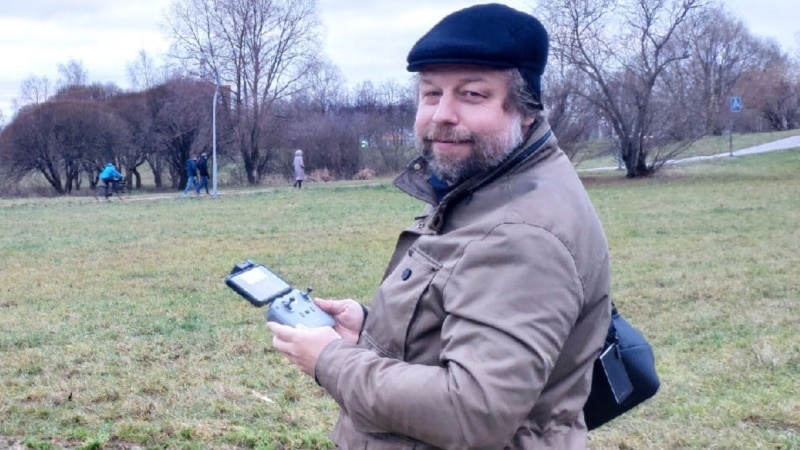
A district court in Warsaw has approved a Ukrainian request to extradite Russian archaeologist Aleksandr Butyagin, a prominent scholar accused by Kyiv of illegally conducting excavations in annexed Crimea and damaging cultural heritage sites.
The court recognized “the full admissibility” of Ukraine’s request, which followed Butyagin’s arrest in December 2025.
Butyagin’s lawyer said he would appeal the decision, which Russia’s Foreign Ministry called “political.” The 54-year-old archaeologist will remain in custody in Poland during any appeal.
Butyagin was detained in Warsaw while traveling from the Netherlands, where he had been delivering lectures, based on an international warrant issued by Ukrainian authorities.
According to prosecutors, Ukraine accuses him of damaging a cultural heritage site during archaeological work in Crimea, causing losses estimated at more than 200 million hryvnyas (about $4.8 million). If convicted, he could face up to five years in prison.
The charges stem from excavations carried out after Russia annexed Crimea in 2014. Ukraine considers such work illegal without its authorization, arguing it violates both domestic law and international conventions on protecting cultural heritage in occupied territories.
Butyagin is a senior researcher at the prestigious State Hermitage Museum in Saint Petersburg, and he has led archaeological expeditions in Crimea for decades, including at the ancient Greek site of Mirmekion near Kerch.
His work has earned academic recognition but also placed him at the center of disputes over research conducted in Crimea under Russian control. Ukrainian authorities say such excavations constitute unauthorized interference in protected cultural sites.
Russian Protests
Russia’s Foreign Ministry has condemned Butyagin’s arrest, calling the charges “absurd” and politically motivated.
In January, the ministry summoned Poland’s ambassador to Moscow to lodge a protest, describing Butyagin as a “world-renowned archaeologist” whose work adheres to international academic standards. Russian officials also noted that he had traveled to other European countries without incident, suggesting his detention in Poland was selective.
Moscow has framed the case as part of broader tensions with Ukraine, accusing Kyiv of targeting Russian scholars for what it describes as purely scientific work.
Polish authorities have not publicly commented in detail on the case, beyond confirming that the arrest and court proceedings were conducted in accordance with legal procedures and international obligations. Poland, a strong supporter of Ukraine since Russia’s full-scale invasion in 2022, has consistently backed Kyiv’s territorial claims.
Under international law, including the Hague Convention, unauthorized archaeological work in occupied territories is prohibited unless required for preservation or documentation. Ukraine and much of the international community consider Crimea to be occupied following its annexation by Russia in 2014.
Ukrainian officials have also reported the removal of archaeological artifacts from Crimea to Russia, raising further concerns about potential violations of international law.


