


The crisis is affecting agricultural production and food security worldwide, with impacts on farmers but also migrant workers, Máximo Torero told journalists at UN Headquarters in New York.
“Temporality matters a lot right now and the clock is ticking very hard, and I think we need to find a solution as soon as possible,” he said via videoconference from Rome.
‘Double shock’ for farmers
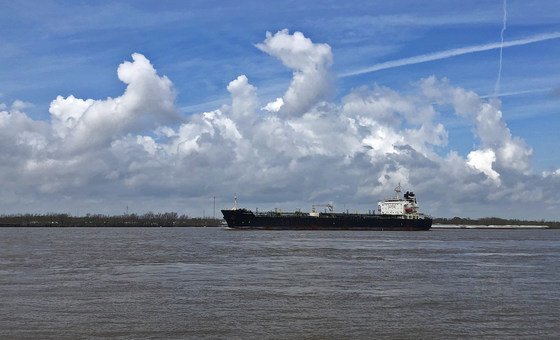
Since the war erupted, tanker traffic in the Strait of Hormuz has declined by more than 90 per cent.
Normally, 35 per cent of global crude oil flows – 20 million barrels – along with 30 per cent of fertilizer trade, and a fifth of liquefied natural gas passes through the critical maritime corridor each day.
As a result, farmers are facing “a double shock” brought on by rising prices for fertilizer and fuel, both key for agricultural production.
Concern for consumers
If a solution is found soon, markets could stabilise within roughly three months, but the picture changes if disruptions continue.
“The medium-term scenario of a three-month blockade will affect all farmers globally, and then we will have different elements that could impact mostly in the next season,” he said, pointing to reduced crop yields and substitutions.
The situation could also spark competition from the biofuel sector, particularly if oil prices rise above $100 a barrel. Although farmers would benefit, “it will be bad for consumers because prices will increase.”
Vulnerable nations
In the short term, priority must be on countries such as Sri Lanka and Bangladesh, where rice harvests are happening now.
African nations that depend on fertilizer imports are also vulnerable, he said, although “big exporters” like Argentina, Brazil and the United States will also be affected.
Regarding the Gulf, Mr. Torero noted that food prices are already “skyrocketing” in Iran. Although the country produces roughly 70 per cent of its own supply, the rest is imported.
Meanwhile, “huge importers of food” such as Qatar and the United Arab Emirates will face challenges because no vessels are going to the region.
Gulf countries also host millions of migrant workers from South Asia and East Africa. Remittances sent to their homelands could decline if the conflict continues.
Solutions needed now
To mitigate the crisis, Mr. Torero stressed the need to find alternative maritime routes in the short term.
“We need to provide emergency balance of payment support to import-dependent nations before planting windows,” he added.
In the medium term, countries must diversify fertilizer import sources, strengthen regional reserve sharing and avoid export restrictions, while increasing resilience will be critical in the long term.
“We need to treat food systems with the same strategic importance as energy and transport sectors, investing accordingly to minimize those shocks,” he concluded.


