


Briefing journalists by video link from Jeddah following an extensive visit to the region, Jean-Pierre Lacroix, said there has been an uptick in dangerous incidents involving peacekeepers and the fragile environment in which missions are operating.
He added that UN missions are continuing to deliver on their mandates despite increasingly challenging conditions on the ground.
“There is no pre-drawdown mandate,” Mr. Lacroix said of the UN Interim Force in Lebanon (UNIFIL), stressing that the mission will continue to operate under its current authorisation until the end of December 2026.
UNIFIL, he said, remains focused on supporting the Lebanese Armed Forces (LAF) and advancing implementation of Security Council resolution 1701, which brought an end to hostilities between Israeli forces and Hezbollah in 2006.
Mr. Lacroix said cooperation with Lebanese authorities and the LAF remained “excellent,” and welcomed recent statements by the Government regarding progress in establishing operational control in the south, while acknowledging that “a number of things remain to be done.”
Increasing danger
At the same time, he expressed grave concern over a growing number of hostile incidents affecting UN peacekeepers, particularly those involving the Israeli Defense Forces.
“The frequency of these incidents has been quite high – it has been increasing,” he said, warning that several encounters “could have had very tragic consequences” for peacekeepers.
He said he had raised the issue with Israeli counterparts, stressing that “it is in no one’s interest to put the lives of peacekeepers at risk,” and reminded all parties of their responsibility to ensure the safety and security of UN personnel.
Mr. Lacroix also described widespread devastation in southern Lebanon, where entire villages and civilians remain unable to return to their homes, undermining prospects for recovery and reconstruction.
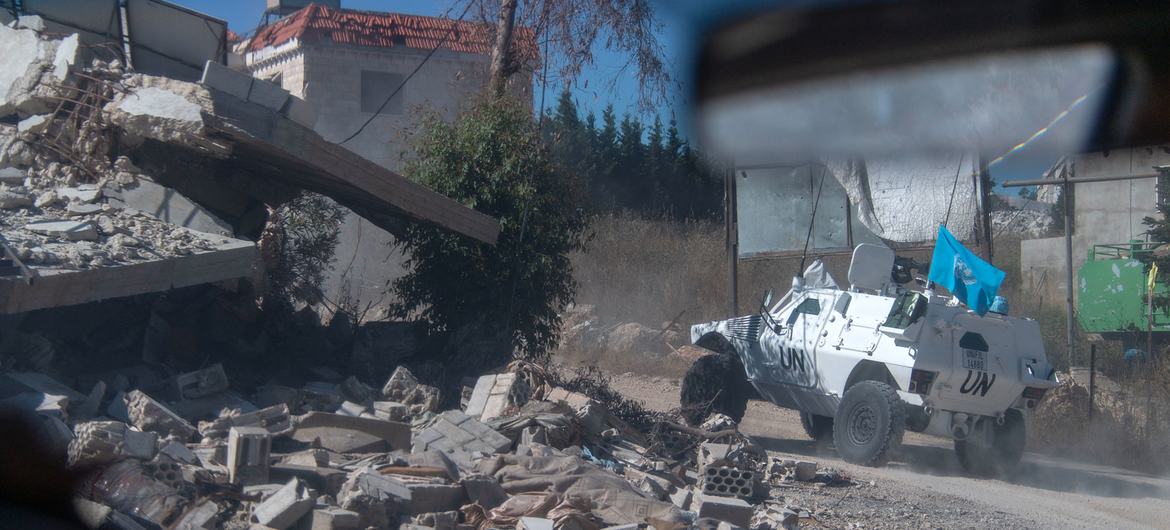
A UNIFIL convoy in southern Lebanon. (file photo)
Financial strain and adaptation
Beyond security risks, Mr. Lacroix highlighted the impact of funding shortfalls on peacekeeping operations, noting that UNIFIL and other missions have had to implement savings plans due to delayed or incomplete contributions by some Member States.
He praised peacekeepers for adapting under pressure, saying they had “succeeded in mitigating the impact” of financial constraints through innovation and operational adjustments.
Syria and regional dynamics
Turning to Syria, Mr. Lacroix said the UN Disengagement Observer Force (UNDOF) continues to carry out its mandate with strong backing from both the Security Council and Syrian authorities.
However, he noted that conditions on the ground have changed significantly since Israeli forces established positions inside the area of separation defined by the 1974 disengagement agreement.
Established in May 1974, following the Yom Kippur War, UNDOF is mandated to maintain the ceasefire between Israel and Syria, and supervise the areas of separation as provided in the 1974 agreement.
“What we would want is a return to the situation where UNDOF would be the only military presence in the area of separation,” Mr. Lacroix said, describing recent talks between Israel and Syria, mediated by the United States, as “positive.”
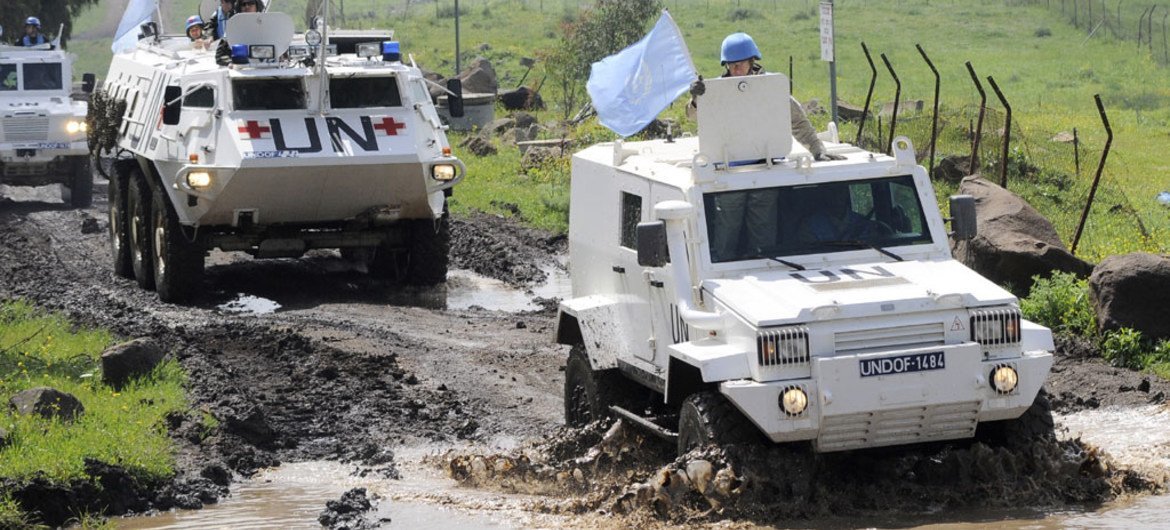
UNDOF peacekeepers on patrol in the Golan Heights.
Mine action and wider needs
He also underscored the growing importance of UN mine action efforts in Lebanon, Syria, Gaza and the Occupied Palestinian Territory overall, saying needs were “huge” and urging greater donor support.
“We are willing to do more,” Mr. Lacroix said, stressing that additional resources would be critical to protect civilians and support recovery in conflict-affected areas.


