


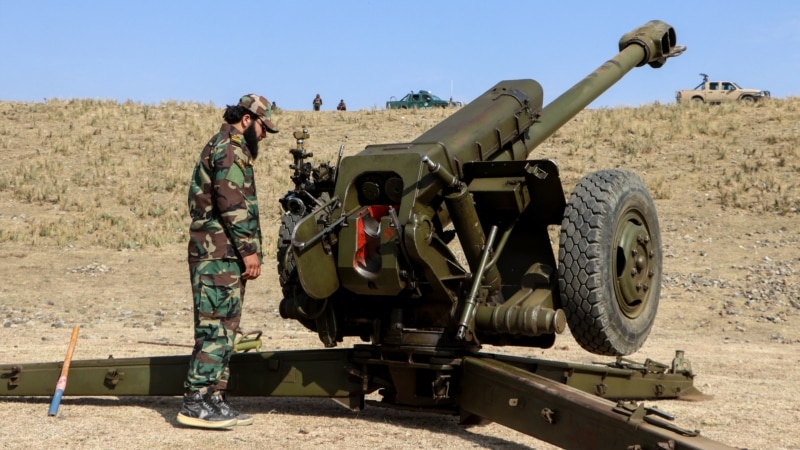
Pakistan has carried out its biggest-ever attacks on Afghanistan, including targeting two of the country’s largest cities, heightening fears of an all-out war between the two neighbors.
Pakistani jets on February 27 bombed military targets in Afghan capital, Kabul, the southern city of Kandahar, home to the Taliban’s spiritual leader Mullah Haibatullah Akhundzada, and in the eastern provinces of Nangarhar, Paktia, Paktika, and Laghman, the Pakistani Army said.
In retaliation, Afghanistan’s Taliban government said it launched drone and rocket attacks targeting military installations and security forces in northwestern Pakistan.
“Pakistan’s strikes inside Afghanistan appear to be the most serious escalation since the Taliban returned to power in 2021,” said Khalid Sultan, an Islamabad-based analyst.
“Unlike earlier, when there were more limited counterterrorism air strikes targeting militant hideouts, this round has been broader in scope, hitting major cities, and framed in much stronger ‘state-to-state’ terms.”
The number of casualties from Pakistan’s air strikes and the Taliban’s retaliatory attacks were unclear, with both sides claiming to have killed dozens of fighters. Both sides reported civilian casualties.
Islamabad launched the air strikes after the Afghan Taliban attacked Pakistani border positions. The attacks by Afghan forces were a response to Pakistani air strikes along the border earlier in the week.
‘Conventional Conflict’
The attacks on February 27 mark the worst flare up since October 2025, when fierce fighting erupted between Taliban fighters and Pakistani security forces, leaving dozens dead and key border crossings closed.
The border clashes occurred just days after Pakistan carried out unprecedented drone strikes in the center of Kabul as well as air strikes in the country’s east.
Pakistan’s strikes last year targeted the leadership and hideouts of the Tehrik-e-Taliban Pakistan (TTP) extremist group, also known as the Pakistani Taliban, inside Afghanistan. Islamabad accuses the Afghan Taliban of sheltering the TTP, an allegation it denies.
What makes the latest strikes different is that Pakistan targeted the Taliban government’s military infrastructure and hit security installations and arms depots in Afghanistan, said Amir Rana, the head of the Pak Institute of Peace Studies (PIPS), an Islamabad-based think tank.
“This is the first conventional conflict between the two sides,” said Rana. “Previous air strikes were meant to caution the Taliban. Now, this is a war-like situation.”
Underscoring the shift, Pakistani Defense Minister Khawaja M Asif, declared “open war” on the Afghan Taliban, in a strongly worded post on X.
Allies Turned Foes
Pakistan’s relations with the Afghan Taliban, a close ally for decades, have deteriorated sharply in recent years.
Islamabad had supported the Taliban since the group first emerged in the 1990s, including allegedly during the group’s 20-year insurgency against the US-backed Afghan government.
The strategy, experts say, was to install a pliant government in Kabul that would secure Pakistani interests. But that strategy appears to have backfired.
Since the Taliban seized power in 2021, the TTP has waged an increasingly deadly insurgency against Islamabad.
The extremist group has killed hundreds of Pakistani security personnel in recent years. In November, the TTP claimed responsibility for bombing a courthouse in Islamabad that killed around a dozen people.
Mohammad Naeem Ghayur, an Afghan defense analyst, said Islamabad has demanded that the Afghan Taliban expel the TTP from Afghanistan and cut logistical and military support to the group.
But that is unlikely, experts say, given the close ideological, organizational, and tribal ties between the TTP and Afghan Taliban.
Moreover, “there are factions within the Afghan Taliban that oppose Pakistan,” said Ghayur.


