


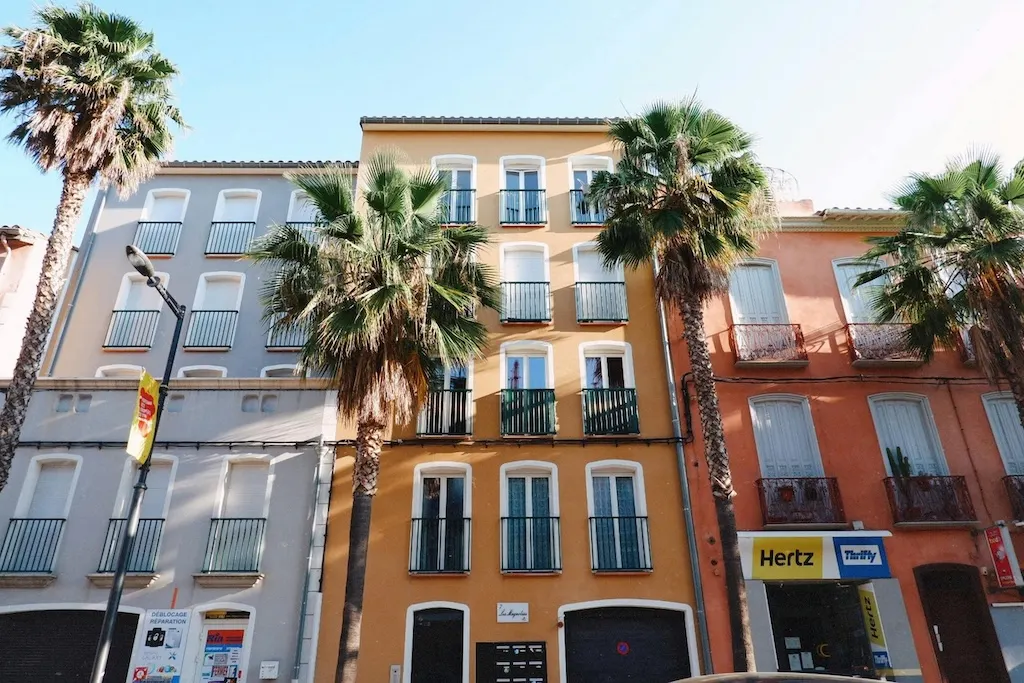
The number of short-term accommodation for tourists in Spain has fallen dramatically, according to the latest official data, coinciding with a government clampdown on illegally listed properties.
In November 2025, there were 329,764 holiday apartments throughout the country, according to the latest data from Spain’s National Statistics Institute (INE).
That’s 12.4 percent fewer than a year earlier, when there were 376,463, and 13.6 percent fewer than in May when there were 381,837, just before the government’s registry for short-term rentals came into effect.
This is the mandatory registration of homes intended for tourist, temporary or room rentals since July 1st 2025.
READ ALSO: How to register your tourist flat with the Spanish government
The current volume of tourist accommodation is the lowest since February 2023. The peak was recorded in August 2024 when there were more than 403,200 units.
Tourist apartments represented 1.24 percent of the total residential stock in Spain in November last year, which has fallen since the same month in 2024 when it was 1.41 percent.
According to INE data, the total number of beds in tourist accommodation in Spain was 1.62 million in November 2025, compared to 1.89 million in November 2024, a decrease of 14 percent.
The average number of beds per tourist accommodation also fell to 4.93, from 5.04 per apartment previously.
Andalusia registered the greatest number of tourist apartments with 91,757, and actually registered a year-on-year increase of 1.2 percent instead of a decline as seen overall and in most areas of the country.
READ ALSO: Short-term let owners in Spain must complete new form in February
Advertisement
The regions with the next highest number of tourist apartments were the Canary Islands with 49,676 (-3 percent), Valencia with 48,411 (-25 percent), and Catalonia with 46,915 (-11 percent).
Next were the Balearic Islands with 19,398 (-19.8 percent), Galicia with 15,236 (-22.5 percent), and Madrid with 15,309 (-26 percent).
By province, Málaga remains at the top of the list with more than 48,200 tourist units. This is followed by Alicante with almost 30,000, Las Palmas with 27,336, and Santa Cruz de Tenerife with 22,340.
Other provinces among the top 20 include the Balearic Islands, Barcelona, Girona, Tarragona, A Coruña, Pontevedra, Asturias, Madrid, Cádiz, Seville, Granada, and Murcia. The remaining provinces had fewer than 3,000 tourist units by the end of November 2025.
READ ALSO: Spain’s Málaga suspends new tourist flat licences for three years
Advertisement
According to data from the College of Property Registrars, the body responsible for issuing tourist accommodation numbers, as of early January, 299,754 properties had already obtained one, which allows them to advertise on sites like Airbnb, while another 16,581 had a provisional code. A total of 84,250 applications, however, have been revoked, resulting in a rejection rate of 21 percent.
Among the most common reasons for it being denied are that the tourist accommodation lacks the necessary tourist licence, that it does not have the required 3/5 majority approval from the homeowners’ association, or that it is a protected dwelling, which cannot be used for any purpose other than as a primary residence.
Over the last few years, the Spanish government, as well as local city councils have been doing a lot to try and reduce the number of tourist accommodation in the country, due to the ongoing housing crisis and protests from locals.
READ ALSO: Spain vows to turn 50,000 tourist lets into long-term rentals
As well as trying to close down illegal tourist lets, cities have also been making it more difficult for properties to get a tourist licence, introducing new rules like what floor they must be on, that they must have a separate entrance and can only be located in certain areas. Anyone wishing to operate a tourist apartment in a communal building, must also now get approval from the other homeowners to be able to do so.
Last week Spain also ordered online platforms to remove a further 86,275 illegal tourist and short-term rental adverts.
So far it seems like the methods are working and the number of tourist apartments are indeed decreasing and they could continue doing so this year too.


