


The seafarers are working on some 2,000 ships including oil and gas tankers, bulk carriers, cargo ships as well as six tourist cruise liners.
The ships are trapped in the Persian Gulf and are unable to pass through the narrow strait owing to the ongoing war in the Middle East.
Iran borders the strait on its northern side and has said it will only allow passage to “non-hostile” ships.
Prior to the conflict, around 150 vessels passed through the waterway every day, but now only four or five do so.
On Monday, two Chinese-flagged cargo ships had reportedly embarked on the four-to-six-hour journey through the strait and into the Gulf of Oman and safer waters outside the war zone.
Attacks on ships
Since the beginning of the conflict a month ago, there have been 19 attacks on vessels in the strait, according to the UN’s International Maritime Organization (IMO) in London.
Seven seafarers have been killed, eight injured and five have been reported as missing since the Israeli-US bombing of Iran began, sparking Iranian strikes across the Gulf.
On Tuesday, a fully loaded oil tanker was struck off the coast of Dubai, probably by an armed drone.
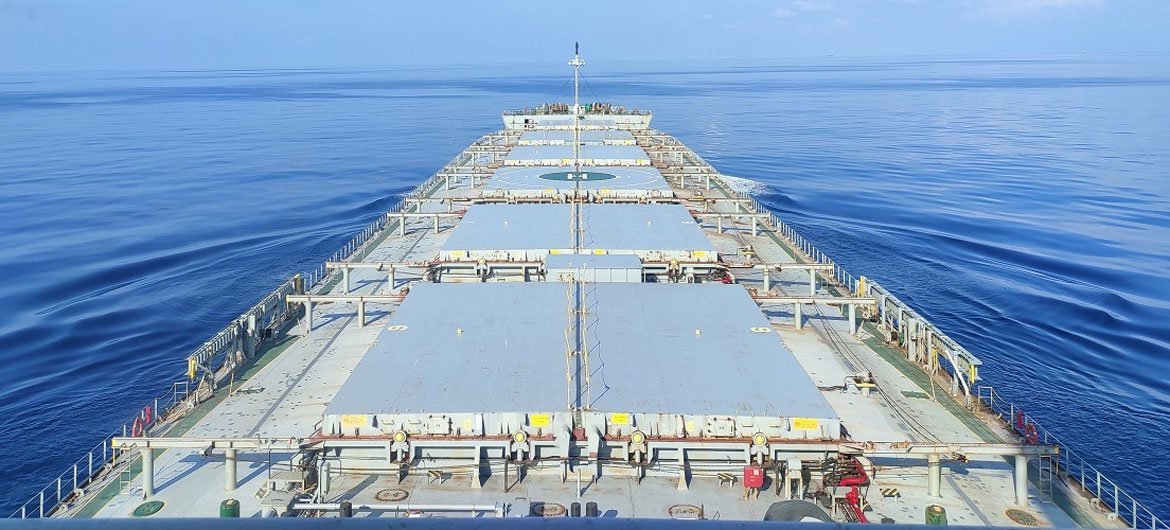
A cargo vessel sails in the open seas. (file)
It remains unclear why those 19 ships were specifically targeted.
There appear to have been fewer attacks in the past week, amid increased diplomatic moves to resolve the crisis.
Seafarer safety
The IMO, which is a specialized agency of the United Nations responsible for measures to improve the safety and security of international shipping, is focused on ensuring the evacuation and safety of the 20,000 seafarers.
“There is no precedent for the stranding of so many seafarers in the modern age,” said Damien Chevallier, Director of the organization’s Maritime Safety Division.
“IMO has called on all parties to the conflict to deescalate the attacks so that the seafarers can be evacuated to safety.”
“They have been working in an active war zone for a month,” said Mr. Chevallier. “It is a very scary situation and one can only imagine the psychological stress they are under.”
The International Transport Workers’ Federation, an IMO partner which represents seafarers, said it had received more than 1,000 emails from crew stranded on ships voicing concern about on-board conditions and asking for repatriation to their home countries.
“It might be possible to relieve those seafarers by replacing them with others as a ship obviously needs to a crew to carry on operating, but the companies running those vessels would need to find volunteers,” said Mr. Chevallier.
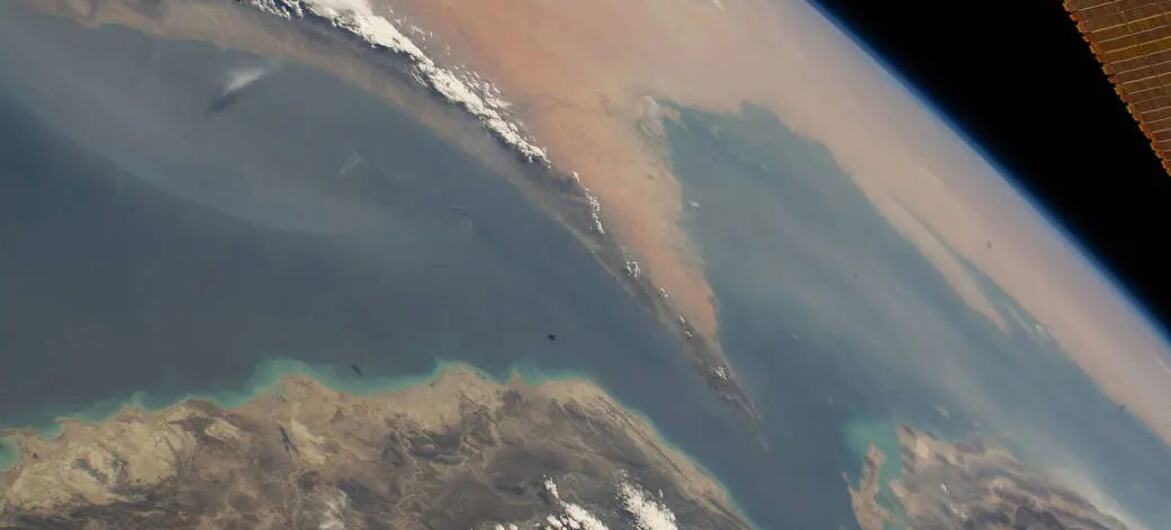
A satellite photo shows the strategically important shipping route of the Strait of Hormuz.
“The best solution is for those vessels to be able to pass to safety through the Strait of Hormuz, but that would require a cessation of hostilities,” he added.
Negotiating safe passage
The 2,000 vessels in the Persian Gulf are being resupplied with food, water and fuel by companies operating out of Saudi Arabia and Oman. The Saudi authorities have worked with IMO to provide information to the industry about how to contact those resupply companies.
It is not necessarily safer for those ships to remain in port, so the vessels are moving around the Gulf in search of secure locations where they can wait out the conflict, following the protocols of the shipping companies that own them.
As the IMO continues to engage with a range of interlocutors towards the evacuation of seafarers, the IMO’s Damien Chevallier said that the organization has asked Iran “for clarification of what constitutes a ‘hostile’ ship and one which could thus be under the threat of attack,” if it passed through the Strait of Hormuz.
Internationally agreed route
The strait is vitally important to the global economy. An estimated 20 per cent of the world’s oil and gas supplies pass through it.
An internationally agreed ship routing system, a two-way ship traffic separation scheme, was adopted by IMO in 1968 with agreement of countries in the region. This maps out the safest route through the narrow maritime corridor passing close to Oman in the south.
However, the few vessels that have transited have taken a northern route close to Iran, reportedly so the authorities there can monitor their movements more closely.
What next for seafarers?
IMO’s short-term aim is to secure the safety of all the crew currently stuck in the Persian Gulf, but there are longer-term concerns about the future of seafaring.
“If seafarers do not feel safe due to conflicts like the one which is taking place now, then it will be difficult to attract the next generation to meet what are expanding needs,” Mr. Chevallier explained.
“Without seafarers there can be no global trade which the world’s economies depend on.”


