


Nintendo is home to some of the most beloved characters in the video game industry—Mario, Pikachu, Kirby, and many others. But inside the company itself is another cast of beloved characters—the army of developers that has stuck with Nintendo for most of their careers.
“It’s almost impossible for any developer who is now of working age to have grown up without at least some influence from Nintendo,” says Keza MacDonald, author of the forthcoming book Super Nintendo: The Game-Changing Company That Unlocked the Power of Play, based off years of reporting on the company as a games journalist. “It is still, to this day, making games differently from everyone else.”
Indeed Nintendo has largely sidestepped the graphics arms race that has bedeviled both its hardware and software competitors, instead focusing on what Game Boy designer Gunpei Yokoi affectionately termed “withered technology”: Using well-established technology and focusing on making something fun instead. That strategy has also allowed Nintendo to avoid the high costs and constant retraining that are hamstringing its competitors.
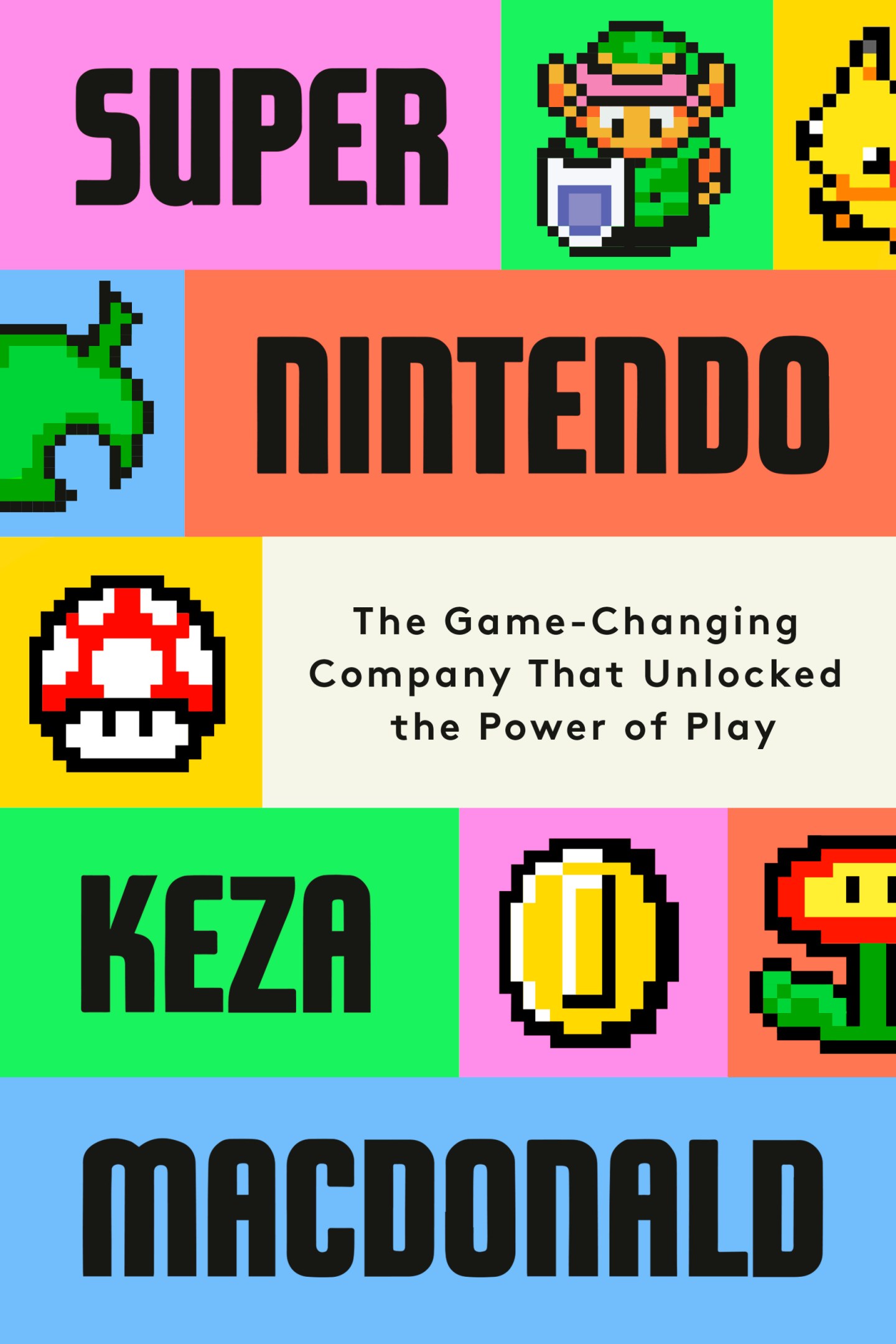
Courtesy of Penguin Random House
The Japanese game developer embraced “the principle of finding a playful way to design things that aren’t necessarily at the cutting-edge,” explains MacDonald, who currently writes about gaming for The Guardian. “That’s been a part of Nintendo’s philosophy since before it was even making video games.”
The Japanese company has what MacDonald deems a “slightly conservative” approach, ensuring that it maintains healthy profit margins and builds up large reserves of cash. “Nintendo always operates with an understanding that its next product might not be a hit,” she says.
Nintendo released the Switch 2, its latest video game console, earlier this year. While a few commentators griped that Nintendo’s latest version was just more powerful (and more expensive) than the last, gamers seem to have flocked to the new device. The company now expects to sell 19 million Switch 2 units by March 2026, the end of its fiscal year. The company reported 1.1 trillion Japanese yen ($7 billion) in revenue between March and September, more than double what it generated the same period a year ago. It also earned 199 billion yen ($1.3 billion) in profit, an 83% jump. Shares are up 46% for 2025 so far.
Nintendo was founded in 1889 as a company making playing cards and eventually moved to making toys in the 1960s. It shifted to video games in the 1970s, and had its first hit with Donkey Kong, developed by Shigeru Miyamoto, who eventually designed beloved franchises like Super Mario and The Legend of Zelda.
The game industry is known for its churn: Studios expand and contract according to changing demand. Around 10% of developers reported being laid off last year, and over 40% said they felt the effects of layoffs, according to a survey from the Game Developers Conference. “What that does is it robs companies of not just the knowledge, but also the security that helps people do their best work,” MacDonald says.
Nintendo, on the other hand, has sidestepped this boom and bust cycle. The company revealed earlier this year that its Japan-based employees had an average tenure of 15 years.
“The people who first made Nintendo’s hits are still working at the company,” MacDonald says. “For the last 50 years, these people have been passing down knowledge and training up a new generation of Nintendo creatives.”
She adds that the company also rejects hierarchy when it comes to design. “It’s not like the oldest guy gets to decide what’s a good idea and what isn’t. Everyone puts ideas in.”
Not all of Nintendo’s experiments work. Take the company’s Wii U console, released in 2012. Unlike its predecessor, the wildly successful Wii, the Wii U was a flop, selling barely 14 million units. Yet Nintendo took some of the design lessons from this failure and put them towards the Nintendo Switch—which, at 154 million units sold, is close to being the top-selling console of all time.
That’s just one of the things that MacDonald thinks that other companies—and not just those in the gaming industry—can learn from Nintendo.
“A failed idea is often a step towards the next hit you’re going to have.”


