


Just two weeks ago, on August 19, the UN in Geneva marked World Humanitarian Day.
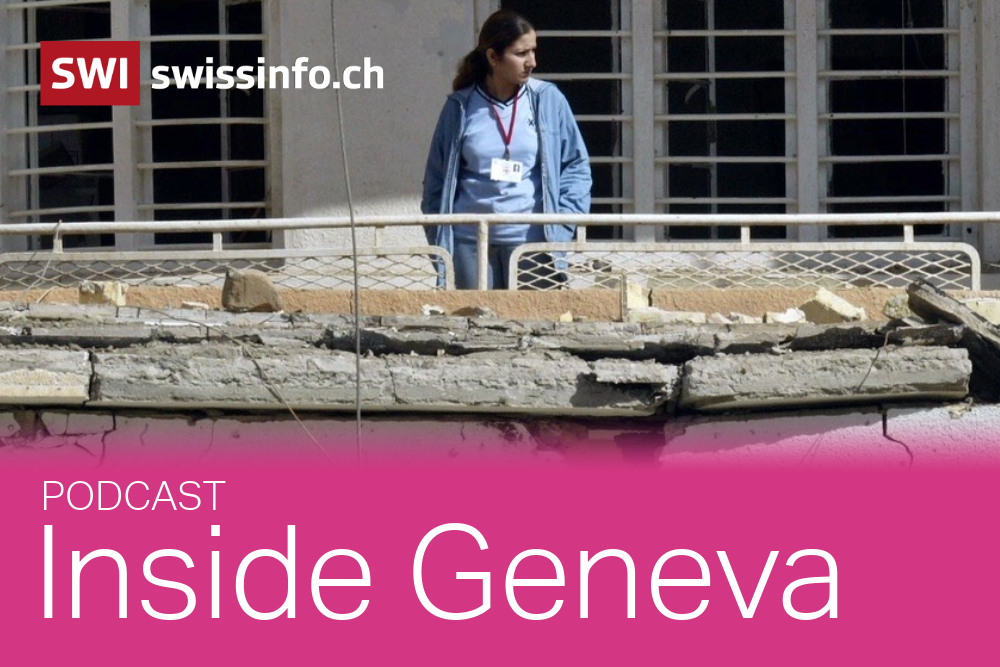
The day was initially introduced to commemorate the aid workers killed in the bombing of the UN’s Baghdad headquarters in 2003 (to hear moving testimony of that day, listen to our Inside Geneva special episode.
More
More
Special episode: World Humanitarian Day stories from crisis zones
More than two decades on, humanitarian workers face more risks than ever. Last year, a record 383 aid workers were killed doing their jobs. This year, by mid August, 265 had been killed. Most horrifying among all these tragic deaths, 15 emergency medical workers in Gaza in March. Israeli forces fired on their clearly marked vehicles, then buried the bodies in a mass grave.
Targeting aid workers is a clear violation of international law, something multiple aid agencies tried to remind us of on August 19. The International Committee of the Red Cross described the attacks on aid workers as “abhorrent”, and a “grave betrayal of humanity.” The UN’s Office for the Coordination of Humanitarian Affairs, OCHA, put out a powerful social media video demanding that “those with power and influence” act to protect humanitarian workers.
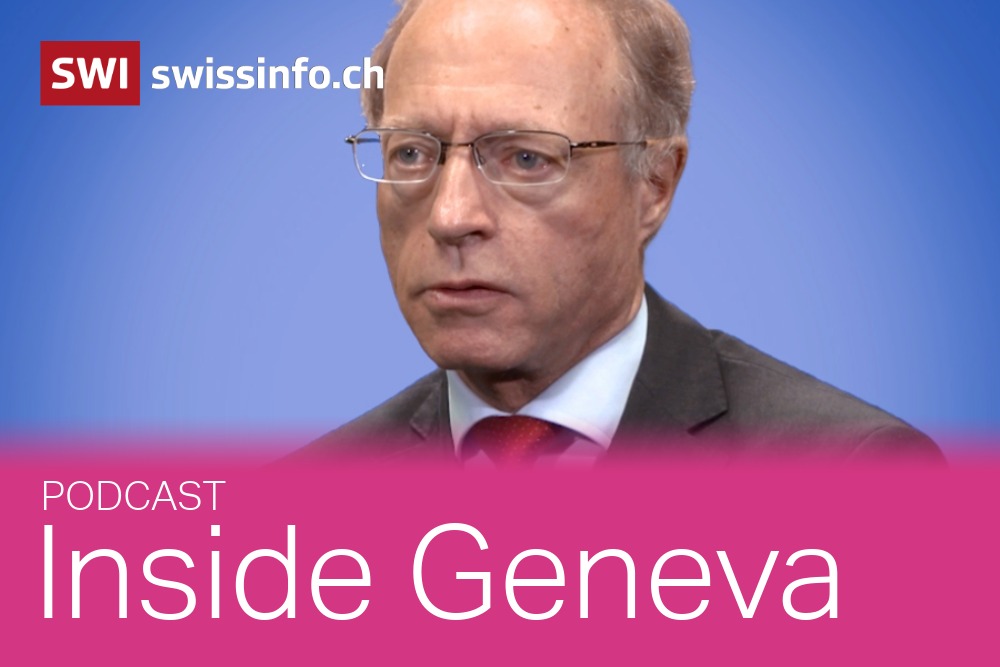
At the same time, aid agencies are coping with existential financial cuts, even as conflicts continue, and new ones flare up. So what would motivate someone to choose humanitarian work as a profession today? In this week’s Inside Geneva summer profile, we talk to Stéphane Jaquemet, who has spent his entire working life as a humanitarian.
More
More
Inside Geneva’s Summer Profiles: Stéphane Jaquemet
From Gaza, to former Yugoslavia, to Nepal
Jaquemet grew up in the Swiss village of St Maurice in canton Valais, where his parents had a small grocery shop. “They were not rich,” Jaquemet says, but they were determined their children should get an education – a route, his parents believed, to a better life.
Jaquemet studied law at university, and was conscious from the start that his place there was the product not just of his own academic skills, but of Switzerland’s policy of equal access to education – studying law was not just for the wealthy.
“There was a system which basically gave equal opportunity to all children. And I very quickly realised that there were many people who did not have this equal opportunity, did not have equal chances. And for me that was fundamentally wrong.”
That awareness of inequality led Jaquemet into humanitarian work with the International Committee of the Red Cross. His first posting: Gaza in the 1980s. It was, he remembers, already a very challenging situation.
‘‘Gaza was already bad at that time’ Jaquemet tells Inside Geneva. ‘There were curfews every night, there were raids by the Israeli army. They would break into houses, arrest mainly young people.”
The ICRC at that time had access to those arrested, but only after two weeks, Jaquemet recalls. “Most of the people had been beaten up,” he says. “They were really in very bad shape.”
“But it was very important to be the first contact with these people, and then…we would visit the family, and of course this first meeting with the family was something very special. It was extremely emotional.”
Achieving something
These moments in his career are the ones Jaquemet recalls with most satisfaction; moments where humanitarian workers could bring some relief to distraught, grieving families.
His time during the conflict in former Yugoslavia taught him that sometimes aid workers are helpless. He had colleagues in Sarajevo and other parts of Bosnia who he remembers were “traumatised and frustrated. Where they were the witnesses to ethnic cleansing without any possibility to support {people}”.
For Jaquement, posted to Krajina, now part of Croatia, things were a little better. “There were many violations,” he says. “But there was also the feeling, as a humanitarian actor, that something could be done. We were not able to address most of the violations, but I think we were able to support people, and to empower the refugees in particular.”
Most of Jaquemet’s career was in fact spent at the UN Refugee Agency, and a special highlight for him was working in Nepal, to resettle thousands of refugees from Bhutan. They had, he recalls “been there for fifteen years without any hope of return or any hope of resettlement.”
Then, suddenly, the United States stepped in with an offer of resettlement. The refugees came to life again, learning English, and planning their futures. “It was remarkable…to go from a situation where you really don’t have any hope, into providing real opportunities.”
And now?
Resettlement, of course, is only on offer to a tiny minority of the world’s refugees, and in the US under Donald Trump, all resettlement programmes have been stopped. So how does Jaquemet feel now, after a career spent trying to make life a little less hard for the world’s most vulnerable?
He is dismayed by the current narrative around migration, which he sees as “dictated by the far right.” He is also deeply disappointed by a “lack of reaction” from the international community to what is happening in Gaza.
And now, with huge financial cutbacks to humanitarian work, and thousands of aid workers losing their jobs, would he still encourage young people to choose the profession?
“Yes and no,” he answers after some hesitation. The funding cuts mean getting a job at all will be very difficult, he admits, but still “if you are a young person, really motivated to fight for a better world,” he would still offer encouragement.
“I still believe that we will be able to see a new, more positive cycle,” he says. “And that’s why I would encourage young people to remain interested in humanitarian work.”
So would he do it all again? “I would, I would, I’m still motivated.”
Listen to the full, fascinating conversation on Inside Geneva
vm


