


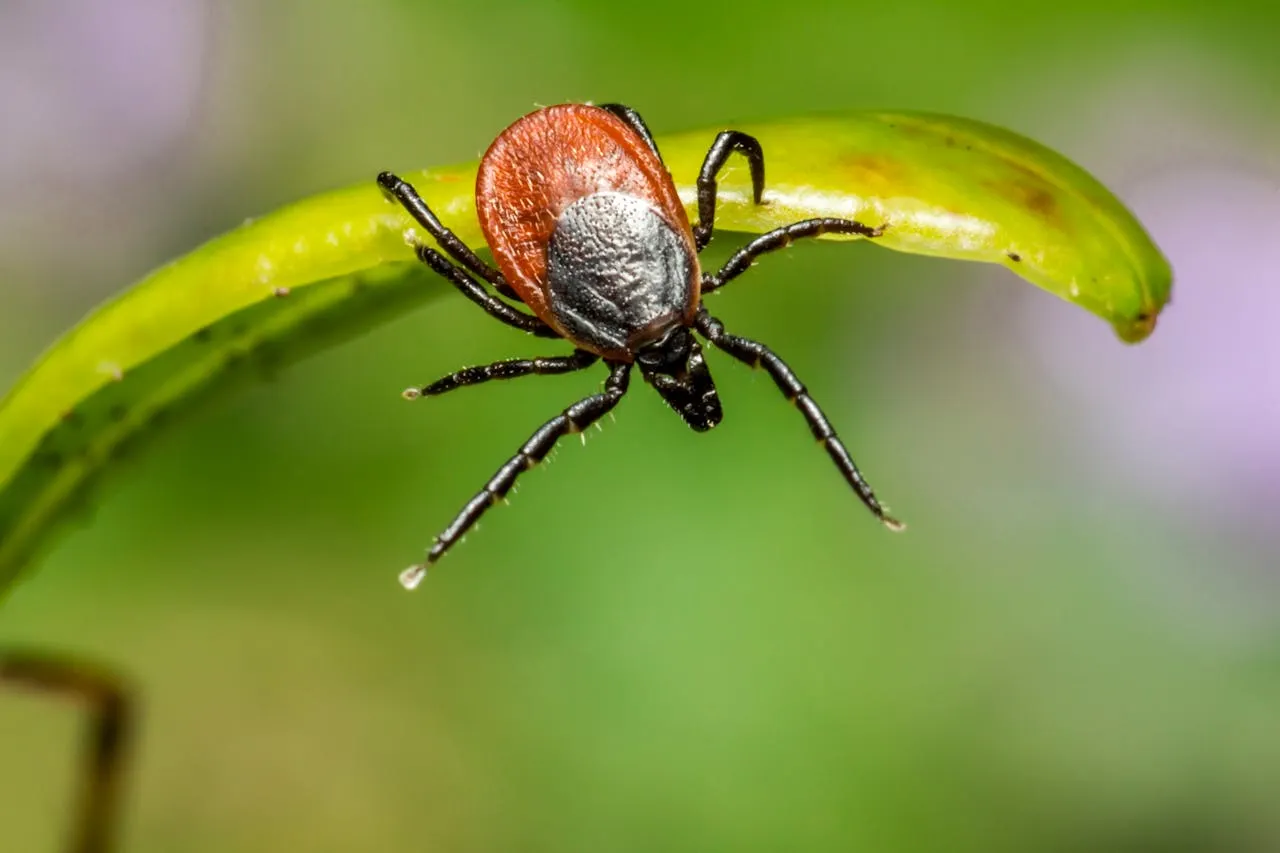
The number of tick bite cases is increasing in Switzerland, but people often underestimate the danger they pose. Here’s how to protect yourself.
Ticks are abundant in Switzerland every summer.
However, two varieties that are not native to Switzerland are actively ‘invading’ the country.
One is the Hyalomma tick.
And it is not pretty: experts say that when it is engorged with blood, it can measure up to two centimetres in length, which is almost three times the size of the common tick found in Switzerland.
It has eyes and actively pursues its victims.
The pathogens that these ticks carry should not be underestimated.
According to Werner Tischhauser, Vice President of the Swiss Tick League (yes, there really is such a thing), “if Hyalomma ticks were to spread here, that would be bad news for the population, because this species poses a significant threat.”
It could, for instance, cause Crimean-Congo fever, which can be fatal.
Next: the marsh tick
Also known as the meadow tick, this species is also increasingly establishing itself in Switzerland, migrating here from the Mediterranean region and North Africa. It affects both humans and dogs.
This tick transmits bacteria that cause Tibola syndrome, with patients experiencing fever, swollen lymph nodes, and skin changes at the bite site.
Fortunately, unlike the illness caused by the Hyalomma tick, this condition is not life-threatening.
Where are these invasive ticks most common?
These creatures prefer a mild climate, which is why people in living in mountainous regions are less affected than those at lower altitudes.
They are most numerous in the Jura, Emmental, and Toggenburg regions, and parts of the Zurich Oberland as well.
Advertisement
What should you do if you are bitten?
If you do get a tick, you should remove it safely. The sooner you can do this, the lower the risk that it will be able to infect you.
The best thing to do is to go to the doctor or a pharmacy to have the tick properly removed — if you just happen to be in the vicinity of one.
Otherwise, it can be done with a special tick remover (which you should be able to buy at most Swiss pharmacies) or tweezers.
Last but certainly not least: How can you protect yourself from tick bites?
Vaccination is the best way to protect yourself from the illnesses caused by ticks.
It is recommended from the age of three and is covered by basic insurance. The vaccination provides protection for 10 years.
You can also protect yourself from bites themselves ‒ wear long trousers and closed shoes (rather than sandals or flip-flops) when walking in the woods or in long grass.


