


Jean-Luc Godard filmed the clashes in the Latin Quarter, Paris, in the midst of May 1968.
Keystone
The Jean-Luc Godard Foundation has ambitious goals: to list, preserve and share Godard’s archive. The French-Swiss film director died in 2022, leaving behind works scattered worldwide and the thorny matter of film rights.
On the Rue des Petites Buttes in Rolle, western Switzerland, an ordinary door leads to an apartment. Although the door isn’t much to look at, it was immortalised in several films by the Jean-Luc Godard. It was, in fact, the entrance to his studio, an atelier that has been widely documented in films and photographs and reproduced in exhibitions. On January 16, the studio became home to the new Jean-Luc Godard FoundationExternal link.

The final destination: Jean-Luc Godard’s house in Rolle, Switzerland.
© Keystone / Laurent Gillieron
The Foundation’s goal is not “to create a mausoleum to pay homage to the butt of Jean-Luc Godard’s cigar”, says Frédéric Maire, a founding member who was close to the filmmaker. Instead, it aims to keep Godard’s work alive. Close friends and family, including former artistic collaborators and his nephew Paul Grivas, established the Foundation after Godard’s death to create a catalogue of his entire archive. This will not be easy as Godard had a habit of throwing everything out, and what remains of his work is widely dispersed among private and public collections.

Frederic Maire, director of the Swiss Film Archive, poses for a photo after an interview in June 2025 in Lausanne.
Martial Trezzini / Keystone
Maire is familiar with the challenges of preservation and cataloguing, and his new work on Godard’s oeuvre builds on his previous experience. He was formerly the artistic director of the Locarno Film Festival, and from 2009 to 2025 he directed the Cinémathèque Suisse, Switzerland’s national film archive. Godard knew the Cinémathèque well and attended screenings there. Maire worked regularly with Godard, as did his predecessor, Freddy Buache. The Cinémathèque holds a portion of Godard’s archive.
Distinguishing films from ‘non-films’
Godard’s body of work presents particular complications as it can be difficult to distinguish films from “non-films”, finished works from rough sketches. His last films with various collaborators, including Fabrice Aragno and Jean-Paul Battaggia, who are also Foundation members, are a good example of this mix of rough cuts, experimental films and finished film projects.
Some elements of Godard’s archive have already been highlighted in a multimedia project called What We Leave Behind and in the March 2026 edition of the French film magazine Cahiers du Cinéma. In order to catalogue Godard’s complete works, the Foundation plans to launch an appeal for information about items in private collections, film archives and museums worldwide. The goal is simply to ensure their preservation and accessibility, not to own or store them.
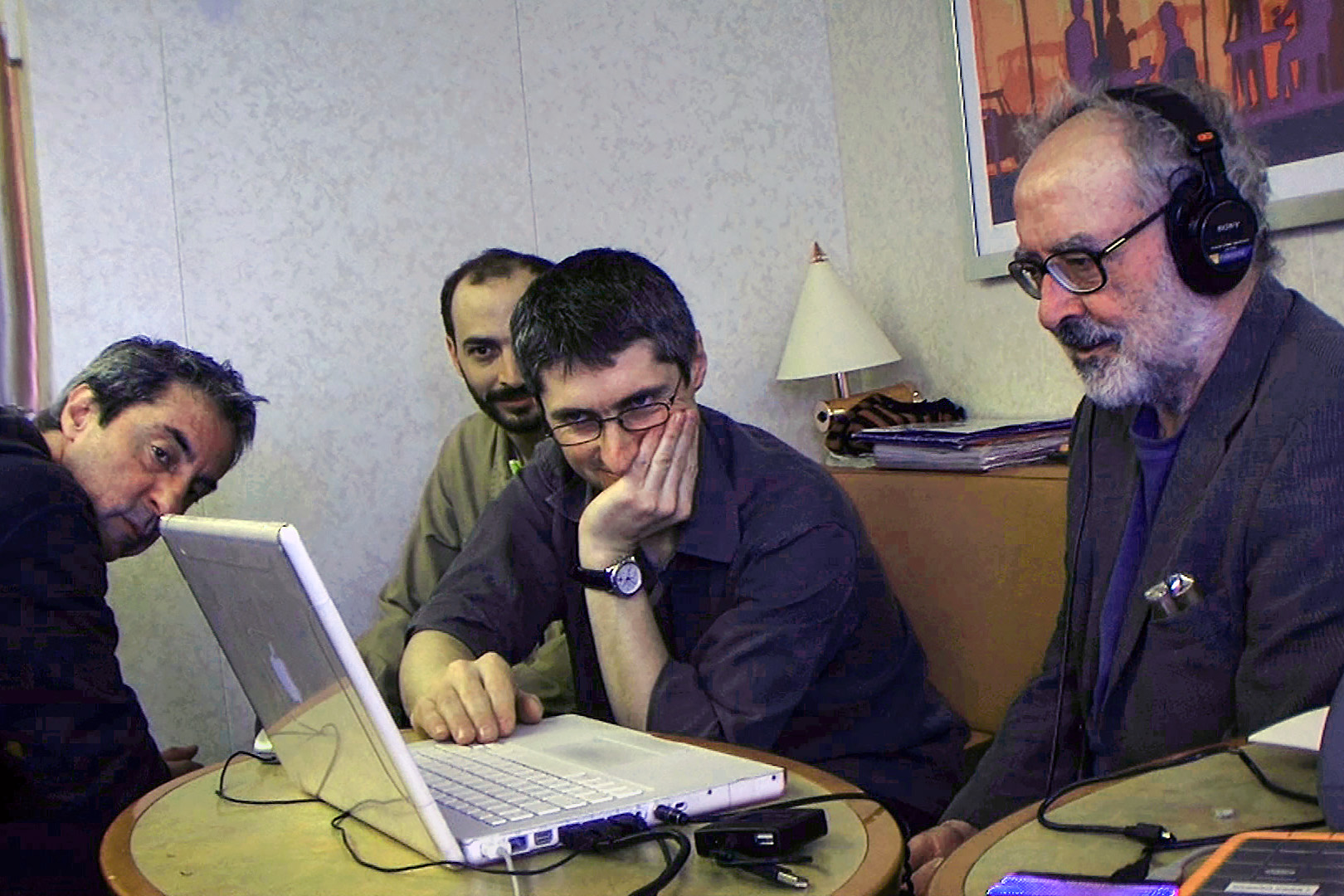
The collaborators who have become the custodians of memory: from left to right, Jean-Paul Battaggia, Paul Grivas, Fabrice Aragno, and JLG during the filming of “Film Socialisme”, March 2009.
Fondation JLG
Short films by Godard, sometimes intended for television, still occasionally resurface. These shorts make it clear that in between his full-length film projects he never stopped working. Some of these more experimental films are unknown or unavailable to the public. The Foundation hopes that by tracking them down and restoring them, they will be accessible to everyone. One example is a short film that Godard made at Zoetrope Studios in Los Angeles with the help of Francis Ford Coppola on the set of Coppola’s One from the Heart (1981). “We’re convinced it was made on 35mm [film], but currently only a poor-quality video copy exists,” Maire says.
Gems waiting to be discovered?
Godard’s famous “official” films also present a number of problems – sometimes even the biggest problems of all – due to rights issues. For example, there is no high-quality digitally restored version of Nouvelle Vague (New Wave, 1990, starring Alain Delon). The Foundation aims to contact the rights holder and restore the film, and to do the same for others like it.
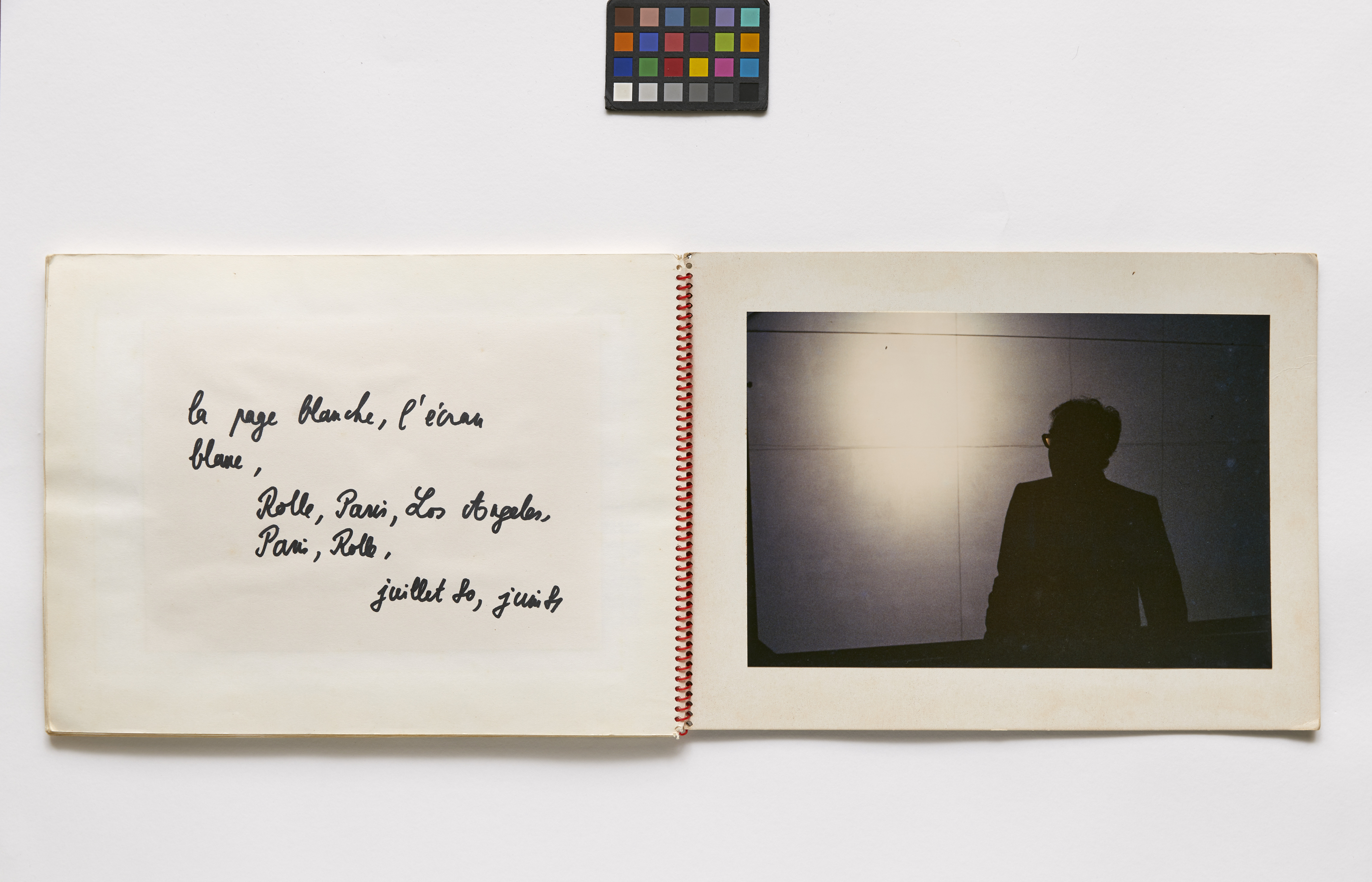
What do we mean by ‘filmic object’? Preparation notes for ‘Passion’, 1982.
@ F. Braga, Courtesy Casa Do Cinema, Fundação Serralves, Porto
Is it possible that Godard’s existing filmography is missing some unreleased finished films? Grivas says the answer might depend on “what we mean by ‘film’”. He believes it is certainly possible that marvels could yet be discovered, such as different cuts or rough cuts of finished films. He suspects that an alternative version of JLG/JLG (1995) probably exists.
Upcoming projects and centenary of Godard’s birth

Jean-Luc Godard in colour: Self-portrait taken on an iPhone (2020).
Fondation JLG
The Foundation’s main goals are to create the catalogue, connect relevant organisations and become the primary resource for information about Godard’s work. As a non-profit, it plans to fund its projects – including a more complete website, film-restoration work, and exhibitions – with public and private contributions. In the months preceding its launch, the Foundation was supported by the Jan Michalski Foundation.
Although the Foundation is still defining the exact projects it will take on, Maire says one thing is clear: it wants to create “a welcoming space” instead of “doing Godard” in melancholic imitation of his work. It hopes that access to the archive and the Foundation could encourage new creativity and even a form of legacy, although Maire hesitates to use this term. The Foundation also hopes to foster research, as the inventory will be a wonderful asset for anyone studying Godard’s works. Maire and Grivas envision an online catalogue that is open to the public and offers videos of some of Godard’s films.
Several projects are already underway, including the publication of Godard’s correspondence, which will no doubt be a gold mine of information for Godard enthusiasts worldwide. The Foundation has also contributed to an exhibition opening on March 28 at La Virreina Centre de la Imatge, a contemporary-art museum in Barcelona. In addition, it is already considering plans for the 2030 centenary of Godard’s birth.
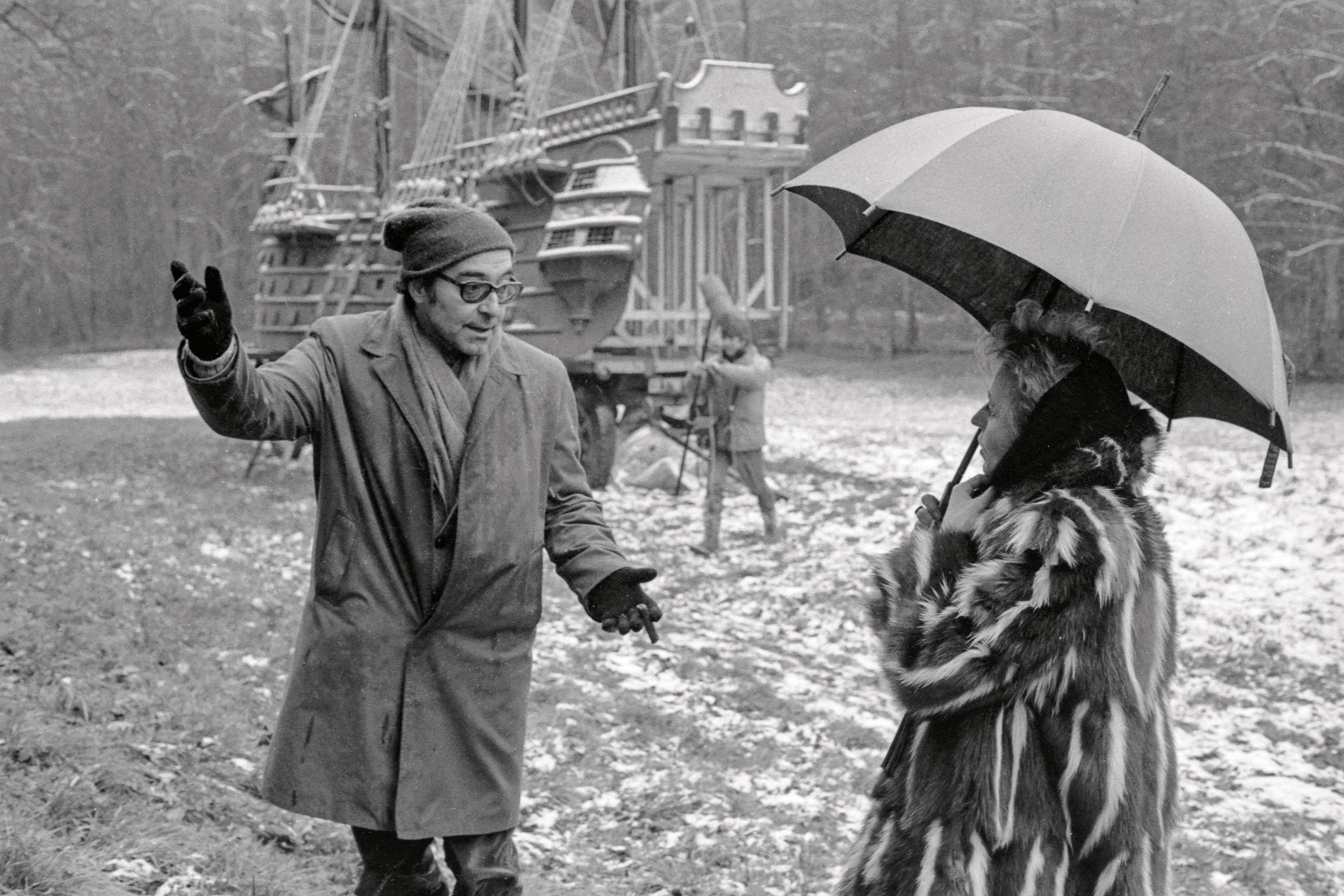
Jean-Luc Godard during the filming of “Passion”, with Hanna Schygulla (1982).
Fondation JLG / Anne-Marie Miéville
Grivas admits to feeling overwhelmed at times by the amount of work ahead. “There are 20 ideas a day,” he says. He adds that Elias Sanbar, a longtime friend of Godard’s and an enthusiastic Foundation member, has also admitted that he “hope[s] we will be up to the task”. Grivas takes comfort from a Henry James quote that appeared in Godard’s Film Socialisme (2010) as well as in his own Film Catastrophe (2018) about the making of Godard’s film: “We work in the dark – we do what we can – we give what we have. Our doubt is our passion and our passion is our task. The rest is the madness of art.”
Edited by Samuel Jaberg. Adapted from French by K. Bidwell/ts


