New 3D simulations for better avalanche forecasting
Keystone-SDA
Generated with artificial intelligence.
A new 3D simulation tool is enabling much more accurate avalanche forecasts. The model, which proved its worth during the landslides in Brienz and Blatten, could lead to more effective management of alpine risks.
This content was published on
The new 3D simulation tool was developed by researchers at the Swiss Federal Institute of Technology Zurich (ETHZ) and the Institute for Snow and Avalanche Research (SLF). It enables more accurate forecasts to be made of the course, height and propagation of alpine mass movements such as snow, ice and rock avalanches.
The model is also capable of realistically reproducing process sequences in complex, steep terrain. “We now have a reliable and operational tool that enables us to help the authorities to assess the possible consequences of imminent alpine mass movements by means of simulations,” explained Johan Gaume, a professor at ETHZ and the SLF, in a press release on Monday.
First test in Brienz
After a first conclusive practical test in 2023 on the village of Brienz, which had been evacuated because of a landslide threat, the researchers carried out simulations in Blatten last spring. Their aim was to unofficially test their forecasting model in a more complex and unstable scenario than that of Brienz.
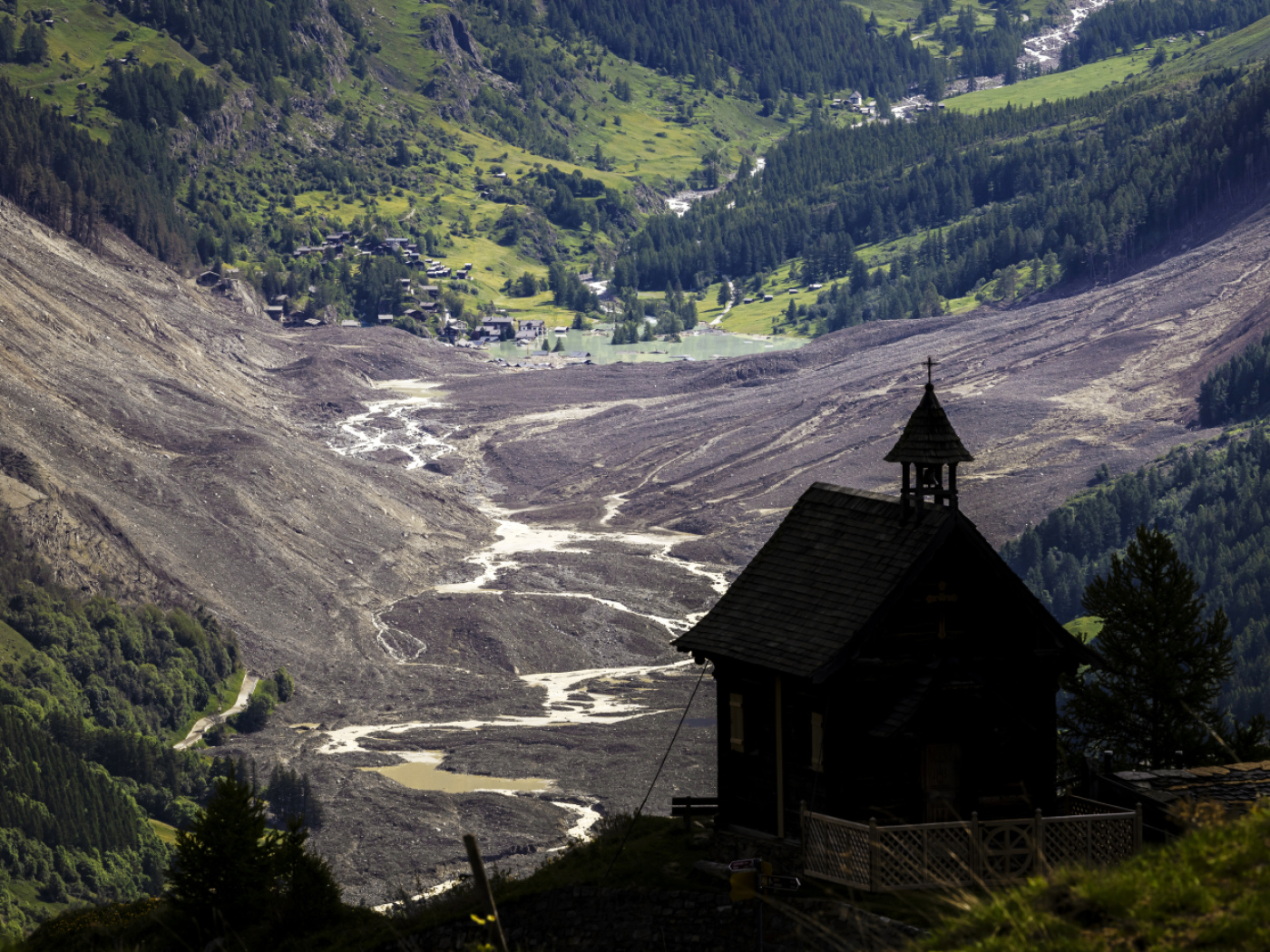
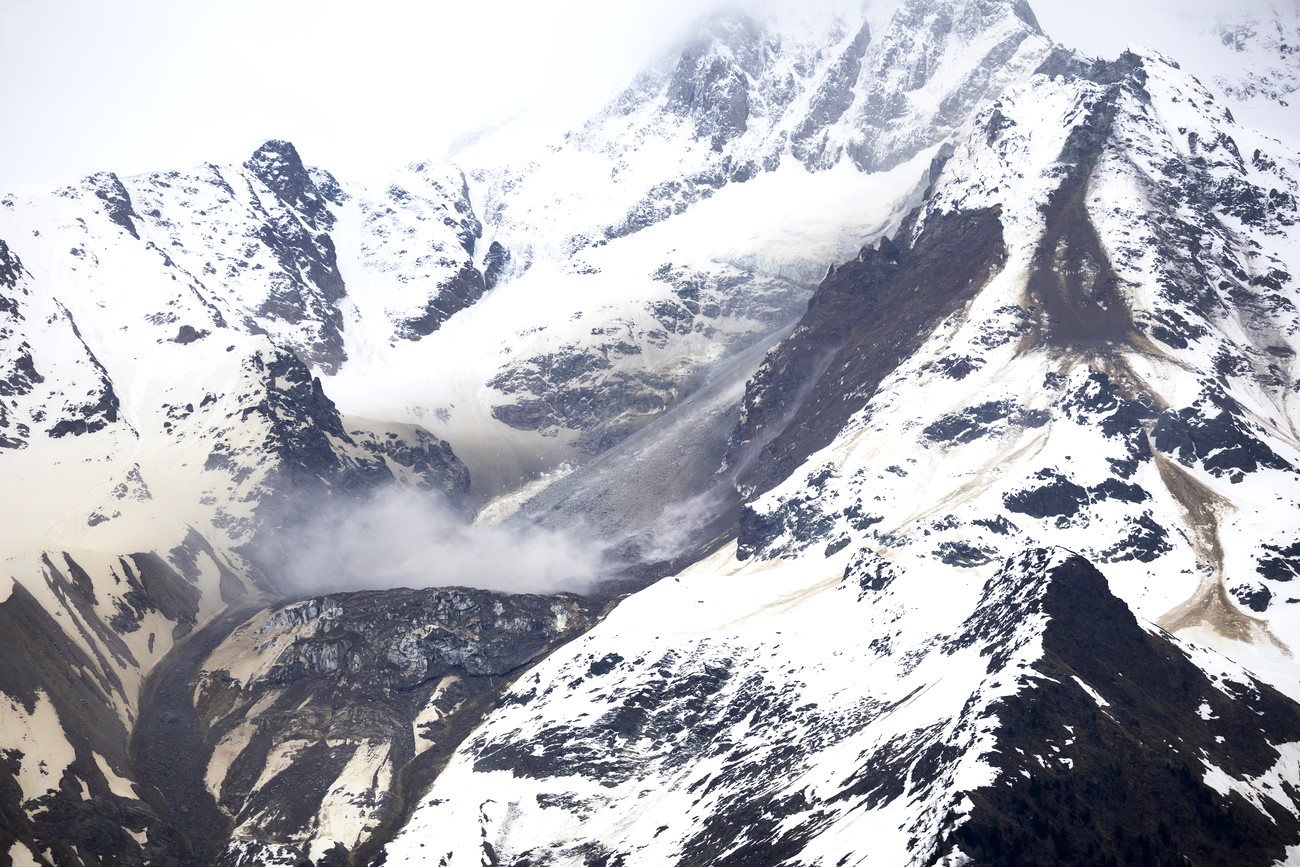
At Blatten, in addition to the rocks and water, the ice also played a role and the terrain is very complex. As in reality, the results of the 3D simulation showed that most of Blatten was destroyed and that the hamlet of Weissenried was barely spared by the mass of collapsed rock and ice.
More
More
Why do Swiss mountains collapse? It’s complicated
This content was published on
Small landslides are on the increase in the Swiss Alps owing to climate change. But the link with global warming is less obvious for large natural disasters.
The model also showed that the mass of the fall had spread by 1.2 kilometres on the south-west side of the valley and by 700 metres on the north-east side – very accurate values compared with the actual disaster. These results stunned the researchers at the time, but seemed rather implausible.
Avalanche and debris flow modelling tools are generally based on two-dimensional “medium-depth” methods. In other words, they assume that the flow of rock and water is shallow and remains in constant contact with the ground, resulting in continuous friction.
But the 3D model allows the particles to detach themselves from the surface, reducing friction on the ground and enabling the phases during which the material flies through the air to be accurately captured. This is a decisive factor in simulating the flow behaviour and propagation of flows in steep or complex terrain,” explained Gaume.
In the case of Blatten, the scientific simulations have not been shared with the Valais authorities, and are not part of the official studies currently under way, nor of risk management. The researchers’ aim is not to replace existing 2D tools, but to offer a complementary solution when conventional models reach their limits.
Adapted from German by DeepL/ac
We select the most relevant news for an international audience and use automatic translation tools to translate them into English. A journalist then reviews the translation for clarity and accuracy before publication.
Providing you with automatically translated news gives us the time to write more in-depth articles. The news stories we select have been written and carefully fact-checked by an external editorial team from news agencies such as Bloomberg or Keystone.
If you have any questions about how we work, write to us at english@swissinfo.ch
More
Zurich laboratory finds intestinal bacteria in coffee machines
This content was published on
Last year, the Zurich Cantonal Laboratory found defects in one in four samples of milk drinks from coffee machines. Too many intestinal bacteria were found in a number of samples.
Alleged leader of Kosovar terrorist group indicted in Switzerland
This content was published on
The Office of the Attorney General of Switzerland has brought charges against a Kosovar on suspicion of being the leader of the Swiss branch of a Kosovar terrorist organisation. He is also suspected of having been active in the management of the organisation in Kosovo.
Swiss glacier lake drains without causing flooding damage
This content was published on
The Faverges glacial lake on the Plaine Morte above Lenk in the Bernese Oberland drained over the weekend. There was no flooding or damage, the authorities announced on Monday.
Chihuahua leads Swiss rescue team to owner stuck in a crevasse
This content was published on
A Chihuahua helped to rescue a man on the Fee Glacier above Saas-Fee VS on Friday. It alerted a rescue team to its owner who had fallen into a crevasse.
Swiss bosses distance themselves from the United States
This content was published on
According to a survey of managers, Swiss companies are increasingly turning away from the USA and orientating themselves more towards Southeast Asia and the EU. This is the result of a recent survey.
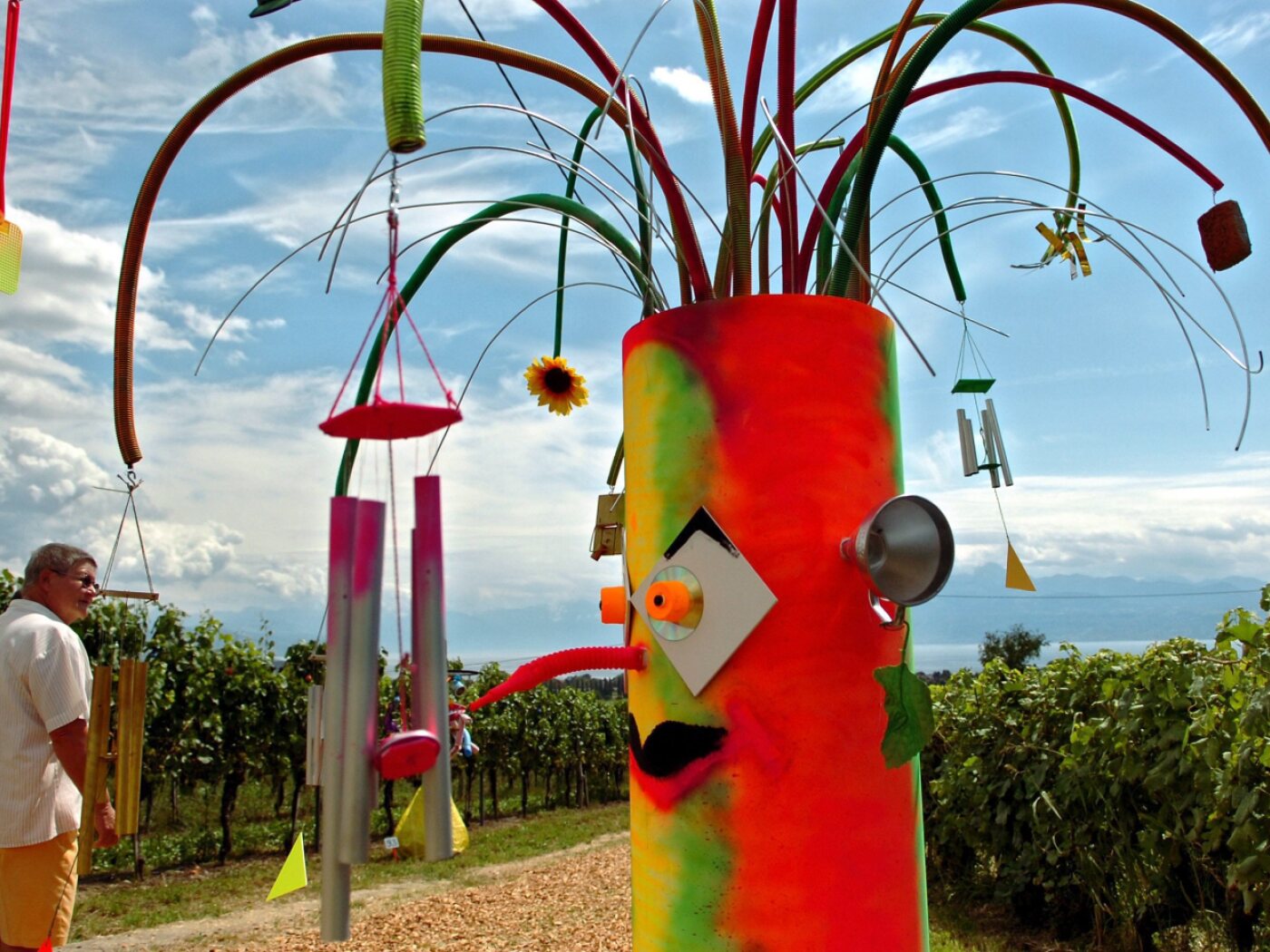
The Fête de l’Epouvantail (scarecrow festival) is celebrating its 30th anniversary and returns to Denens in canton Vaud for its seventh edition from July 10-20.