


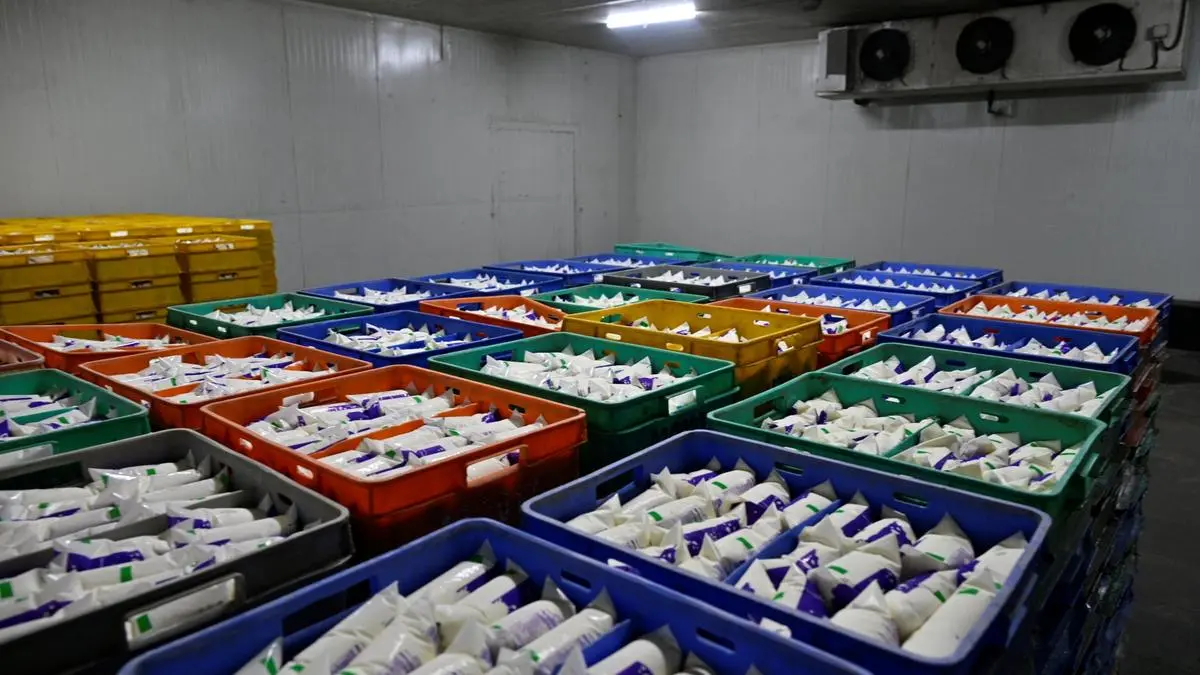
Christened as ‘Sardar Patel Co-operative Dairy Federation Ltd,’ this co-operative body has been registered at Gandhinagar in Gujarat
| Photo Credit:
VENKATACHALAPATHY_C
A new multi-state co-operative, that will engage in collection of milk in 20 states and 2 union territories — including states of Karnataka and Tamil Nadu — was announced at an event in Gujarat on Sunday.
Christened as ‘Sardar Patel Co-operative Dairy Federation Ltd,’ this co-operative body has been registered at Gandhinagar in Gujarat, under Section 7 of the Multi-State Co-operative Societies Act, 2002. A logo for this new body was unveiled by Union Home and Co-operative minister Amit Shah at an event at Anand to mark completion of four-years of establishment of the Union Ministry of Co-operation. “This Sardar Patel Co-operative Dairy Federation will help farmers at a level that Amul does by engaging in fair practices of procuring milk and providing appropriate pricing,” Shah added.
This co-operative with an initial corpus of ₹200 crore will bring together small and big unregistered milk co-operatives on a single platform. Of the 300 lakh litres of milk collected by GCMMF daily, 20 percent of the milk comes from 20 different states outside Gujarat. This milk from outside Gujarat is sourced from 20 lakh farmers. The registration of the new multi-state co-operative does not allow it to indulge in credit or housing related activities in any form.
The area of operations of this new co-operative body will be confined to Himachal Pradesh, Punjab, Uttarakhand, Haryana, Rajasthan, Uttar Pradesh, Bihar, Assam, West Bengal, Jharkhand, Odisha, Chattisgarh, Madhya Pradesh, Gujarat, Maharashtra, Andhra Pradesh, Karnataka, Goa, Tamil Nadu, Telangana and Union territory of Dadra and Nagar Havel, Daman and Diu and Jammu and Kashmir.
New Salt Co-operative in Kutch
In a separate initiative, GCMMF along with Sarhad Dairy in Kutch also set up a new co-operative body of salt producers. This cooperative is expected to unite small ‘agariyas’ — community engaged in traditional salt farming practices — on a common platform. “The profit for producing salt will now got to agariyas,” Shah said adding that it will help be a model for small salt producers.
“If there is no transparency, then co-operative movement does not continue for long. Studies of various countries that have seen co-operative movements end, show that lack of transparency has been the reason. Wherever technology has not been adopted, co-operatives have been able to compete. In co-operatives where the interest of the members were not taken into account, have also closed down,” Shah said seeking infusion of more transparency and technology into the co-operative sector.
More Like This


Published on July 6, 2025


