


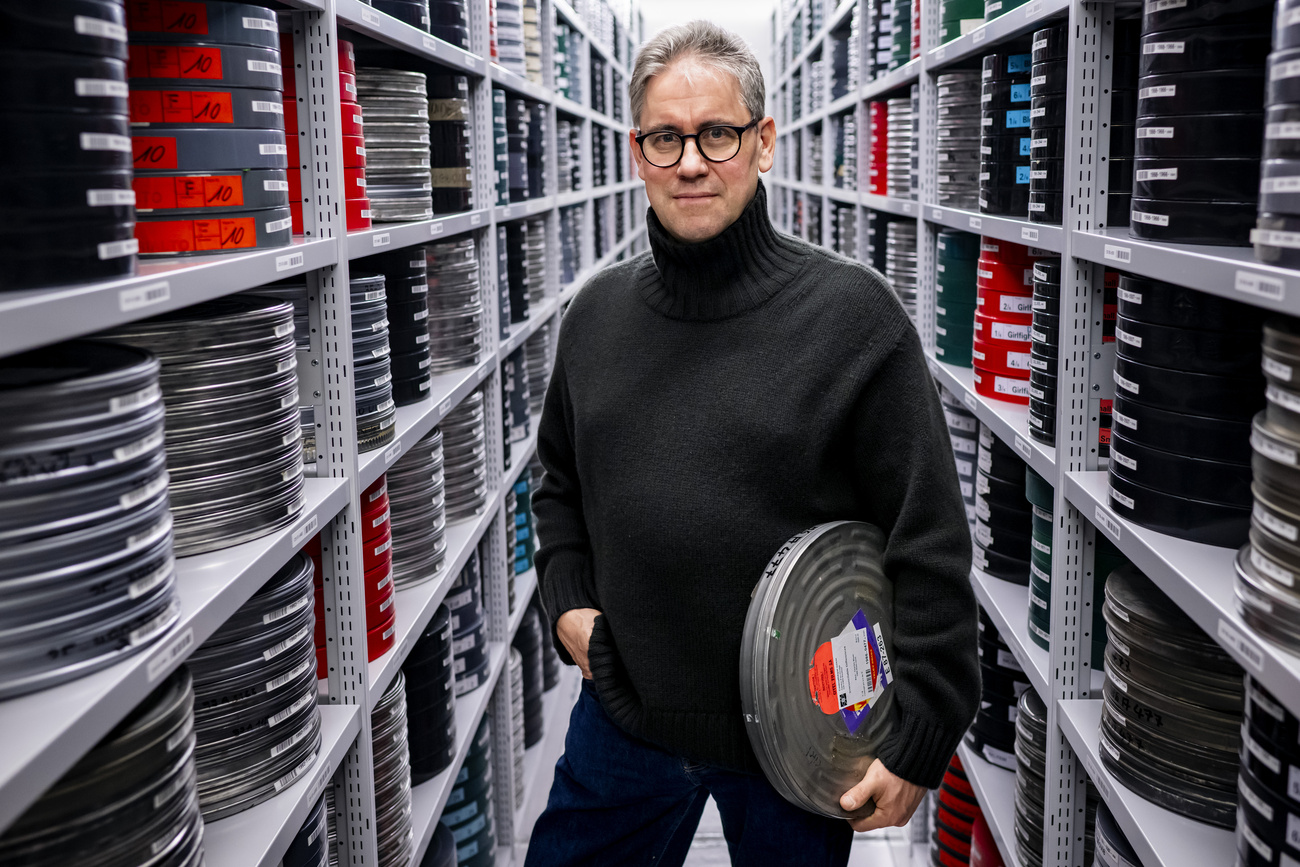
Vinzenz Hediger, the new director of the Swiss Film Archive, at the research and archiving centre in Penthaz, close to Lausanne. He took up his post last November.
Keystone / Jean-Christophe Bott
From Berlin’s festival storms to attic‑born treasures, the new Cinémathèque Suisse boss Vinzenz Hediger lays out his mission: protect a world‑renowned archive, embrace forgotten formats, and bring Swiss film heritage to audiences across the country.
Hours after this year’s Berlinale opened, a scandal erupted that nearly toppled the festival’s artistic director. At the opening press conference, filmmaker Wim Wenders and producer Ewa Puszczyńska dismissed a question about Israel’s siege of Gaza, with Wenders declaring that filmmakers “have to stay out of politics”.
The backlash exploded when Booker Prize winner Arundhati Roy – scheduled to present the 1989 Indian TV film In Which Annie Gives It Those Ones, which she co-wrote and starred in – withdrew in protest, calling the remarks “jaw-dropping”. Her unexpected appearance, and sudden boycott, turned the long‑obscure film into one of the festival’s most talked‑about events, proving that film history is very much alive – and capable of biting back.
Painstaking work
The Cinémathèque Suisse has now entrusted its direction to film scholar and former critic Vinzenz Hediger, who arrived in Lausanne at the start of the year. Beyond the individual work of archivists, it is people like Hediger who must decide what makes it into the lifeboat when so many needy projects are waiting to be hauled aboard.
Swissinfo met him in Berlin, among the furore of the festival’s opening controversies, to talk about the demands of his new role.
“It’s the key question,” Hediger told Swissinfo. “The hidden history of all archives is their history of refusals and of saying no to things… resources are limited, space is limited, and so you have to say no to a lot of stuff.”
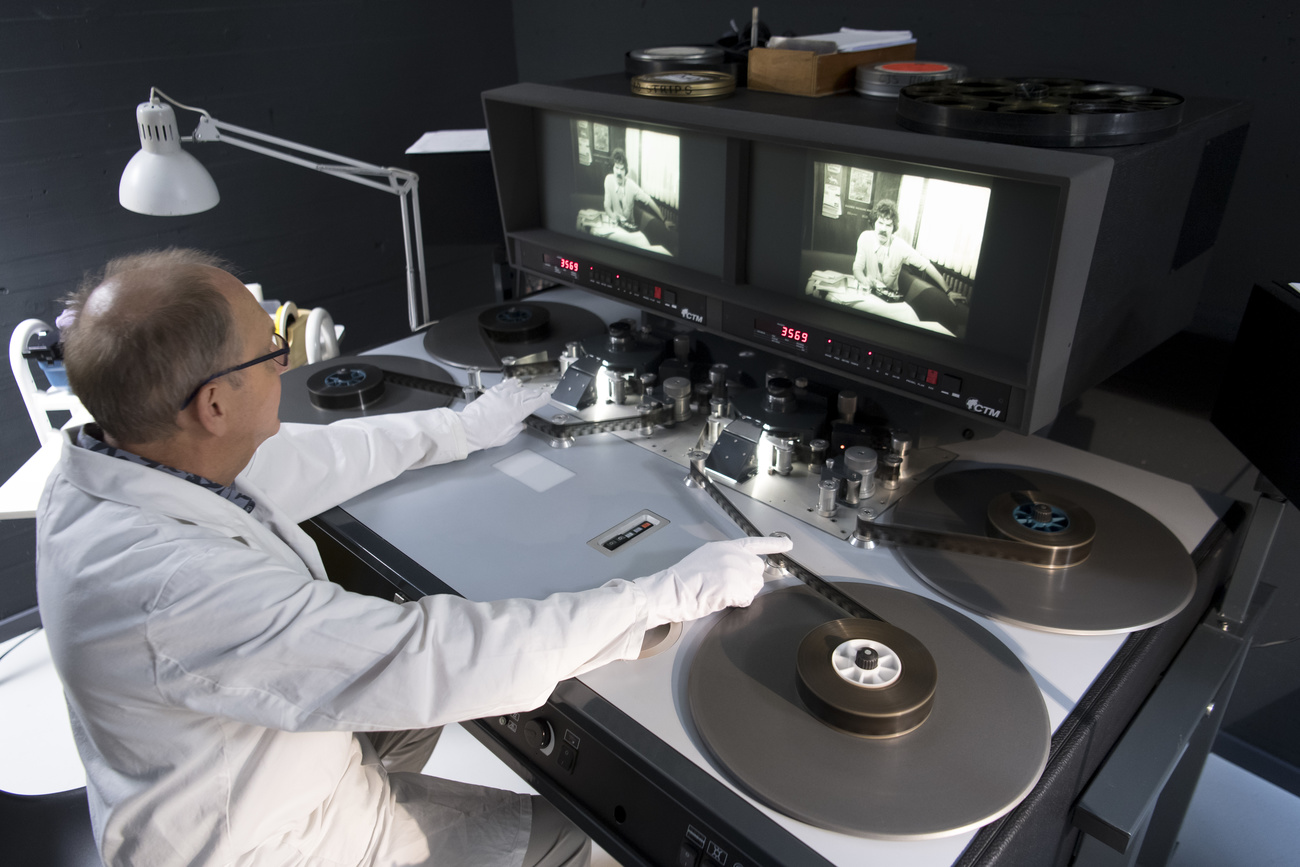
Places like the Cinémathèque Suisse must wrangle materials from around the world, from private collections and other sources, and ensure their stability as physical objects. Then they need to catalogue them, scan them, clean them up, and after an extensive process of restoration, produce pristine digital or celluloid versions so that the public who deserve to see them can do so.

The first premises of the Cinémathèque Suisse – Place de la Cathédrale 13 – in a photo taken in 1951…
Collection Cinémathèque Suisse, Tous Droits Réservés

… and the state-of-the-art Research & Archival Centre at Penthaz, occupying 13,000 square meters.
sda-ats
From the tabloids to the history of cinema
Hediger’s route to the head of one of Europe’s major film institutions began on the culture pages of Switzerland’s biggest tabloid. In the 1990s he paid his way through university in Zurich by reviewing first‑run films for Blick, at a time when the paper was beginning to invest in a culture section.
“That’s where I learnt how to write,” he says. “Any intellectual pretension that you bring to that job will lead to your firing the next day. Blick readers aren’t stupid. They’re working people, they have very little time and usually very little money, and as much as everybody they have a right to know what’s happening in the cinema.”
Watching ten films a week and filing multiple short reviews taught him to pare ideas down to their essence. He says the job forced him to adapt his language to a readership of working people without resorting to condescension, a discipline that still shapes how he thinks about his work.
Hediger grew up in Switzerland in the 1970s, “one of the great moments of Swiss film” and remembers his parents taking him to see both Disney’s One Hundred and One Dalmatians (1961) and Yves Yersin’s Les Petites Fugues (1979). “I saw them on the same level,” he says.
External Content
That ingrained respect for cinema makes his task easier. The main funder of the Cinémathèque is now the federal government – meaning it is a truly national institution with all the resulting responsibilities. Part of his mission, he says, is to make it “very, very visible, not just in Lausanne but across Switzerland”. This is done through a network of partner cinemas, collaborations with television channels, digital formats, and close work with festivals in all of Switzerland’s linguistic regions.
Upcoming attractions

Apart from trailers, Hediger also edited several books shedding light on subjects relegated by the established film history. In this case, Hediger and Patrick Vonderau focus on the history of industrial films – government-produced and industrially sponsored movies that sought to achieve the goals of their sponsors, rather than the creative artists involved.
Reproduction
“The conventional history of Swiss films focuses on auteur cinema,” Hediger explains. “But if you’re interested in continuity of production in Switzerland, which is a country that has never really had a film industry, you need to look at commissioned films and industrial films.”
That’s where his professional relationship with the Cinémathèque Suisse itself began, as a post-doctoral researcher. In Lausanne, he found that the Cinémathèque’s holdings were vast and long ignored.
This interest extended to another ephemeral artform: film trailers. He says he got the idea of researching trailers once he realised “nobody had ever written a book on them”. That research took him to archives all over Europe and the US, at a time when none of this material was online and every trailer had to be carefully reviewed on film or tape.
“Whenever I came to an archive, the archivist would invariably say, ‘That’s a great topic. We don’t have anything’,” he laughs. “And it was never true. I had to develop a whole search‑term inventory for searching the archives, plus biographical cues and stuff that would lead me to uncover correspondences and studio papers.” From there, he could “patch together the history of the movie trailer”.
A world‑class archive in a small country
If Hediger is evangelical about the Cinémathèque’s potential, it is because he believes many citizens in Switzerland do not grasp just how exceptional their national institution is.
“This is the sixth‑largest film collection in the world,” he notes. “It has grown to that size and importance because Switzerland has had and continues to have, measured by the size of the country, an incredibly rich cinema-going culture.”
Along with a collection of important Swiss films, the holdings double as a chronicle of what has been shown in the country over the decades, thanks to a practice under which distributors deposited their prints in Lausanne.
“They would dispose of the surplus distribution prints and keep the good ones,” he says. The resulting projectable reels of film, usually original‑version copies with German and French subtitles, are prized by festivals and other institutions who loan these materials for their programmes.
Hediger says that when the Cinémathèque temporarily limited print lending a few years ago, it created a minor earthquake in the international network of classic film distribution, since so many festivals had grown used to turning to Lausanne for film materials. Therefore, the Cinémathèque is “more like a world heritage institution than just a regional or national archive”.
More
More
Cinémathèque Suisse turns 75, and film lovers can rejoice
What makes it into the lifeboat
Some major collections can arrive at the institution serendipitously, as was the case with the personal archive of French director Claude Autant‑Lara. He long felt he was underappreciated in France and thus settled, also for tax reasons, in Lausanne. In revenge against this perceived slight by his peers, he bestowed his materials and papers on the Cinémathèque in Lausanne rather than one of the many in his native country.
Still, the romance of film history must constantly be weighed against the constraints of budgets, priorities and resources. Federal funding for the Cinémathèque has been frozen for two years, which effectively translates into a 2-4% real‑terms budget cut.
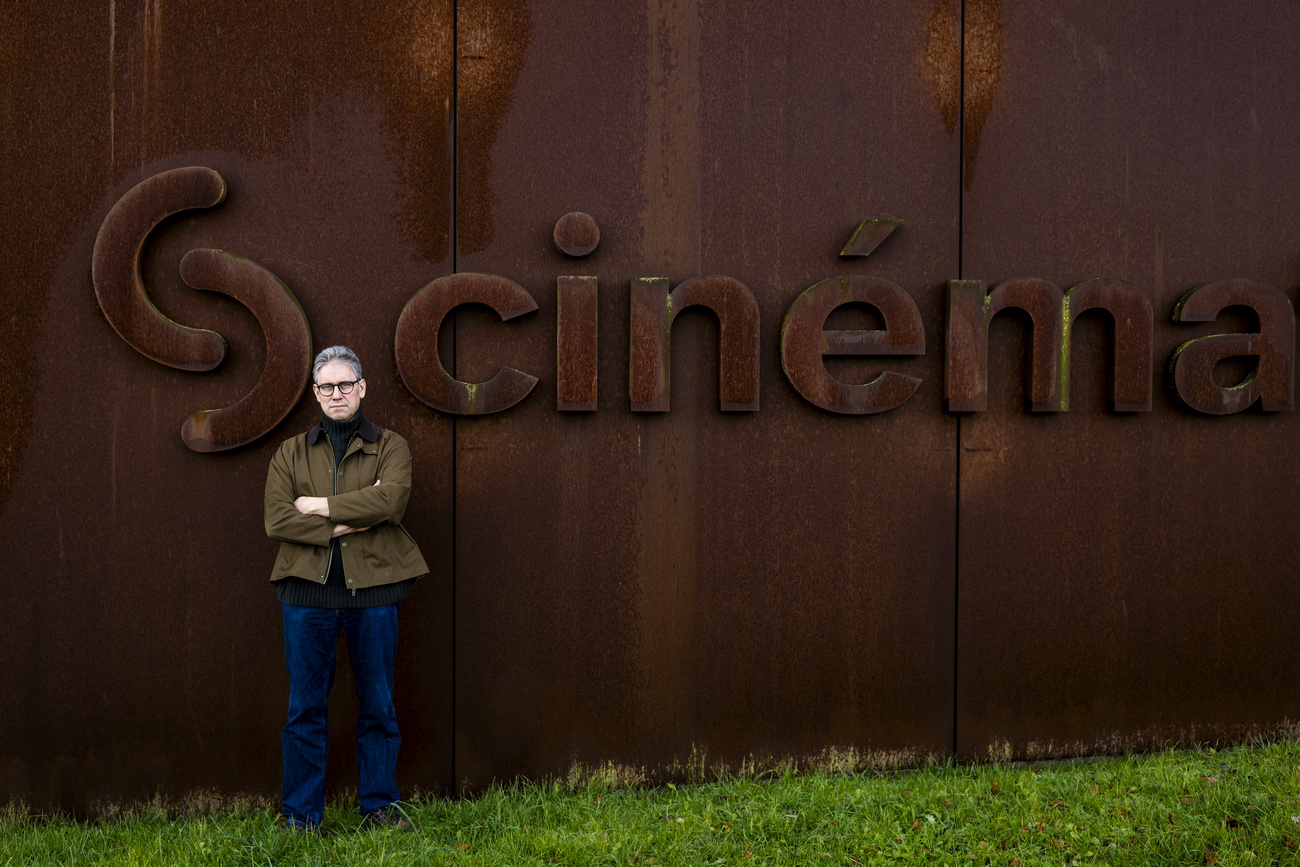
“The Cinémathèque is more like a world heritage institution than just a regional or national archive”.
Keystone / Jean-Christophe Bott
The Covid pandemic gave people time to clear out their attics, leading to a boom of rediscovery. In the years since, the Cinémathèque has been inundated with amateur films and private collections. One ongoing project, Hediger says, concerns a cache of 9.5mm Pathé Baby reels shot by a man from canton Vaud, who made “really great films about the local landscape and his neighbourhood”.
“They’re wonderful films, and we’re going to project them in the cinema,” says Hediger, his love for such film history detritus evident. “That’s local cinema: going to the movies to see your own home as it was 50 years ago. It’s a thrill.”
This cinema history bric-a-brac may have once seemed utterly irrelevant – and for many maybe it still is. But what can make an impression at any given time from the history of cinema is unpredictable. Archives can only ensure pristine presentation and fair accessibility. Otherwise, even what once appeared marginal can, when shown in a new context to a new audience, move mountains.
More
More
The soapy secrets behind Basel’s first film
Edited by Eduardo Simantob/ts


