


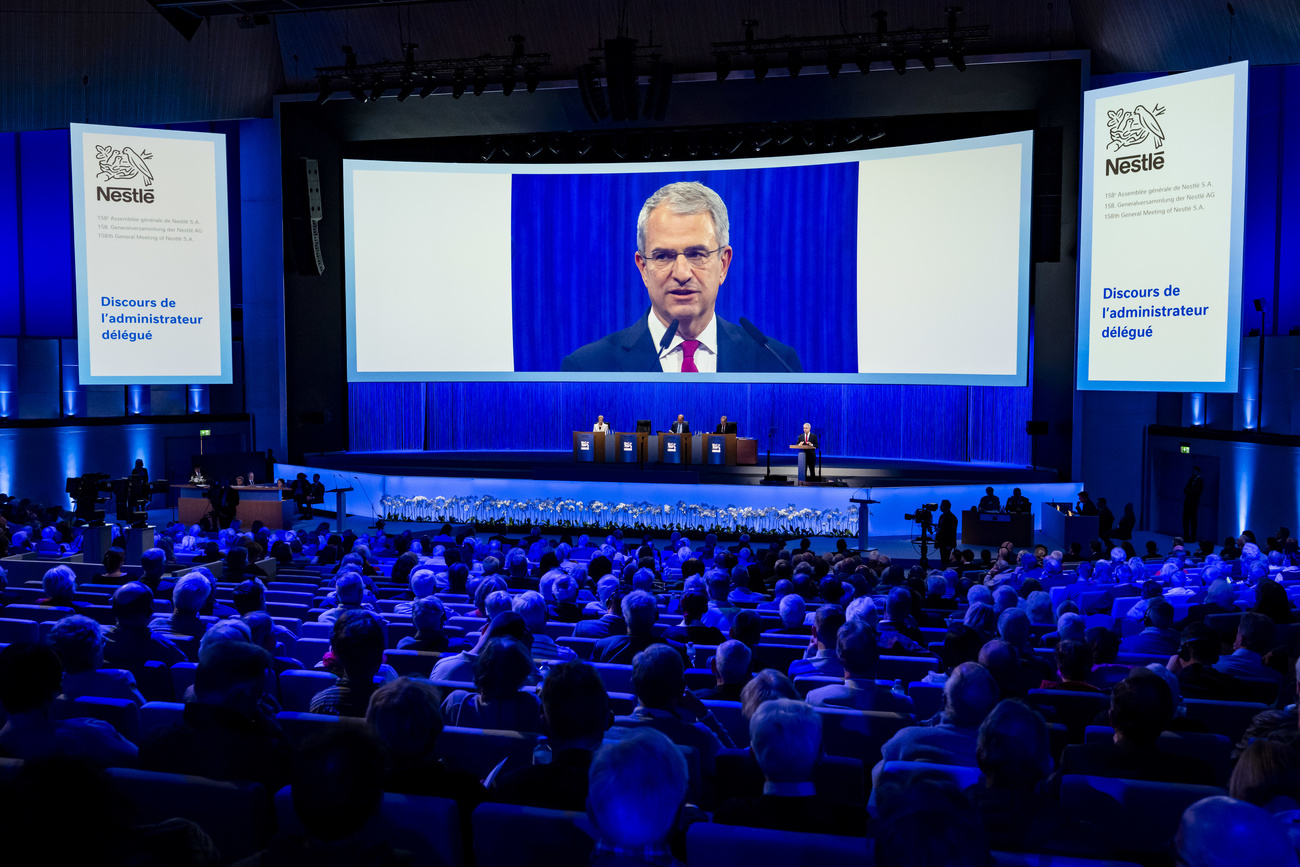
Nestlé CEO Laurent Freixe is attempting to re-focus the Swiss-based food giant on its core brands and attempting to restore the culture he feels has been lost.
Keystone / Jean-Christophe Bott
Nestlé chief executive Laurent Freixe said his predecessor’s forays into new product categories that included health supplements “weakened the fabric of the organisation”, as he ruled out turning to major acquisitions or asset sales to boost growth.
Freixe, a company stalwart who replaced Mark Schneider last August, said in an interview with the Financial Times that diversification under Schneider had led to Nestlé’s core business lines – coffee, petcare and food – being neglected.
“If you . . . put all your emphasis on developing new spaces . . . you will weaken the core. I think this is part of the issues that Nestlé has been facing,” Freixe said, adding that “losing share from the core and weakening the fabric of the organisation is not a winning proposition”.
External Content

In 2017, Schneider became only the second outsider to take the top job in Nestlé’s near 160-year history. The former healthcare executive went on to make a series of acquisitions, including food allergy treatments and fitness supplements, to try to rebalance Nestlé’s portfolio towards healthier, higher-margin categories.
+ Nestlé appoints Laurent Freixe as new boss
Schneider was replaced by Freixe – a globetrotting Nestlé veteran of almost 40 years – after growth slowed during the latter part of his tenure. People familiar with the company said Schneider’s forthright style clashed with the consensual corporate culture that pervades the group behind KitKat and Nescafé.
‘Intimate’ knowledge of Nestlé
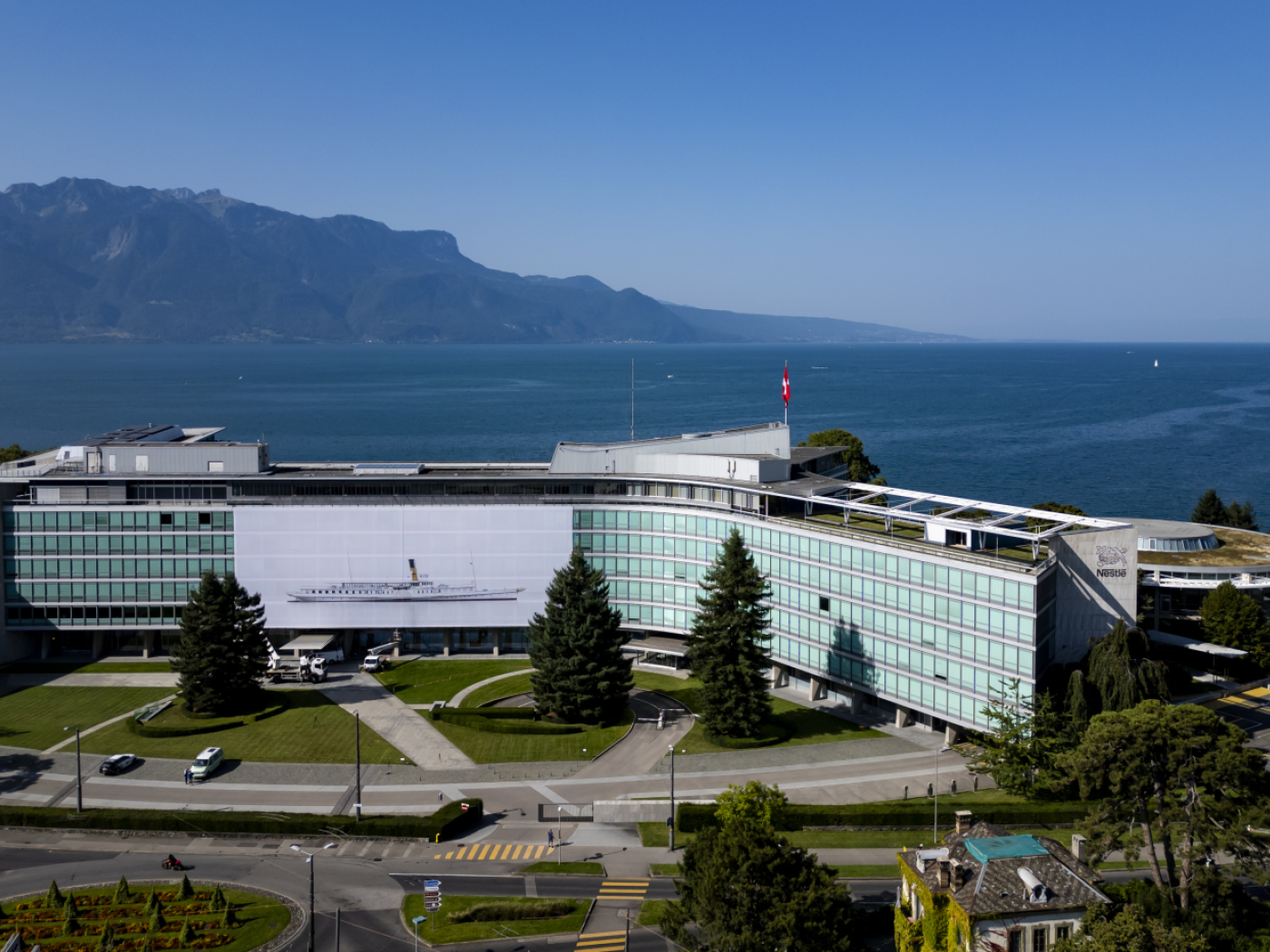
Now Freixe is in the top job, he is refocusing Nestlé on its core brands and attempting to restore the culture he feels has been lost. The Frenchman, who has worked for Nestlé in Hungary, Spain and Latin America, has moved key regional heads back to Nestlé’s vast headquarters in Vevey, overlooking Lake Geneva.
+ Nestlé CEO Schneider was ousted, paving way for veteran Freixe, sources say
While Freixe says he and Schneider “understood each other quite well”, the major difference between them was that he had an “intimate” knowledge of the inner workings of the Nestlé machine. “Because of that, and maybe my style, I’m very close to the people, so it’s a big advantage,” he said.
Growth and dynamics at play
Some consumer goods companies are predicting that US tariffs will lead to another round of price rises after the post-pandemic inflationary surge. However, Freixe believes there are other, more powerful dynamics at play.
“Demand is relatively weak, supply is coming back and competition is intense. That is typically more deflationary than inflationary,” he said, adding those forces would outweigh upwards pricing pressure from tariffs and climate change, which is disrupting harvests of coffee and cocoa.
Nestlé and its rivals have reported slowing volume growth, as weary consumers turn to cheaper alternatives. Last year, Nestlé’s organic growth fell to 2.2% from 7.2% a year earlier. The Swiss company reported a 2.9% drop in net profit to CHF10.9 billion ($13.2 billion).
Unilever, Reckitt Benckiser and Danone have all been slimming down – selling underperforming brands and pivoting to higher margin categories to try to revive growth. Freixe, however, said he was focused on reinvigorating Nestlé’s core businesses.
“There are always people who . . . [see] portfolio [management] as a quick fix,” he said. “I think we should never forget that M&A is not the strategy.”
More
More
Nestlé aims to boost brand in search of growth
Neither is Nestlé’s chief executive swayed by the prevailing logic that slimming down will make the company more dynamic. Freixe said he didn’t “see the merits” of Nestlé being smaller, so long as it could take advantage of its scale and “bring the speed”.
Keeping packaged foods
However, some analysts have questioned why Nestlé is holding on to its struggling US frozen food business. Sales of its frozen and chilled food range – which includes DiGiorno pizza and Hot Pockets snacks – fell by 15.5% last year to CHF4.3 billion, partly driven by the winding down of Nestlé’s frozen meal business in Canada.
Even though sales of packaged foods have been slowing for nearly a decade, and healthy eating is on the rise, Freixe insists there is nothing “fundamentally wrong” with the category.
“There is frequency of consumption . . . and we are leaders. That matters,” he said. However, Freixe acknowledged it had lost “relevancy and competitiveness”, adding that Nestlé was trying to hold prices down.
Nestlé’s boss intimated he would be open to selling brands that sit in structurally unattractive categories where Nestlé is not “in a position to win.”
Water problems
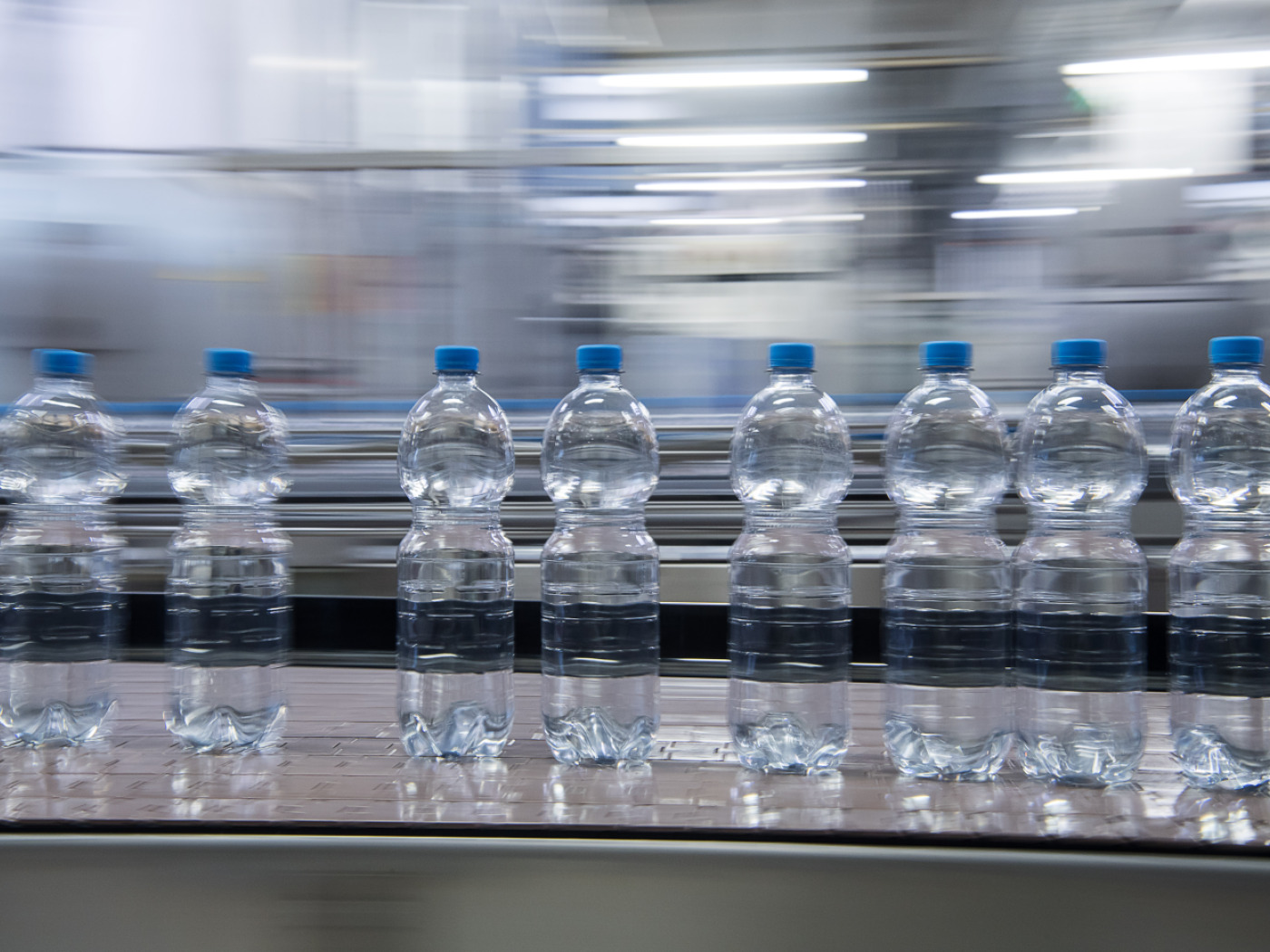
That includes spinning off Nestlé’s troublesome water business. A report by the French senate committee this week found the government had covered up Nestle’s use of illegal filtering treatments for products labelled as “natural mineral water”.
Nestlé said the committee’s conclusions showed the need for clearer, more consistent regulations and that all its natural mineral water products were safe to drink. The company, Freixe said, was in the process of finding an investor to form a joint venture agreement for the water business.
More
More
Nestlé water scandal: French state accused of cover-up
Last November, Freixe cut Nestlé’s medium-term profit margin guidance to at least 17% , from the 17.5% to 18.5% range set by Schneider, and launched a $2.8 billion cost cutting drive.
He said it was a time “when we need realism” rather than “dreams”, in a nod to subdued consumer demand and US President Donald Trump’s fast-evolving tariff regime.
While Freixe acknowledges demand is weak he insists that the growing popularity of GLP-1 weight loss drugs – including Ozempic and Wegovy – is not a cause.
A recent Cornell University study found that consumers using GLP-1 drugs reduced their grocery spending by nearly 6% on average. Freixe said Nestlé had not experienced a drop in sales off the back of the growing use of the drugs and that its portfolio – which is skewed towards coffee and pet food – meant the company was well positioned for any future impacts.
He added that early sales of new products specially formulated for GLP-1 users – such as Nestlé’s range of high protein ready meals – were promising.
Meanwhile, Trump’s appointment of Robert F Kennedy as US health secretary poses another potential problem for Freixe. Kennedy is espousing policies aimed at curbing the consumption of ultra-processed foods and reducing Americans’ sugar intake.
That could have significant implications for Nestlé’s confectionery and prepared meals businesses, which make up 15 per cent of global sales.
However, Freixe said Nestlé was “very much aligned” with Kennedy’s mission. “Quality of the food, nutritional density, promoting regenerative agriculture, that’s our agenda.”
Copyright The Financial Times Limited 2025


