


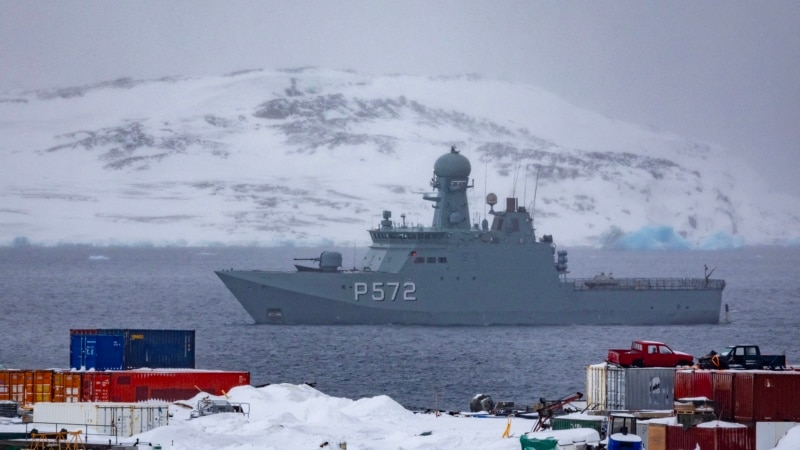
NATO officially launched its Arctic Sentry mission on February 11 in a bid to improve the military posture of the alliance in the Arctic region.
The move follows recent tensions between NATO allies Denmark and the United States over the political future of Greenland. When it was first mooted last month, several diplomats told RFE/RL that a potential Arctic mission could be a way out of a growing crisis.
Following a meeting between US President Donald Trump and NATO Secretary-General Mark Rutte last month in Davos, Switzerland, it was agreed that NATO should play a bigger role around Greenland to counter potential Chinese and Russian interference around the island and in the Arctic in general.
Speaking at a press conference in Brussels on February 11, Rutte said that “for the first time we will bring everything we do in Arctic under one command. We will not only leverage all that we are doing, we will also see what gaps there are and we will fill them” adding that “we do this because we have a clear sense that the Russians and the Chinese are becoming more active there.
In a press release announcing the launch, NATO’s supreme allied commander for Europe, Alexus Grynkewich, said that “Arctic Sentry underscores the Alliance’s commitment to safeguard its members and maintain stability in one of the world’s most strategically significant and environmentally challenging areas,” adding that it would “leverage NATO’s strength to protect our territory and ensure the Arctic and High North remains secure.”
No details have emerged so far about how many NATO countries are involved in the mission or troop levels, although the military alliance has confirmed that it is “multidomain,” meaning it will cover air, sea, and land.
NATO has also stated that Denmark’s Arctic Endurance exercise together with 11 other European NATO nations currently going on in and around Greenland and the upcoming Cold Response exercise in northern Norway and Finland involving 25,000 soldiers, including American troops, will form part of Arctic Sentry.
Seven of the eight so-called Arctic countries are NATO members, with Russia being the glaring exception. And while the waters around Greenland aren’t full of Russian and Chinese ships right now, that could change as Arctic Sea ice melts and new sea lanes open up.
Arctic Sentry comes after NATO formed similar missions in 2025 that are still underway in the Baltic Sea — as a response to the alleged Russian sabotage of undersea cables — and on the alliance’s eastern flank — after Russian drone incursions into Poland in September.


