


The office said people across the region are migrating “not by choice, but out of necessity,” driven by the systemic deprivation of economic, social and cultural rights at home. Poverty, unemployment, weak public services and climate stress are eroding livelihoods and leaving millions with few alternatives but to leave.
“Migration should be a choice, not a necessity born of desperation,” said Cynthia Veliko, head of the OHCHR Regional Office for South-East Asia.
“When people do not see a future for themselves at home – because their rights, such as decent work, adequate education and healthcare, are not available to them – they can be forced into unsafe migration and exploitation, often at great personal cost to themselves and their families.”
Migration trends
In 2024, more than 72 million international migrants originated from the region, a nearly 13 per cent increase from 2020. Almost a quarter of all international migrants worldwide now come from the region.
Youth and women are particularly affected by unemployment, low wages and gender-based discrimination, while climate change is increasingly disrupting agriculture and informal work.
Rising food and electricity prices and depreciating local currencies are placing a heavier burden on poorer households, which already spend more than half their income on food. Without reliable education, healthcare and stable work, families are increasingly turning to migration as a survival strategy.
The consequences are increasingly deadly. At least 2,514 migrants died across Asia in 2024, the highest toll ever recorded for the region and a 59 per cent increase from the previous year, according to UN migration data.
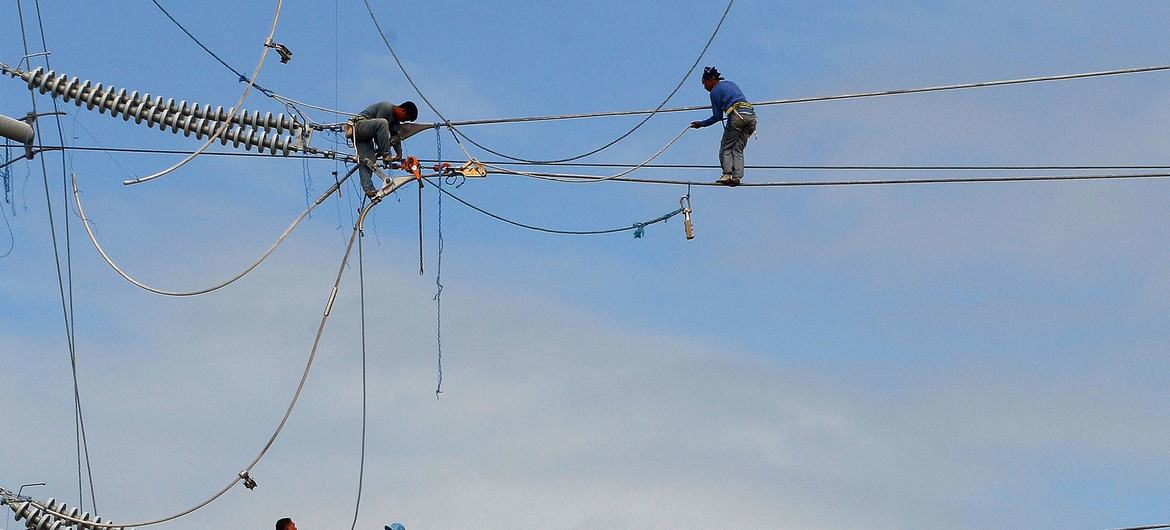
Workers install electrical cables in South Luzon, Philippines.
A sense of ‘futurelessness’
A central finding is a growing sense of “futurelessness” across parts of the region, where people no longer believe they can secure a dignified life at home.
“These are not merely individual aspirations. Education, healthcare, decent work, and a healthy environment are human rights – duties that States must uphold to ensure dignity and equality for all,” Ms. Veliko said.
“Governments should build inclusive societies through sustained investment in public services and ensure fair and equitable access to resources.”
Hidden costs of remittances
OHCHR also highlighted the hidden costs of remittances, which are vital to many families and national economies but often mask deeper social damage.
For poorer households, money sent from abroad is frequently used to meet basic needs such as food, utilities and emergency healthcare, leaving little for education or long-term stability. Children grow up separated from parents, elderly relatives lose care and communities lose working-age adults.
“Behind every migrant is a story of sacrifice, resilience and hope,” Ms. Veliko said. “Too often, their journeys are reduced to economic decisions, obscuring the deeper struggle for dignity for themselves and for the loved ones they leave behind.”
Recommendations
The UN human rights office urged governments in countries of origin to prioritize public investment in health, education, job creation and environmental protection, while reducing inequality through inclusive economic policies.
It also calls on destination countries to expand safe and regular migration pathways and on international financial institutions to align debt and fiscal policies with States’ human rights obligations.
The office said people will always move, but with adequate rights and opportunities at home, migration should become a genuine choice – not an act of last resort.

