


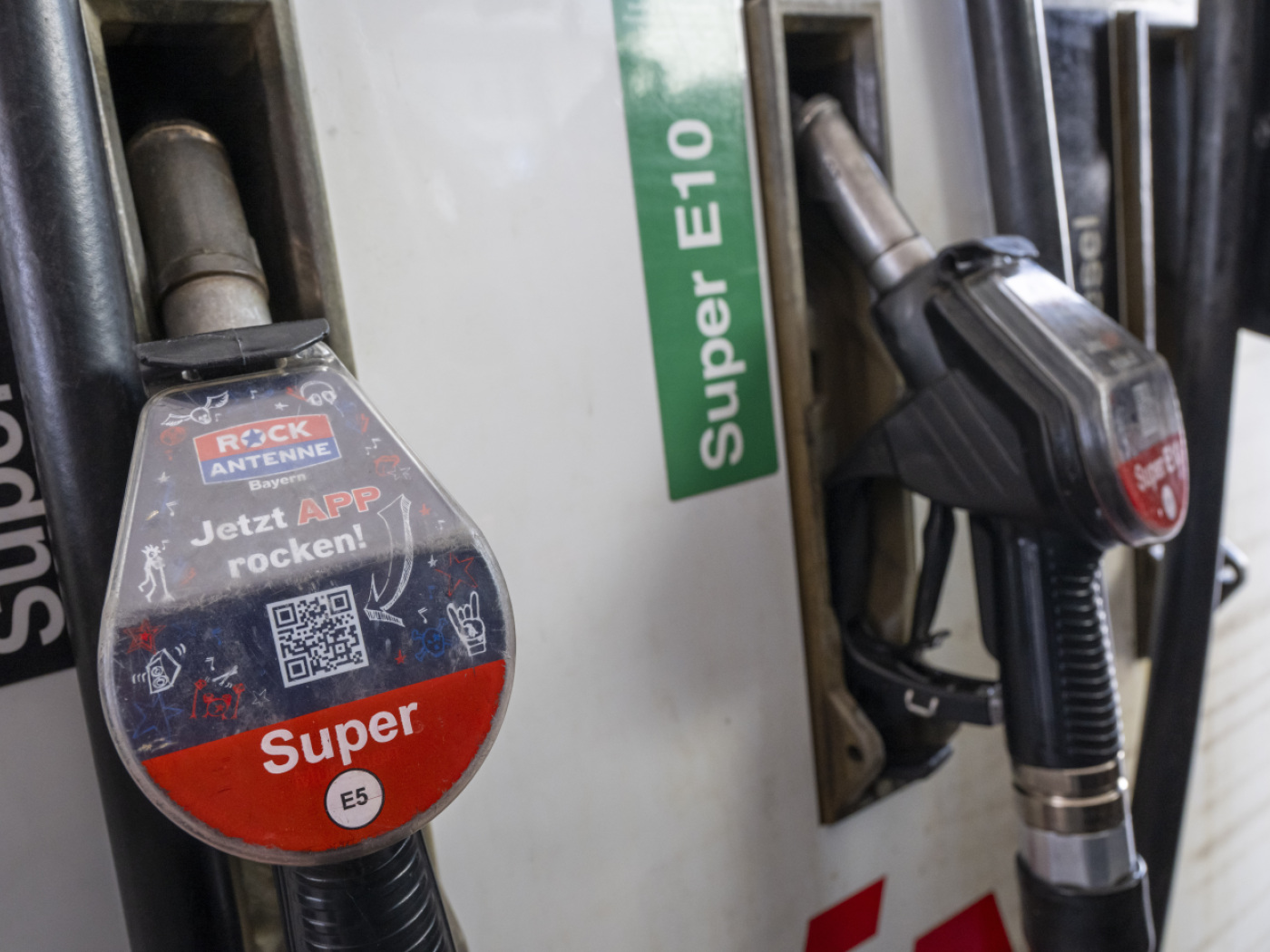
The price per barrel peaked at nearly £120 during the night between Sunday and Monday.
Keystone-SDA
The conflict launched by Israel and the US against Iran has caused oil prices to rise further today. The situation prompts industry experts in Switzerland to forecast higher petrol prices in the future.
Just four days ago, the Touring Club of Switzerland (TCS) quoted an average price of CHF1.74 (about $2.23) per litre for unleaded 95. Today, no such prices can be found on the association’s price comparison tool. However, there are disparities between petrol stations, depending on whether they are affiliated to a brand or whether they are independent.
+Get the most important news from Switzerland in your inbox
“Fuel and naphtha prices are expected to rise sharply in the coming days,” Avenergy Suisse, the organisation that brings together oil market players in Switzerland, warned today, commenting on the situation on the international market. Maritime traffic in the Strait of Hormuz is almost paralysed following several attacks on merchant ships. Some refineries have also significantly reduced their capacities.
Close to CHF2 per litre
TCS expects petrol prices to approach the CHF2 per litre mark in the coming days. “Based on the market prices published in Rotterdam, new increases are expected,” said Erich Schwizer, an industry expert at TCS, when asked by the financial news agency AWP.
More
More
Swiss oil traders weigh opportunities following US intervention in Venezuela
Although TCS does not generally make forecasts, estimates can be made on the basis of stock exchange data. Schwizer estimates that the average price per litre of unleaded 95 petrol will reach CHF1.90 by Friday. Diesel is expected to cost CHF2.20.
The trend is dictated by oil prices. The determining factor is the situation in the Strait of Hormuz, through which approximately one fifth of the world’s trade in crude transits. Today, the barrel of Brent was trading at $103.75 (+12%) around 1pm, after peaking at $119.50 last night.
This is an increase of 70% compared to February 27, the day before conflict broke out in the Middle East. The price thus reached the highest level since the energy crisis triggered by the conflict in Ukraine at the end of February 2022.
However, industry players remain calm. The association Avenergy Suisse emphasises that Switzerland’s supply of oil products is currently “secure”, as there are sufficient quantities of oil on the market.
Over four months of reserves
The market has sufficient crude oil and petroleum products both internationally and nationally, a spokesman for the Federal Office for National Economic Supply (FONES) told the AWP news agency on Monday in response to an inquiry.
Indirect effects via world markets are possible. However, the short- and medium-term impact of the conflict on energy supplies remains unclear and depends, among other things, on a potential blockage of the Strait of Hormuz.
The stakeholders in the country’s economic supply chain are monitoring the situation. Measures have been prepared in case of supply shortages. For example, the federal government could release mandatory reserves of petroleum products, the spokesperson explained. These reserves could cover Switzerland’s needs for approximately three to four and a half months.
More

More
Does your country have enough food reserves to withstand a crisis?
The existing reserves include gasoline, diesel, and heating oil. There is also a reserve of aviation fuel. FONES has concluded mandatory storage agreements with companies for this purpose.
These reserves were last partially released in October 2022, partly due to logistical problems with Rhine river transport. At that time, transport on the Rhine had become difficult due to historically low water levels. The corresponding regulation expired in October 2023.
Adapted from Italian and German by AI/ac
We select the most relevant news for an international audience and use automatic translation tools to translate them into English. A journalist then reviews the translation for clarity and accuracy before publication.
Providing you with automatically translated news gives us the time to write more in-depth articles. The news stories we select have been written and carefully fact-checked by an external editorial team from news agencies such as Bloomberg or Keystone.
If you have any questions about how we work, write to us at english@swissinfo.ch


