


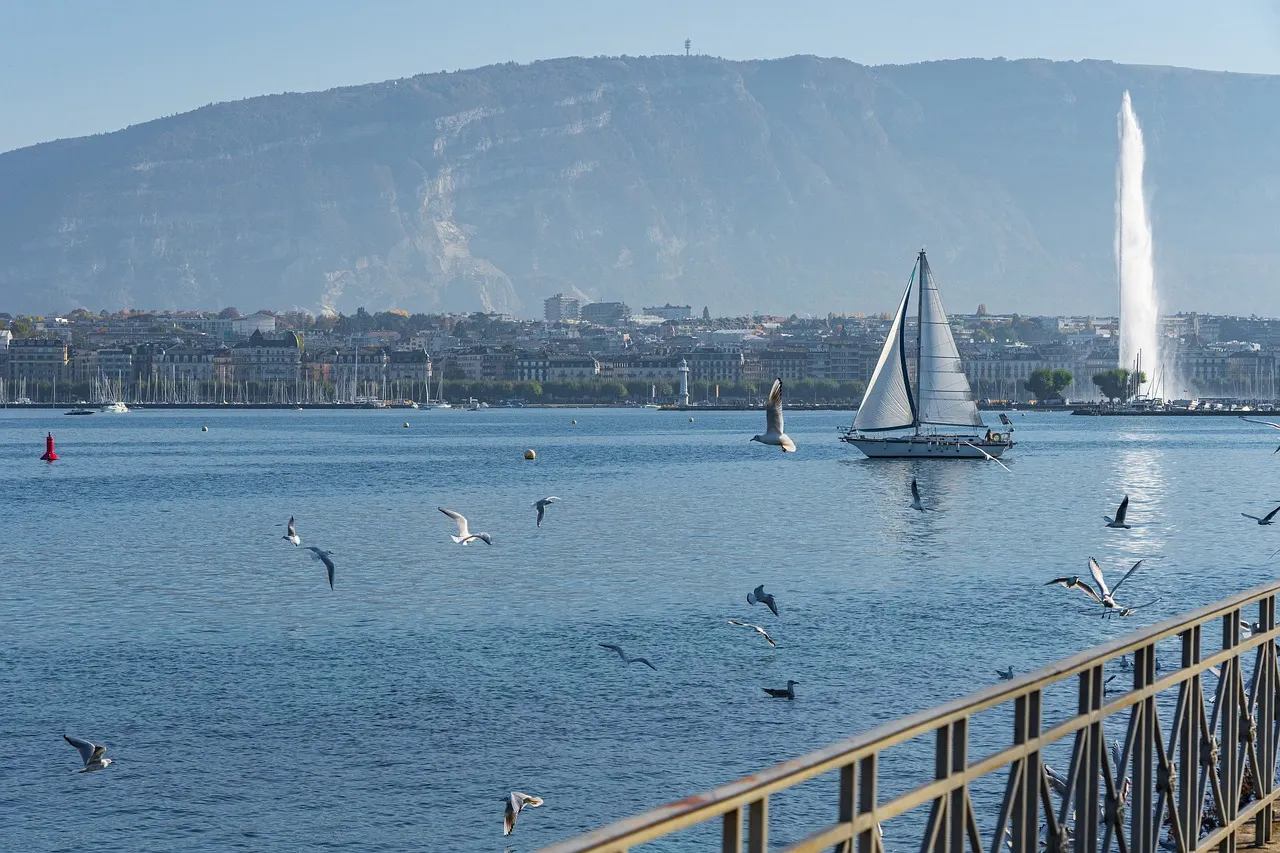
Visiting Switzerland can be confusing — especially if you are aiming to visit a place that has a very different name in the local language, like Lake Geneva for example.
You already know (hopefully) that Switzerland is not Sweden, and Lausanne and Lucerne are not the same cities.
Yes, visiting Switzerland can be confusing, because in a trilingual country geographical names often vary from one linguistic region to another.
Take for instance the body of water people in English and German-speaking countries know as Lake Geneva and Genfersee, respectively.
If you approach a person in Geneva and ask for directions to Lake Geneva, they will look at you like you’re crazy. That’s because in the city and the French-speaking area in general, it is known as Lac Léman, while the region commonly referred to English as the ‘Lake Geneva region’ is actually ‘la région lémanique.’
The same applies to another very scenic body of water.
What you may know as Lake Lucerne, is actually Vierwaldstätter See in German and Lac de Quatre Cantons in French — so named because it nestles among four cantons: Uri, Schwyz Unterwald, and Lucerne (or Luzern, as it is known here).
Then there is also Thunersee, which is known as Lac de Thoune in French.
While some sound similar in all the languages — for instance, Aargau, Argovie, and Argovia; Bern or Berna, and Zurich and Zurigo, others’ names may be a puzzle to foreign tourists as well.
Thus, Geneva is Genève in French, Genf in German, and Ginevra in Italian.
Vaud becomes Waadt in the Swiss-German part, while Valais is Wallis in German and Vallese in Italian.
Graubünden is Grisons in French and Grigioni in Italian.
Solothurn becomes Soleure in French and Soletta in Italian.
Glarus is Glarona in Italian, and Schwyz morphs into Svitto in the same language.
And if you go to Basel, you also go to Bâle and Basilea at the same time.
But that’s not all.
The same pertains to city names as well.
Besides the above-mentioned Genève / Genf / Ginevra, Zurich /Zurigo, and Basel / Bâle / Basilea, there is also Lausanne / Losanna, Biel / Bienne, and Chur /Coire /Coira.
Then there is the iconic Matterhorn. It too is known under different names, depending on the region — le Cervin in French and il Cervino in Italian.
Nobody ever said that travelling in Switzerland is easy


